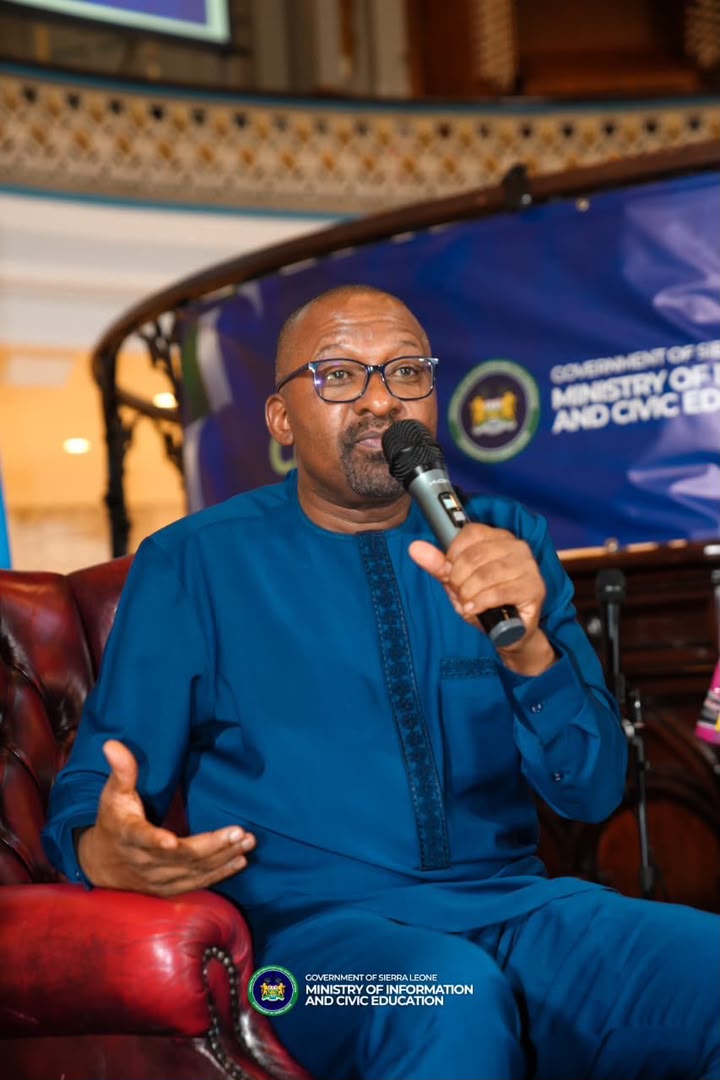
Sierra Leone’s Vice President, Dr. Mohamed Juldeh Jalloh, has emphasized that increasing household incomes remains at the heart of the Government’s economic recovery agenda, acknowledging that many families continue to face financial hardships despite recent improvements in macroeconomic stability.
Speaking during Sierra Leone Diaspora Week in London, United Kingdom, Dr. Jalloh said the Government is committed to ensuring that the benefits of economic reforms are felt by ordinary citizens through job creation, expanded social protection programmes and policies aimed at improving livelihoods.
Reflecting on the week-long engagement with Sierra Leoneans living abroad, the Vice President described the event as a valuable platform for strengthening ties with the diaspora and promoting national development.
“It was a pleasure to participate in Sierra Leone Diaspora Week and engage with members of our diaspora community,” he said. “From the Civic Townhall and the Sierra Leone Diaspora Investment Conference to the many meetings in between, the week provided a valuable opportunity to discuss strengthening diaspora engagement, promoting investment and advancing Sierra Leone’s development.”
He also expressed appreciation to the sponsors and partners who contributed to the success of the programme.
“My sincere thanks to our numerous sponsors for their generous support in making this important week a success,” he stated.
Addressing Sierra Leoneans from the United Kingdom and across Europe, Dr. Jalloh said the Government has adopted a realistic and data-driven approach to addressing the country’s economic challenges. He noted that while inflation has declined and the availability of essential commodities has improved in recent months, many households remain unable to fully benefit because incomes have not increased at the same pace as living costs.
According to the Vice President, the Government recognizes the gap between macroeconomic improvements and the everyday realities faced by many Sierra Leonean families.
“We recognize that household incomes remain low. Even where commodities are relatively cheaper and more available in our markets, many families still cannot afford them. That is why our priority is to create more jobs, strengthen livelihoods and expand targeted social safety nets, including direct cash transfers for the most vulnerable, so that economic stability translates into real improvements in people’s lives,” Dr. Jalloh said.
The Vice President explained that Sierra Leone’s economic strategy is now transitioning from a phase focused largely on stabilization to one centered on inclusive growth and shared prosperity. He stressed that the Government’s objective is not only to maintain economic stability but also to ensure that citizens experience tangible improvements in their standard of living.
He said investments in agriculture, energy, infrastructure and human capital development are expected to stimulate private sector growth, create employment opportunities and boost productivity across the country.
Dr. Jalloh further noted that ongoing efforts to strengthen social protection programmes are intended to support vulnerable households during the recovery period while ensuring that economic gains are distributed more equitably.
“Economic reforms must ultimately improve the welfare of our people. Our objective is not only to stabilize the economy, but to raise household incomes and give families the purchasing power to afford the goods that are available in our markets,” he added.
The Vice President’s remarks came shortly after the International Monetary Fund (IMF) approved the successful completion of the third review of Sierra Leone’s Extended Credit Facility programme. The approval unlocked an immediate disbursement of approximately US$31.7 million and was accompanied by a new US$211.5 million arrangement under the Resilience and Sustainability Facility.
The IMF noted that Sierra Leone has made notable progress in restoring macroeconomic stability through fiscal consolidation, tighter monetary policies and structural reforms. However, the institution also emphasized the importance of protecting vulnerable groups through targeted social spending and continued investment in social protection measures.
Government officials believe the IMF’s continued support provides additional confidence in the country’s reform agenda while creating opportunities for long-term economic resilience and climate adaptation.
The Vice President also linked the Government’s strategy to the priorities outlined in the 2026 national budget, which places strong emphasis on poverty reduction, employment creation and investment in productive sectors of the economy. Programmes such as cash transfers for vulnerable households remain a key component of the Government’s efforts to reduce poverty and improve living standards.
Meanwhile, the Bank of Sierra Leone continues to pursue policies aimed at maintaining price stability and reducing inflation, measures which authorities say are essential for protecting household purchasing power and sustaining economic recovery.
Recent household survey data from Statistics Sierra Leone continue to show that poverty remains concentrated among low-income families, reinforcing the Government’s position that raising household earnings must remain a central pillar of the country’s economic transformation agenda.
As Sierra Leone advances its reform programme, Government leaders say the ultimate measure of success will be the extent to which economic growth improves the lives of ordinary citizens and creates opportunities for families to achieve greater financial security and prosperity. https://thecalabashnewspaper.com/vice-president-says-raising-household-incomes-is-central-to-sierra-leones-economic-recovery-strategy/

No comments:
Post a Comment