By Alvin Lansana Kargbo
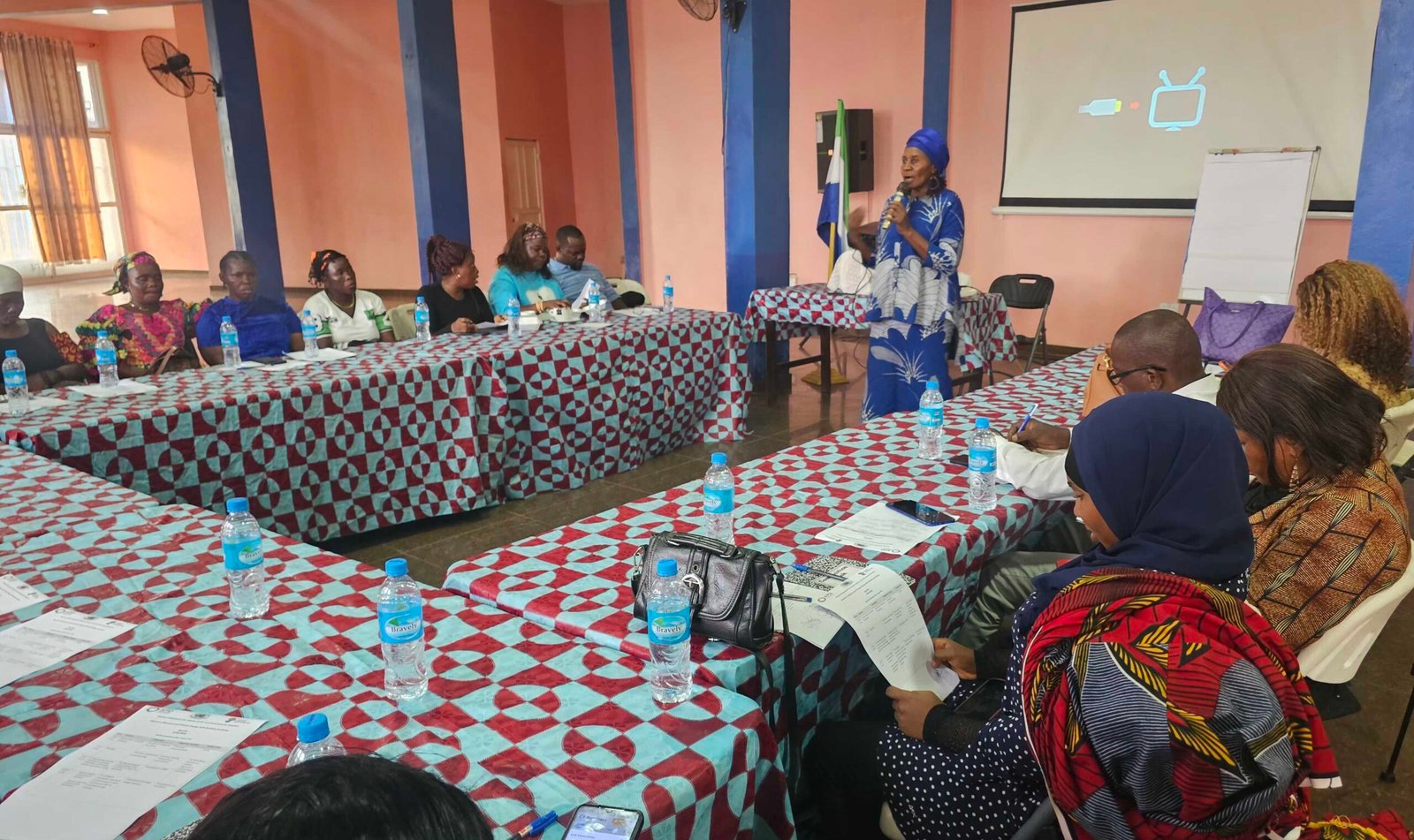
The 50/50 Group of Sierra Leone organized a Women’s Advocacy and Climate Skills Building Workshop aimed at strengthening the capacity of women affected by climate change to influence policy and advocate for improved agricultural support, with the event held on Thursday, 4 June 2026 at the organization’s headquarters on Tower Hill in Freetown.
The workshop was organized under the Women Empowered for Climate Action and Food Security (WeCAF) Project with support from the Feminists for Alternatives on Climate and Environment (FACE) Programme. The event brought together representatives from the Ministries of Gender, Agriculture and Environment, as well as women from climate-vulnerable communities across the Western Area.
The initiative focused on addressing the disproportionate impact of climate change on women, particularly those living in peri-urban communities around Freetown. Organisers noted that women continue to face the harshest effects of climate-related challenges such as flooding, soil degradation, erratic rainfall and declining agricultural productivity, while often remaining underrepresented in policy discussions and decision-making processes.
The workshop provided participants with practical advocacy, leadership and engagement skills aimed at strengthening their ability to influence climate-responsive and gender-inclusive policies. It also served as a platform for knowledge sharing, networking and collaboration among women, Civil Society Organisations, Government institutions and climate stakeholders.
Speaking at the event, the Programme Coordinator of the 50/50 Group of Sierra Leone, Madam Aisha Fofanah-Ibrahim, said the training forms part of a broader FACE-supported initiative designed to strengthen the resilience of women involved in vegetable farming. She explained that the project examines how women farmers in the Western Area are adapting to the realities of climate change while playing a vital role in promoting food sustainability and food sufficiency.
Madam Aisha Fofanah-Ibrahim disclosed that women account for more than 60 percent of vegetable production in the Western Area and represent a significant proportion of agricultural producers across Sierra Leone. She stressed that despite their important contribution to food production, women farmers continue to face numerous challenges that hinder their productivity and resilience.
According to Madam Aisha Fofanah-Ibrahim, environmental degradation and limited access to agricultural support services remain among the most pressing issues confronting women farmers. She explained that the workshop was specifically designed to strengthen the advocacy capacity of women, enabling them to demand improved services and resources that would enhance agricultural productivity and help communities adapt to climate-related disasters.
She highlighted inadequate access to farmland, shortages of farming inputs, limited irrigation facilities, environmental destruction caused by charcoal burning and widespread hill-cutting activities as some of the major obstacles affecting women farmers. She further noted that many farming groups receive insufficient agricultural inputs, citing situations where only a few bags of fertilizer are shared among several groups.
Madam Aisha Fofanah-Ibrahim also expressed concern over the limited availability of agricultural extension services. She explained that many women farmers rarely receive technical assistance, training opportunities or access to improved farming technologies, a situation that negatively impacts crop yields and limits the adoption of climate-smart agricultural practices.
She stated that one of the expected outcomes of the workshop is the development of community-based advocacy action plans that will enable participants to engage local authorities, community leaders and elected representatives on issues affecting their livelihoods. The plans will also provide mechanisms for monitoring progress and documenting results.
During the discussions, women from affected communities shared firsthand accounts of the growing challenges they face. Participants reported that increasing levels of substance abuse among young men and boys have created additional social and economic pressures on farming households. Some women disclosed that agricultural produce and farming tools are frequently stolen from their gardens, resulting in financial losses and reduced household incomes.
Participants also expressed concerns that support programmes implemented by Government institutions and Non-Governmental Organisations often fail to reach grassroots farming groups. They argued that even when support is provided, the quantities distributed are frequently inadequate to meet the needs of farming communities.
The women further identified poor drainage systems and recurrent flooding as major threats to vegetable production. They explained that heavy rainfall regularly washes away crops, destroys seedbeds and damages farmland during the rainy season, causing significant losses and increasing food insecurity.
Additional concerns raised included limited access to credit facilities, high transportation costs, inadequate market opportunities, lack of storage facilities and insufficient representation of women farmers in local decision-making structures.
The workshop concluded with calls for stronger collaboration among Government institutions, development partners, Local Councils and community stakeholders to ensure that women farmers receive the support needed to adapt to climate change, increase food production and contribute meaningfully to Sierra Leone’s food security agenda.
The 50/50 Group of Sierra Leone emphasized that empowering women with advocacy skills and strengthening their participation in climate governance are critical to building resilient communities and achieving sustainable agricultural development across the country. https://thecalabashnewspaper.com/50-50-group-empowers-women-to-champion-climate-action-and-food-security/

No comments:
Post a Comment