By Alvin Lansana Kargbo
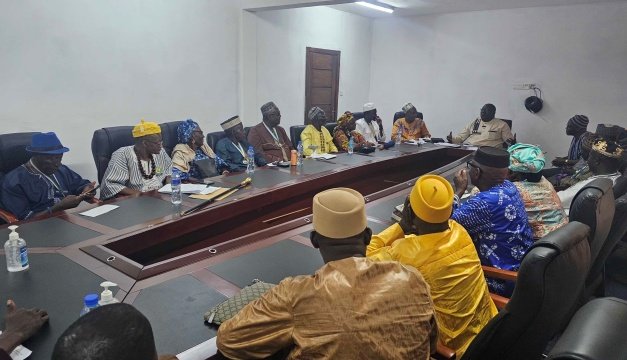
The National Civil Registration Authority (NCRA) has stepped up efforts to expand the registration and issuance of national identity cards by engaging traditional leaders in a high-level consultative meeting held on Tuesday, 9 June 2026, at the Authority's headquarters on Kingharman Road in Freetown.
The meeting brought together senior officials of the National Civil Registration Authority and leaders of tribal councils from the Western Area to chart a common strategy for increasing the number of citizens obtaining national identity cards, improving access to registration services and strengthening public awareness of the importance of the country's national identification system.
Addressing the gathering, the Director General of the National Civil Registration Authority, Mohamed Mubashir Massaquoi, described the national ID programme as a key pillar of national development and governance. He said the engagement with tribal authorities was intended to build stronger community partnerships and secure the support of traditional leaders in encouraging citizens to comply with national identification requirements.
Mohamed Mubashir Massaquoi reminded participants that legislation enacted by the Government in March 2022 made the possession of a national identity card mandatory for accessing numerous public and private sector services. He explained that citizens without valid identification often face challenges in securing public sector employment, enrolling in educational institutions, registering businesses and vehicles, obtaining passports and accessing banking and financial services.
He noted that despite the legal requirement, many Sierra Leoneans are yet to obtain national identity cards because of limited public awareness and inadequate enforcement. According to him, increasing the number of registered citizens remains vital for strengthening governance, improving service delivery and enhancing national security.
The Director General observed that many developed nations maintain comprehensive identification databases that support effective public administration and law enforcement. He explained that reliable identification systems help governments verify identities, reduce fraudulent activities and improve accountability across critical sectors, including healthcare, transportation and financial services.
Mohamed Mubashir Massaquoi further highlighted the value of national identification in the healthcare sector, where proper age verification can assist medical professionals in providing appropriate treatment and medication. He also pointed out that the absence of valid identification has created difficulties for some citizens seeking driver's licences and other official documents.
As part of plans to accelerate registration, he announced that the National Civil Registration Authority would collaborate closely with tribal authorities, market women, transport unions, truck drivers and commercial motorbike riders to intensify public sensitization campaigns. He disclosed that thousands of citizens have already been mobilised and expressed confidence that community leaders would play a major role in expanding the exercise.
He assured tribal leaders that the Authority is prepared to deploy mobile registration teams directly into communities. According to him, where chiefs successfully mobilize residents, National Civil Registration Authority officials will conduct registration exercises within those communities for up to one week, reducing the burden on citizens who would otherwise travel long distances to registration centres.
Speaking on behalf of the tribal authorities, the Chairman of the Western Area Tribal Heads Council, Chief Sahr Orlando Gbekie, popularly known as S.O. Gbekie, welcomed the initiative and pledged the support of traditional leaders for the national identification campaign.
Chief Sahr Orlando Gbekie said tribal leaders should lead by example by obtaining national identity cards before encouraging members of their communities to do the same. He emphasized that identification carries both legal and social importance, noting that individuals without valid identification often encounter difficulties during travel and in their dealings with law enforcement agencies.
He also expressed concern over the affordability of registration-related expenses for some residents, especially those travelling from provincial areas to the Western Area. He called for an increase in the number of registration centres and the deployment of more mobile registration teams to improve accessibility.
Chief Sahr Orlando Gbekie clarified that citizens become eligible to obtain national identity cards from the age of 12 and called for sustained public education to address misconceptions surrounding the registration process. He assured the meeting that the Tribal Council Administration in the Western Area would work closely with the National Civil Registration Authority to educate residents and promote wider registration.
Also contributing to the discussions, the Mende Tribal Headman for the Western Area and Secretary General of the Western Area Tribal Heads Council, Chief Matthew Jibao Young, advocated for stronger enforcement measures and broader community mobilisation to increase national ID card ownership.
Chief Matthew Jibao Young expressed optimism that the meeting would lead to a significant rise in registration and proposed that possession of a national identity card should become a requirement for recognition and continued service as a tribal leader within the Western Area. He stressed that national identity cards are essential for education, employment and access to government services, while also playing an important role in strengthening national security, identifying non-citizens and assisting law enforcement agencies in combating crime.
He further called for stronger collaboration between the National Civil Registration Authority, the Freetown City Council and other local authorities to integrate national ID card requirements into business licensing, local tax administration and municipal service delivery.
Participants agreed that the Western Area, being the country's most densely populated region, requires special attention in the national identification drive. Discussions focused on expanding community outreach programmes before the height of the rainy season and strengthening cooperation between traditional authorities and the National Civil Registration Authority.
At the end of the meeting, several resolutions were adopted. Tribal leaders committed themselves to obtaining national identity cards and encouraging their communities to register, while the National Civil Registration Authority agreed to deploy mobile registration teams to communities where chiefs successfully mobilize residents. Both sides also agreed to intensify public sensitization through tribal structures and community networks.
It was further resolved that a major coordination meeting involving all 16 tribal heads, more than 500 sub chiefs and officials of the National Civil Registration Authority would be held at Attouga Mini Stadium in the Western Area. The gathering is expected to serve as a platform for mass mobilization, public awareness and the development of practical measures to accelerate national ID card registration and issuance across the region.
The engagement forms part of the National Civil Registration Authority's broader strategy to achieve universal national identification coverage and ensure that every eligible citizen is captured within Sierra Leone's civil registration and identification system. https://thecalabashnewspaper.com/ncra-mobilizes-tribal-heads-to-expand-national-identification-coverage/

No comments:
Post a Comment