By Amin Kef (Ranger)
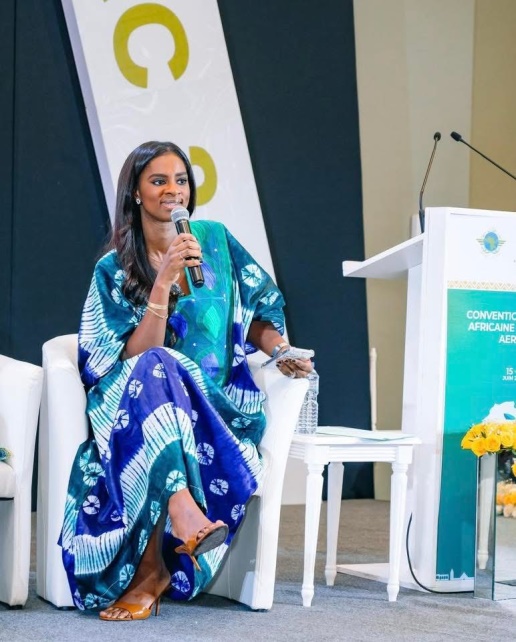
The Director General of the Sierra Leone Civil Aviation Authority, Madam Musayeroh Barrie, has called on aviation leaders, policymakers, Governments and industry stakeholders across Africa to prioritize human capital development, stressing that the long-term success and sustainability of the continent’s aviation sector will depend largely on investing in people.
Madam Musayeroh Barrie made the appeal during the African Air Transport Convention and Expo held in Lomé, Togo, from 15 to 19 June 2026. The high-level convention brought together aviation experts, regulators, policymakers and industry leaders from across the continent to discuss the future of African air transport and explore strategies for strengthening the sector.
Speaking during the Women, Youth and Skills Development Session, Madam Musayeroh Barrie noted that much of the discussion throughout the convention focused on infrastructure development, improved connectivity, regulatory reforms and the implementation of the Single African Air Transport Market. While acknowledging the importance of those priorities, she emphasized that such ambitions would remain difficult to achieve without a skilled, competent and adequately supported workforce.
She stated that the future growth of Africa’s aviation industry depends not only on investments in infrastructure and technology but also on developing the people who will lead and sustain the sector in the years ahead.
“Human capital remains the backbone of every successful aviation system. Building a highly skilled, well-trained and motivated workforce is essential for improving service delivery, enhancing safety standards and ensuring the long-term sustainability of Africa’s aviation industry,” Madam Musayeroh Barrie said.
She observed that the convention’s discussions highlighted three key priorities that should shape the future direction of the sector. The first, she explained, is the urgent need to strengthen aviation education and skills development programmes across Africa to equip young professionals with the competencies required to meet the industry’s evolving demands.
Madam Musayeroh Barrie further noted that access remains one of the most significant challenges facing the aviation sector, preventing many talented young Africans from pursuing careers in the industry. She emphasized that inclusion must go beyond policy statements and become a genuine strategic priority that ensures equal opportunities for all qualified individuals regardless of gender, background or economic circumstances.
To address those challenges, she called on Governments, aviation authorities, training institutions and industry partners to establish stronger links between education and employment, enabling graduates to transition more effectively into professional aviation careers. She also advocated the expansion of mentorship programmes and capacity-building initiatives to guide, inspire and support young professionals entering the sector.
According to Madam Musayeroh Barrie, structured mentorship and leadership development programmes are critical for nurturing the next generation of aviation professionals and equipping them with the technical expertise, practical experience and leadership skills needed to drive innovation and excellence within the industry.
She also highlighted the financial barriers that continue to limit access to aviation education and professional development opportunities across Africa. Many aspiring aviation professionals, she noted, are unable to pursue their ambitions due to the high cost of training and certification programmes.
In response, she urged Governments, development partners and industry stakeholders to increase scholarship opportunities and introduce practical measures aimed at removing financial obstacles that prevent talented individuals from accessing quality aviation training.
Madam Musayeroh Barrie maintained that empowering young professionals and creating clear pathways for career advancement would contribute significantly to strengthening aviation safety, improving operational efficiency and building greater resilience within the sector.
She further reaffirmed Sierra Leone’s commitment to supporting regional initiatives aimed at enhancing aviation standards, promoting collaboration among African states and building a more competitive and sustainable air transport industry across the continent.
Participants at the convention welcomed her call for greater investment in human capital, acknowledging that workforce development remains one of the most important factors in addressing the challenges confronting Africa’s aviation sector and unlocking its full potential.
The African Air Transport Convention and Expo continues to serve as an important platform for advancing dialogue on aviation development, fostering partnerships and identifying innovative solutions that support the growth of air transport across Africa.
Madam Musayeroh Barrie concluded that the success and long-term sustainability of Africa’s aviation industry will ultimately depend on the continent’s ability to develop, support and retain its human capital, describing skilled professionals as the foundation upon which the future growth, competitiveness and resilience of the sector will be built. https://thecalabashnewspaper.com/human-capital-development-critical-to-aviation-safety-and-sustainability-slcaa-dg-avers/

No comments:
Post a Comment