By Ibrahim Sesay
A Policy Familiarization Workshop on the Sierra Leone National Clean Cooking Strategy 2025–2035 has reinforced the country's determination to expand access to safe, affordable and environmentally friendly cooking solutions, with stakeholders emphasizing the need for stronger collaboration to reduce dependence on firewood and charcoal and accelerate sustainable development.
The workshop, hosted by the Government of Sierra Leone through the Ministry of Energy, took place at the Sierra Palms Resort in Freetown on Tuesday, June 9, 2026. The event, which was supported by development and regional partners, brought together Government officials, development partners, private sector representatives, Civil Society Organizations, consultants and other stakeholders to deepen their understanding of the objectives and implementation framework of the National Clean Cooking Strategy.
As the lead institution spearheading the strategy, the Ministry of Energy used the forum to strengthen stakeholder engagement and build consensus around the country's long-term roadmap for promoting cleaner cooking technologies and fuels.
The Sierra Leone National Clean Cooking Strategy 2025–2035, which was officially launched in 2025, seeks to transform the country's household energy sector by reducing reliance on firewood and charcoal while addressing major public health, environmental and economic challenges associated with traditional cooking methods.
A key objective of the workshop was to prepare institutions and partners for the effective implementation of the strategy over the next decade and to raise awareness about the far-reaching benefits of clean cooking.
Participants were informed that indoor air pollution caused by traditional cooking methods remains a serious public health challenge, with thousands of deaths linked annually to prolonged exposure to smoke. The continued dependence on biomass fuels also contributes to deforestation, environmental degradation and climate change while placing a heavy social and economic burden on many households, particularly women and girls.
The workshop further highlighted the five strategic pillars of the National Clean Cooking Strategy 2025–2035, which include expanding affordability through subsidies and consumer financing, increasing public awareness and education, supporting private sector investment in clean cooking technologies, strengthening regulations and quality standards, and improving coordination among Government institutions, development partners and the private sector.
Stakeholders discussed their respective roles and responsibilities in implementing the strategy and stressed the importance of coordinated action to achieve universal access to clean cooking solutions while supporting Sierra Leone's climate and sustainable development commitments.
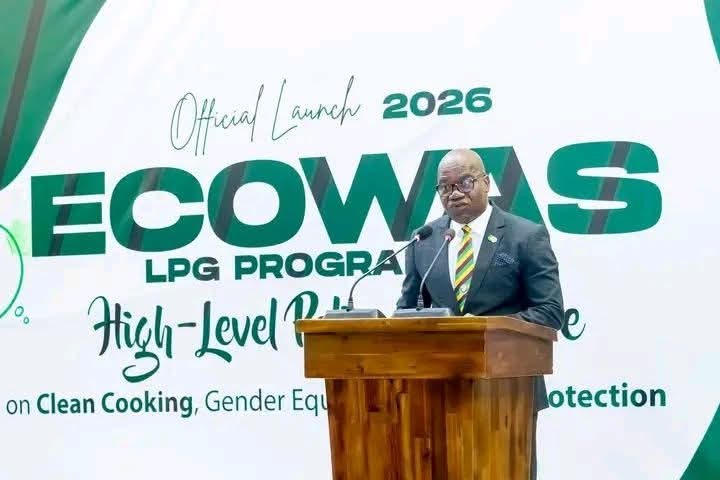
Addressing the gathering, the ECOWAS Resident Representative to Sierra Leone, Ambassador John Azumah, conveyed warm greetings from the President of the ECOWAS Commission, Dr. Omar Alieu Touray, and commended the Government and people of Sierra Leone for their commitment to inclusive and sustainable development.
Ambassador John Azumah also praised President Brigadier-General (Rtd) Dr. Julius Maada Bio, Chairman of the ECOWAS Authority of Heads of State and Government, for his leadership in advancing regional integration and promoting peace and stability across West Africa.
He noted that the workshop came shortly after the successful launch of the ECOWAS LPG 20/20 Initiative, which seeks to establish liquefied petroleum gas as the preferred household cooking fuel in the sub-region, with a target penetration rate of 45 percent by 2030.
According to Ambassador John Azumah, the low penetration of clean cooking solutions across West Africa has left millions of households dependent on traditional biomass fuels, contributing to the loss of hundreds of thousands of lives, particularly among women and children, due to indoor air pollution.
Ambassador John Azumah stressed that investment in clean cooking is an investment in health, prosperity and peace, noting that the transition to modern cooking fuels will save lives, create economic opportunities and improve the well-being of communities across the region.
He commended Sierra Leone for establishing the Clean Cooking Delivery Unit, describing it as an effective cross-sectoral mechanism that will coordinate implementation of the strategy and serve as the implementing agency for the ECOWAS LPG 20/20 Initiative in the country.
Ambassador John Azumah also applauded the emphasis placed on gender inclusion, noting that women and girls should not only benefit from clean cooking policies but should also be empowered as entrepreneurs, distributors and innovators within the clean energy value chain.
The workshop underscored the need for stronger collaboration among the ministries responsible for Energy, Education, Gender, Health, Water Resources and Finance, as well as Civil Society Organizations, development partners and the private sector to ensure the successful implementation of the strategy.
Stakeholders expressed optimism that the Sierra Leone National Clean Cooking Strategy 2025–2035 will significantly reduce preventable diseases associated with household air pollution, curb deforestation, create green jobs and support the country's energy transition agenda. They also maintained that effective implementation of the strategy will improve the lives of millions of Sierra Leoneans while contributing to long-term environmental sustainability and national development. https://thecalabashnewspaper.com/ambassador-john-azumah-reaffirms-ecowas-support-for-sierra-leones-clean-cooking-initiative/

No comments:
Post a Comment