By Ibrahim Sesay
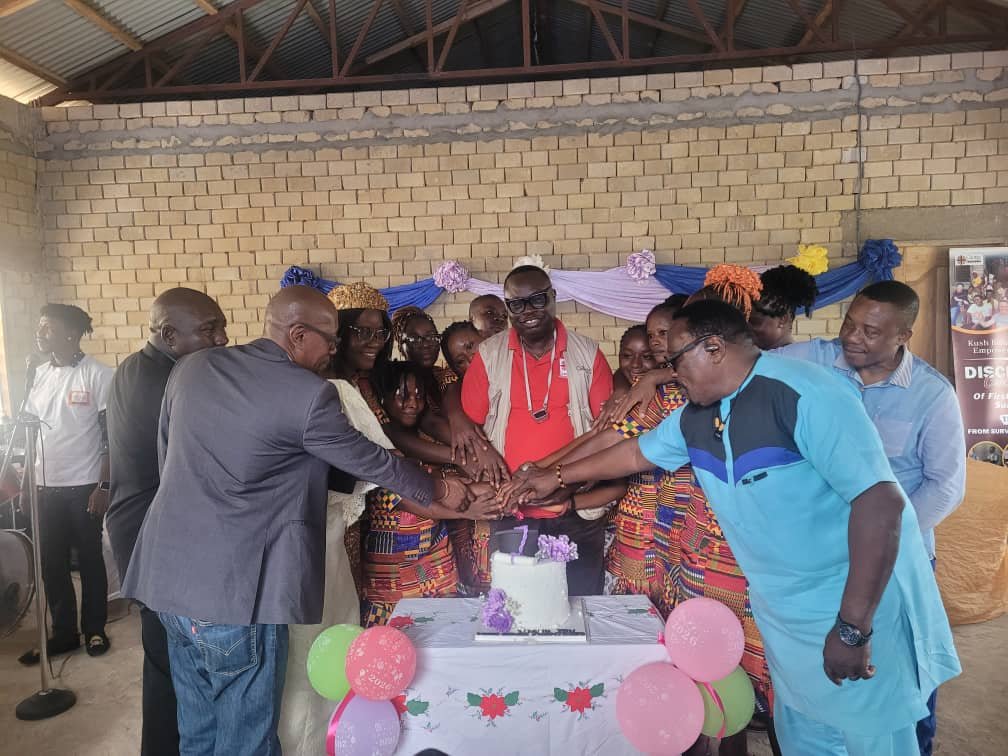
Caritas Freetown has discharged twelve young women who successfully completed a sixteen-week residential rehabilitation programme under its Rehabilitation, Empowerment and Reintegration (REAR) Project marking a significant milestone in the fight against substance abuse and the growing Kush crisis in Sierra Leone.
The Survivors’ Discharge Celebration Ceremony, held on Thursday, 18 June 2026, at Makomba Village in Newton, Western Area Rural District, brought together development partners, Government representatives, families, community leaders and other stakeholders to celebrate the achievements of the survivors under the theme: “From Surviving to Thriving.”
The discharged survivors completed a structured rehabilitation programme designed to support recovery, healing and reintegration through psychosocial care, counselling and vocational skills training.
Speaking at the ceremony, Project Manager, Morray Massaquoi, said the REAR Project was established to provide young women affected by Kush addiction with an opportunity to rebuild their lives and regain their place in society.
He explained that throughout the sixteen-week residential programme, participants received intensive psychosocial support and counselling aimed at helping them overcome trauma, restore self-confidence and begin the process of recovery. In addition, they received vocational skills training intended to equip them with practical means of earning a living and achieving long-term independence.
“There is still more work to be done,” Morray Massaquoi said. “We therefore call on our donors and partners to continue supporting this initiative so that more vulnerable young women affected by substance abuse can access rehabilitation, regain hope and become productive members of society.”
Executive Director of Caritas Freetown, Rev. Fr. Peter Konteh, described the Kush epidemic as one of the most serious social and humanitarian challenges confronting Sierra Leone today. He noted that the crisis disproportionately affects young women and girls, exposing them to addiction, homelessness, family breakdown, exploitation and the loss of educational and economic opportunities.
He explained that the REAR Project was established following extensive engagement and sensitization efforts aimed at understanding the scale of the problem and identifying effective solutions.
According to Rev. Fr. Konteh, the residential facility at Makomba Village provides a comprehensive and holistic response to addiction by addressing not only substance dependency but also the psychological, social and economic challenges that often accompany it.
“The transformation we have witnessed demonstrates that recovery is possible,” he said. “These young women are proof that with the right support, compassion and opportunities, lives can be rebuilt.”
He, however, warned about donor fatigue and stressed the importance of sustainability planning to ensure that rehabilitation services continue to reach those in need.
Country Manager of Catholic Relief Services, Michael Moyo, commended the collaborative efforts behind the programme and praised families, partners and community members for their commitment to supporting the survivors.
He encouraged the graduates to remain focused and continue building on the progress they had made, reminding them that many people remain interested in their success and future well-being.
Representing the Ministry of Social Welfare, Hawanatu Koroma applauded Caritas Freetown for complementing Government efforts to address substance abuse and support vulnerable groups. She urged families and communities to embrace the survivors and assist them during their reintegration process, emphasizing that recovery extends beyond the rehabilitation centre.
The ceremony also featured powerful testimonies from survivors and family members, highlighting the life-changing impact of the programme.
One survivor, Esther Mustapha, recounted her experiences of homelessness and the hardships she endured before entering rehabilitation, including exposure to physical and sexual abuse. She described joining the programme after encouragement from Project Manager, Morray Massaquoi, and said the experience transformed her life.
Esther Mustapha noted that she has regained her physical and mental well-being and acquired tailoring skills that will help her earn a living and support herself.
Another survivor, Adina Matilda Dumbuya, shared how substance abuse began during her university years as a result of peer influence and personal challenges following the death of her grandmother, who had raised her.
She explained that family difficulties and isolation worsened her situation before she eventually entered rehabilitation. Through the programme, she said, she regained confidence, purpose and hope for the future.
Adina Matilda Dumbuya revealed that she plans to return to university to pursue studies in pharmacy.
Her mother, Joy Thomas, described the emotional and financial burden addiction placed on their family and credited Caritas Freetown with helping to restore hope and stability.
“They provided much more than rehabilitation,” she said. “They gave our family hope when we had almost lost it.”
The Survivors’ Discharge Celebration served not only as a graduation ceremony but also as a public affirmation of recovery, resilience and transformation. For many of the graduates, it represented their first formal recognition and achievement, symbolizing a new beginning after overcoming one of the most devastating public health challenges facing the country.
The ceremony concluded with renewed calls for increased funding, stronger partnerships and sustained community involvement to ensure the long-term reintegration, empowerment and success of survivors recovering from Kush addiction across Sierra Leone. https://thecalabashnewspaper.com/caritas-freetown-discharges-12-women-after-successful-kush-rehabilitation-programme/

No comments:
Post a Comment