Monday, 29 June 2026


Political Will Is Not Enough. Build the Capability
By Dr. Yakama Manty Jones

Every African Government I have worked with has had political will. This may sound surprising given how often reforms stall, projects underperform and citizens lose confidence in public institutions. I have sat across the table from Presidents, Ministers, senior civil servants and their technical teams and I have rarely met a leader who did not want to deliver. The problem is rarely the absence of commitment. The problem is that political will is often mistaken for a delivery system. It is not.

I call this the delivery gap: the distance between political commitment and citizens’ experiences. Citizens do not experience speeches, frameworks or manifesto commitments. They experience whether public services work when they need them. When these outcomes fail to materialize, the gap is rarely a gap of intention. It is a gap of architecture.

Governments do not fail because they lack plans. Africa may be the most over-planned continent in the world. National development plans, sector strategies, reform roadmaps, vision documents, most countries have all of them and most are technically sound. Yet citizens do not experience plans. They experience services. Between the plan and the service lies a space where many reforms quietly die, not from sabotage, but from drift: goals too broad to own, accountability spread too thinly and review cycles too slow to catch problems before they become crises.

Three myths keep this gap alive. The first is that political will means leaders care. Most do. The second is that political will guarantees implementation. It does not, because commitment is not a system. The third is that more political will solves delivery problems. It rarely does, because the constraint is seldom enthusiasm.

So what does a Government actually need? It needs two things: a Delivery Operating System and the capability to sustain it.

The Delivery Operating System is the repeatable set of routines through which Governments translate political commitment into measurable results. It starts with ruthless prioritization, choosing the handful of outcomes that matter most. It organizes Government around those outcomes. It diagnoses the real constraints before acting, because activity without an honest diagnosis is just motion. Diagnosis informs financing, staffing, incentives, data needs, procurement and risk mitigation. From there, priorities are translated into practical implementation plans with milestones and named owners. Every priority needs one accountable team, from senior leadership to the last-mile service provider, who knows their name is attached to the result. Spread a target across a committee and you have not shared responsibility. You have diluted it.

What follows is execution. Routines that keep reforms moving and remove obstacles as they appear. That discipline depends on data. Not the kind that arrives once a year in a report nobody reads, but on live, operational information that can answer four questions on demand: are we on track, where are we falling behind, why and what needs fixing now to get us on track.

That data only matters if it lands in a room that takes it seriously: structured performance reviews, held often enough to matter and where leaders ask what changed, why, who is removing the bottleneck and by when. I have watched that shift happen in different rooms. It is not dramatic. It is the entire difference between a Government that talks about delivery and one that does it.

The final element is adaptive problem solving and learning. Most Governments monitor. Far fewer learn. The purpose of data is not reporting. It is identifying problems while they are still small enough to fix, understanding why they occur and adapting before today’s obstacle becomes tomorrow’s institutional failure.

Even the best-designed operating system will fail if Governments do not invest in the capability to sustain it: a culture in which leaders reward execution as much as announcement, institutions and civil servants equipped to manage increasingly complex reforms and technology that makes performance visible and accountability harder to avoid. These allow delivery to survive a change of Minister, a change of Government, a change of fiscal fortune.

The lack of this architecture explains why so many good policies underdeliver. Human capital and women’s economic empowerment, for example, are rarely short of strategies. Governments frequently cannot answer simple questions. Are children learning? Which districts are falling behind? How many women sustained businesses beyond programme support? Which interventions produced lasting income gains? Without shared priorities, named owners and timely data, Ministries can each report progress while citizens experience none of it.

None of this is purely technical and it would be dishonest to pretend otherwise. Some reforms fail not because Governments do not know what to do, but because incentives are misaligned. Delivery often requires institutions to change behaviours, surrender discretion, share information they would rather control and accept scrutiny they would rather avoid. These are political challenges, not technical ones. The political cost of admitting a missed target is immediate, but the benefits of genuine reform are long-term. No dashboard fixes that asymmetry on its own. Only leadership willing to absorb short-term discomfort for long-term credibility does.

The real question is what kind of states we should build. Individual reforms come and go with election cycles and ministerial reshuffles. Delivery capability does not. Governments that build and sustain delivery operating systems will continue delivering long after the leaders who initiated those reforms have left office. Those who rely solely on the commitment of exceptional individuals will see progress fade with every political transition.

Citizens do not live inside policy documents. They live inside the consequences of whether those documents are implemented. Political will starts the reform. A Delivery Operating System turns that will into action. Delivery capability ensures that action endures.

Political will matters. Capability is the currency that pays for it.

About the Author

Dr Yakama Manty Jones is an economist, entrepreneur and international development consultant who supports Governments across Africa in strengthening public service delivery, improving public financial management and advancing human capital development. She is a senior public official and thought leader on public policy, systems approaches to public service delivery, inclusive growth and human-centred design. Dr. Jones is also the founder of Data Mansah, which trains youth in mobile data collection and data-driven advocacy and the Yak Jones Foundation, which promotes literacy among children in Sierra Leone. https://thecalabashnewspaper.com/political-will-is-not-enough-build-the-capability/

Friday, 26 June 2026


SLACPRP Launches Nationwide Drive to Unite Communications and PR Professionals
The Sierra Leone Association of Communications and Public Relations Professionals (SLACPRP) has intensified efforts to strengthen the country's communications industry with the completion of its nationwide membership drive, positioning itself as the first dedicated professional body for communications and public relations practitioners in Sierra Leone.

The initiative comes at a time when strategic communications, public relations, digital media and corporate affairs are playing an increasingly important role in governance, business and national development.

SLACPRP was officially introduced through a virtual soft launch on 8 November 2025 under the theme, "Advancing Excellence in Public Relations and Communications: Harnessing the New Media and AI." Three days later, on 11 November 2025, the Association opened its first nationwide membership drive, inviting professionals from public relations, strategic communications, media, marketing communications, advertising and corporate affairs to become founding members of the country's first professional association dedicated exclusively to the communications sector.

Following overwhelming interest from practitioners who were unable to participate during the initial exercise, the Association reopened applications on 19 May 2026, with the second phase concluding on 19 June 2026.

According to the Association, the strong response reflects the growing demand among communications professionals for a unified platform that promotes collaboration, professional development, ethical practice and industry recognition.

SLACPRP's vision is to advance professionalism, strengthen ethical standards and align communications and public relations practice in Sierra Leone with international best practices.

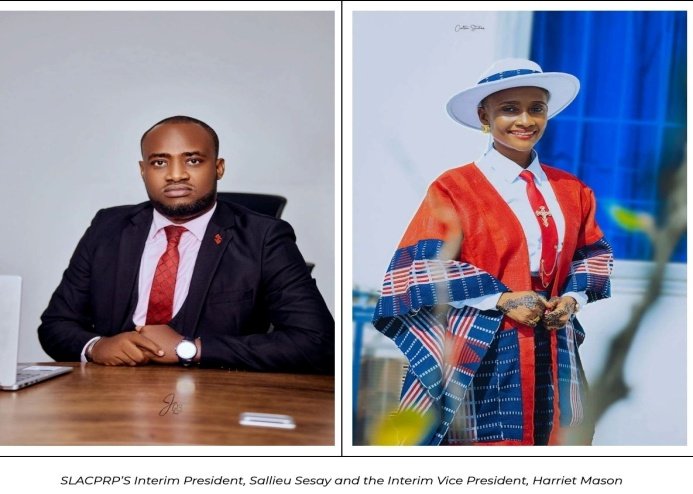
Speaking on the significance of the initiative, Interim President, Sallieu Sesay described the formation of the Association as a historic milestone for the profession.

"This is a defining moment for our industry. Until now, our communications and public relations professionals have stood apart—talented and passionate, yet without a shared home to grow, learn and lead together. SLACPRP is about giving our profession a unified voice, creating a space for continuous learning and connecting practitioners to global opportunities," he said.

He added that under its interim leadership, the Association intends to serve as both a professional home and a strategic institution capable of strengthening trust, influencing national conversations and promoting excellence in communications practice.

SLACPRP has identified several priority areas for its work, including professional networking, peer learning, continuous skills development, knowledge sharing, ethical practice and policy advocacy. The Association also plans to foster partnerships with Government institutions, private sector organisations, academic institutions, Civil Society groups and international partners to improve the visibility and impact of communications professionals across the country.

Interim Vice Chairperson, Harriet Mason, said the Association is committed to building an inclusive professional community that supports practitioners at every stage of their careers.

"We want every communications professional to feel seen, supported and connected. Our collective strength will shape how Sierra Leone tells its stories, both at home and to the world," she stated.

Membership is open to both individual practitioners and institutions involved in communications-related work. The Association believes that a strong and united membership will help advance excellence, innovation and collaboration within the profession while contributing to national development through effective communication.

Interested professionals can obtain membership information and registration forms through the Association's official website and social media platforms. SLACPRP has encouraged practitioners across the country to engage with its activities and become part of a growing network committed to shaping the future of strategic communications and public relations in Sierra Leone.

The Sierra Leone Association of Communications and Public Relations Professionals describes itself as a professional network dedicated to promoting excellence, ethics, innovation, capacity building and policy advocacy within the communications and public relations industry, while empowering practitioners to influence public discourse, strengthen corporate reputation and contribute to national development. https://thecalabashnewspaper.com/slacprp-launches-nationwide-drive-to-unite-communications-and-pr-professionals/


Freetown Mayor Engages World Leaders to Advance Urban Climate Solutions at London Summit
By Amin Kef (Ranger)

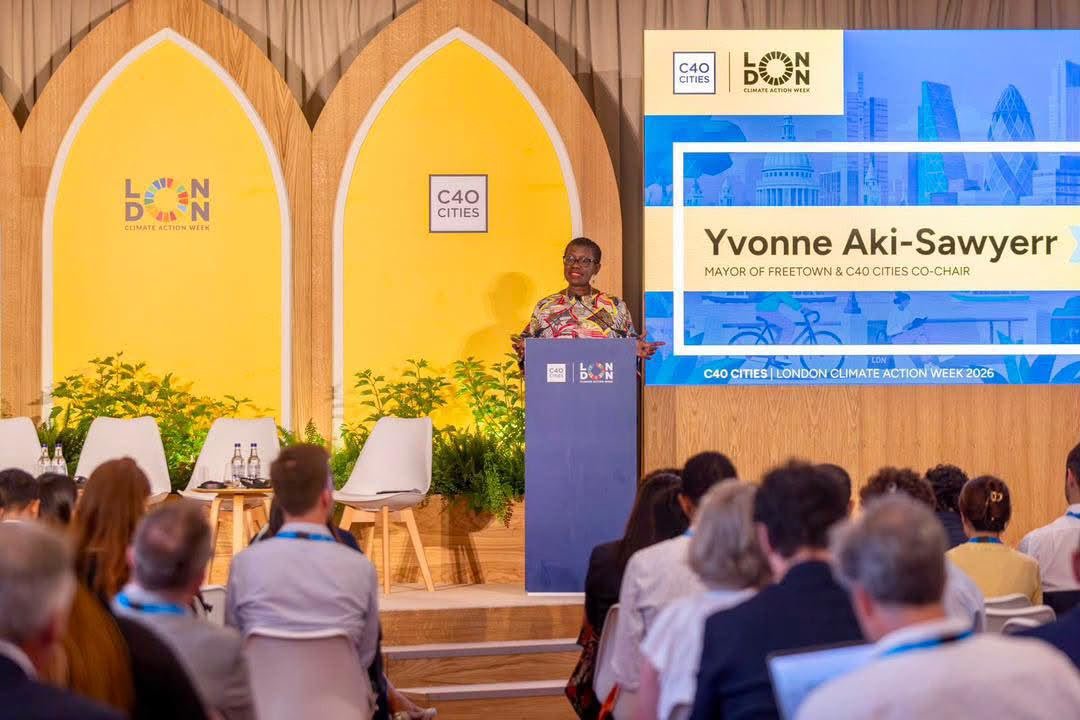
Freetown Mayor and C40 Cities Global Co-Chair, Yvonne Aki-Sawyerr OBE, has strengthened Sierra Leone's profile on the global climate stage through a series of high-level engagements at London Climate Action Week 2026, where she advocated for stronger support for cities leading climate action across the Global South.

Throughout the week-long programme, Mayor Yvonne Aki-Sawyerr participated in strategic discussions with international leaders, policymakers, development partners and climate experts, highlighting the critical role cities play in addressing climate change and building resilient communities.

One of the major highlights of her participation was a closed-door roundtable meeting with United Nations Secretary-General António Guterres. The discussions focused on accelerating locally led climate action and reinforcing partnerships that empower cities to implement practical and sustainable climate solutions.

The Mayor also delivered keynote addresses at the Mayoral Dialogue on Urban Resilience, where she emphasized the importance of strengthening cities' capacity to withstand climate-related challenges while promoting sustainable urban development.

Further showcasing Sierra Leone's leadership on climate issues, Mayor Yvonne Aki-Sawyerr addressed a joint convening organized by ODI Global and the LAGO Collective, where she spoke on the growing importance of women-led green innovation and inclusive climate leadership in driving sustainable development across developing countries.

During the week, the Freetown Mayor attended an invitation-only reception at St James's Palace, where she engaged with King Charles III. The discussions highlighted the work of C40 Cities in promoting climate action, improving air quality and supporting healthier urban environments across member cities.

Mayor Yvonne Aki-Sawyerr also demonstrated her commitment to empowering young people by supporting youth climate advocacy initiatives aimed at encouraging greater youth participation in climate policy and environmental protection.

On the sidelines of the event, she held a series of strategic bilateral meetings, including discussions with Lagos State Governor, Babajide Sanwo-Olu, focusing on strengthening collaboration between African cities in advancing climate resilience, sustainable urban planning and green development.

As part of her outreach during the international gathering, the Mayor also shared Freetown's climate journey and urban resilience initiatives during an interview on the BBC's Climate Question podcast, which is scheduled to air later this week.

In another key engagement, Mayor Yvonne Aki-Sawyerr met with the Executive Director of Breathe Cities to explore opportunities for increased investment in programmes designed to improve air quality, protect public health and enhance the quality of life for residents of Freetown.

Her participation at London Climate Action Week 2026 further reinforces Freetown's growing reputation as a leading African city driving innovative climate solutions and advocating for greater international investment in locally led environmental action. Through her engagements with global leaders and development partners, Mayor Yvonne Aki-Sawyerr continued to position Sierra Leone's capital as a strong voice in shaping global climate policy while advancing sustainable development and resilience for communities across the Global South.

The engagements also reflect the Mayor's continued efforts to position Freetown as a leading African city in the global fight against climate change while advocating for increased investment and collaboration to address the environmental challenges facing rapidly growing urban centres. https://thecalabashnewspaper.com/freetown-mayor-engages-world-leaders-to-advance-urban-climate-solutions-at-london-summit/


98 Graduate from Spark Media Masterclass, Receive Professional Certification
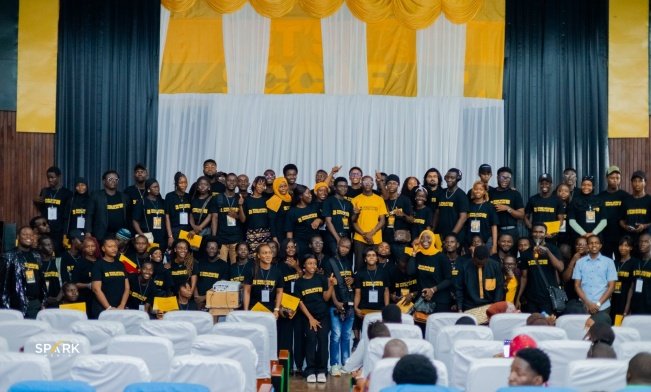
Spark Media has celebrated the graduation of 98 young Sierra Leoneans who successfully completed its intensive Media Masterclass programme during a colourful ceremony held on Saturday, 20 June 2026, at the Miatta Conference Centre in Freetown.

The one-month training programme, which began with an enrolment of 150 participants from across the country, focused on equipping young people with practical skills in videography, photography, graphic design and web design. After weeks of intensive classroom instruction and hands-on practical sessions, 98 participants met the programme requirements and received certificates of completion.

The initiative, offered free of charge, was designed to empower young people with digital storytelling and content creation skills while preparing them for opportunities in Sierra Leone's growing media and creative industries. The training was facilitated by Benjamin Thoronka, who led the photography sessions and Emmanuel AJ Cole, who conducted the videography training.

The graduation ceremony attracted Government officials, representatives of private institutions, development partners, facilitators, family members and supporters who gathered to celebrate the achievements of the graduates.

Delivering the keynote address, the Minister of Planning and Economic Development, H.E. Kenyeh Barlay, congratulated the graduates on successfully completing the programme and encouraged them to use their newly acquired knowledge to contribute positively to national development.

"I would like to thank Spark Media and its partners for empowering these young people," the Minister said, while urging the graduates to remain committed to excellence and professionalism in their respective fields.

Programme Coordinator, Solomon J. Kekura, described the training journey as both demanding and rewarding, noting that the participants demonstrated remarkable commitment throughout the programme.

"The journey has been challenging but rewarding. The graduates showed strong commitment, resilience and growth throughout the programme," he said.

One of the highlights of the ceremony was the presentation of professional equipment to outstanding participants in recognition of their exceptional performance during the training. The Best Videographer and Best Photographer each received a complete camera kit, while the Best Graphic Designer was awarded a brand-new laptop to support their professional development.

According to Spark Media, the awards were intended to help the beneficiaries launch their careers, establish creative businesses and create employment opportunities within their communities.

Speaking during the ceremony, Spark Media Managing Director, Issadin Kamara, expressed appreciation to everyone who contributed to the success of the initiative.

"We are humbled and honoured to certify 98 graduates from the Spark Media Masterclass. At Spark Media, our goal has always been to empower young people to tell compelling stories. We want to thank Joe L. Aruna for his support. We also appreciate Sallu Kamuskay of Salone Messenger for always standing with us," Issadin Kamara said.

Spark Media also acknowledged the contributions of its facilitators, partners and supporters whose collaboration made the programme successful. The organisation disclosed that the masterclass was fully funded by Spark Media with support from Hotacon.

Organisers said the graduation represents the beginning of new professional journeys for the graduates, many of whom are expected to apply their skills in media production, digital communications and entrepreneurship while contributing to the continued growth of Sierra Leone's creative industry.

Congratulating the Class of 2026, Spark Media encouraged the graduates to use their knowledge and talents to tell impactful stories, inspire positive change and seize opportunities within the rapidly evolving digital media landscape.

"This is just the beginning," organizers said, urging the graduates to continue learning, innovate and make meaningful contributions to society through creative storytelling. https://thecalabashnewspaper.com/98-graduate-from-spark-media-masterclass-receive-professional-certification/


RMU Chairman Calls for Urgent Reforms to Strengthen Maritime Education
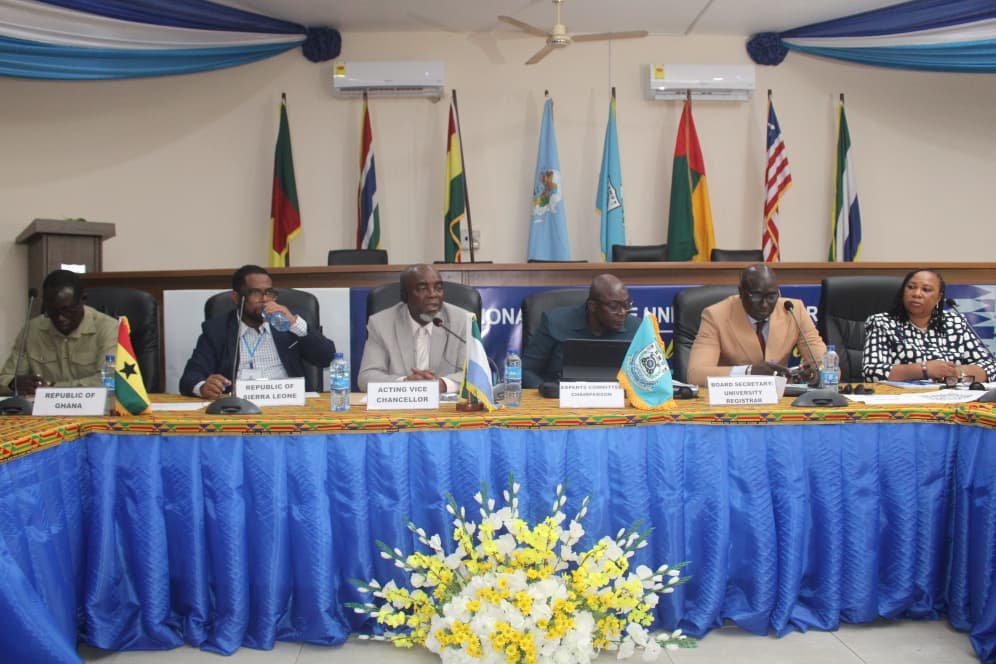
The Chairman of the Committee of Experts of the Regional Maritime University (RMU) and Senior Permanent Secretary in Sierra Leone's Ministry of Transport and Aviation, Rev. Edward Kwame Yankson, has called for urgent reforms and increased investment to position the university to meet the rapidly evolving demands of the global maritime industry.

Speaking at the opening of the 35th Board of Governors Meeting of the Regional Maritime University held on Tuesday, 23 June 2026, in Nungua, Accra, Ghana, Rev. Edward Kwame Yankson stressed the need for the institution to modernize its academic programmes and infrastructure in response to emerging challenges in maritime safety, technological advancement, sustainable shipping and the blue economy.

He commended the university's Management for introducing new academic programmes in the Blue Economy, Maritime Law and postgraduate studies, while also strengthening research and collaboration with industry stakeholders.

Despite those achievements, Rev. Edward Kwame Yankson observed that inadequate funding, limited infrastructure and the need for continuous curriculum modernization remain major obstacles to the university's growth. He called on member states to reinforce regional cooperation and ensure equitable access to maritime education, expressing concern that Sierra Leone currently has only four students enrolled at the institution.

The RMU Committee of Experts Chairman further advocated for increased investment in digital learning, research and innovation, while encouraging stronger partnerships with the maritime industry and the establishment of sustainable financing mechanisms. He also emphasized the importance of scholarships and student exchange programmes to expand educational opportunities for students across member states.

Rev. Edward Kwame Yankson concluded by urging the Board of Governors and member states to collectively support the proposed reforms, expressing confidence that with sustained commitment and innovation, RMU would strengthen its position as one of Africa's leading maritime education and research institutions.

Delivering his address, Acting Vice-Chancellor Dr. Jethro W. Brooks Jr. reported that the university had successfully completed the 2024/2025 academic year within a peaceful academic environment despite operational challenges.

He disclosed that recurring electricity and water supply disruptions compelled the university to undertake extensive campus re-electrification works and invest in alternative water sources, including the drilling of five boreholes.

"These measures were necessary to ensure uninterrupted operations and improve service delivery to students and staff," Dr. Jethro W. Brooks Jr. stated.

He further revealed that the university had invested in additional accommodation and learning facilities to accommodate growing student enrolment, including bunk beds, mattresses, lecture theatre furniture and ICT laboratory equipment.

According to the Acting Vice-Chancellor, the introduction of the "Identify and Fix" maintenance initiative has significantly improved campus conditions and reduced accommodation-related complaints, reflecting Management's commitment to enhancing student welfare and institutional development.

Presenting the Students' Representative Council (SRC) report, outgoing SRC President Seth N-Antibie Adamu highlighted several achievements recorded during his tenure, including improved campus lighting, student loan registration, career mentorship programmes, sports development, internship opportunities and enhanced academic support services.

However, he also drew attention to challenges confronting students, including overcrowded classrooms, inadequate library space, insufficient learning resources and the need for additional scholarships and financial assistance. He appealed to the university's Management and Board of Governors to address those concerns in order to improve student welfare and academic performance.

Representing staff, Felix Koney thanked the Board and university Management for their continued commitment to staff welfare and reaffirmed employees' dedication to supporting the institution's growth and long-term success.

He called for a review of the university's service-benefit structure to eliminate disparities and ensure fairness in the allocation of benefits based on years of service. Felix Koney also appealed for the consolidation of medical allowances for spouses and dependent children to improve healthcare support for staff families.

Additionally, he raised concerns over the persistent water shortages affecting the university and the increasing electricity costs arising from the institution's current tariff classification.

Felix Koney further urged the Board to prioritize investment in larger lecture halls and additional student accommodation to meet rising enrolment, noting that improved infrastructure would enhance the learning environment, expand the university's capacity and generate additional revenue.

He concluded by calling for timely action on the issues raised and expressed optimism that the Board would continue supporting initiatives aimed at improving staff welfare while strengthening the Regional Maritime University's standing as a leading maritime institution in the West African sub-region. https://thecalabashnewspaper.com/rmu-chairman-calls-for-urgent-reforms-to-strengthen-maritime-education/


Parliament Seeks Urgent Solutions to Fast-Track National Stadium Project
By Foday Moriba Conteh

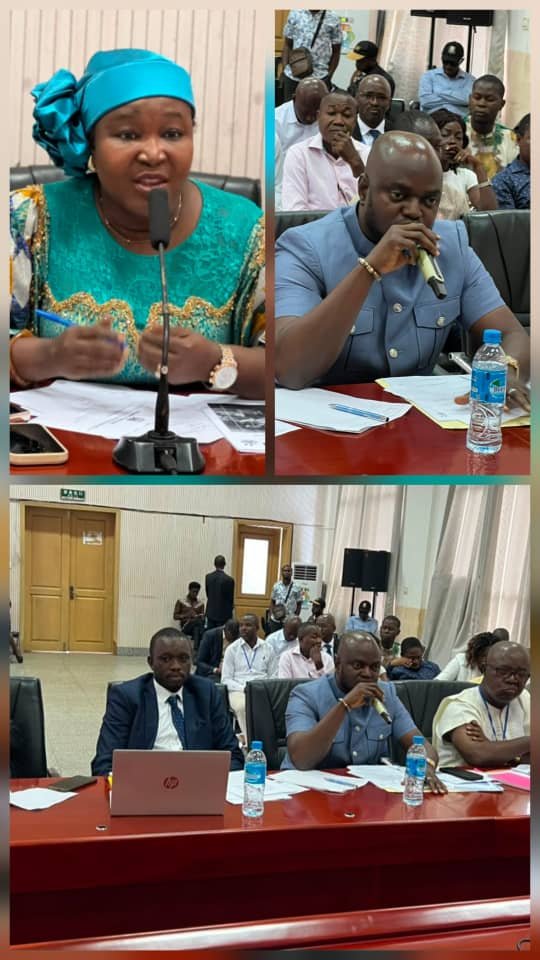
The Parliamentary Committee on Sports has summoned officials of the Ministry of Sports and the National Sports Authority (NSA) to provide a comprehensive update on the ongoing rehabilitation of the National Stadium, expressing concern over delays in the completion of the project.

The meeting, held on Tuesday, 23 June 2026, at the Administrative Building, Tower Hill in Freetown, was convened to assess the progress of the rehabilitation works being undertaken by Chinese contractors and to identify areas where Parliament could support efforts to expedite the project's completion.

Chairperson of the Parliamentary Committee on Sports, Hon. Racheal Pessima, welcomed the delegation and congratulated the Executive Director of the National Sports Authority, Mohamed Alphaka Conteh, Esq., on his recent appointment. She assured officials that the Committee's objective was to obtain a detailed status report on the rehabilitation project and explore possible interventions to address existing challenges.

Hon. Racheal Pessima also commended the Ministry of Sports and the National Sports Authority for what she described as a renewed spirit of cooperation and collaboration.

"The Committee has observed through the media that the Ministry of Sports and the NSA are working closely together. I encourage you to sustain this partnership for the continued development of sports in Sierra Leone," she said.

Director of Sports at the Ministry of Sports, Haroun Mustapha Korgie, thanked the Committee for its continued oversight and support, noting that Parliament has consistently created opportunities for constructive engagement between the Ministry and the National Sports Authority on matters affecting the country's sports sector.

Presenting the technical update, Deputy Executive Director of the National Sports Authority, Dr. Abdulai Rahman Swaray, informed the Committee that although the rehabilitation project commenced in February 2022, it has exceeded its implementation timeline due to gaps in the project agreement.

He explained that the prolonged delay has deprived Sierra Leone of the opportunity to host international football matches, including fixtures in the ongoing FIFA World Cup qualifiers.

"We have been disadvantaged by the delay in the project. We missed out on hosting matches during the ongoing World Cup qualifiers because of the stadium rehabilitation. For the first time in our nation's history, we accumulated up to 15 points in the FIFA World Cup qualifiers," Dr. Abdulai Rahman Swaray stated.

Addressing the Committee, Executive Director of the National Sports Authority, Mohamed Alphaka Conteh, Esq., emphasized that completing the rehabilitation project now depends on strong political commitment backed by practical action.

"What we need at this moment to complete the National Stadium rehabilitation is decisive political action," he said.

Mohamed Alphaka Conteh also used the opportunity to formally introduce himself to Members of Parliament and acknowledged past misunderstandings between the Ministry of Sports and the National Sports Authority. He assured the Committee that his administration is committed to restoring professionalism, discipline and unity within the sports sector.

"Under my leadership, decorum will be maintained within the sector. The mandate I have is to restore professionalism and unity," he assured.

The Executive Director appealed to the Parliamentary Committee on Sports to support efforts aimed at completing the rehabilitation project. He proposed three key measures, including promoting private sector participation through public-private partnerships, facilitating the approval of a supplementary budget by Government and ensuring sustained political commitment to drive the project to completion.

Director of Corporate Operations at the National Sports Authority, Alie Sesay, also presented a detailed briefing on the current state of the rehabilitation works, outlining the progress achieved, outstanding challenges and the remaining tasks required before the National Stadium can be fully completed and reopened for international sporting events. https://thecalabashnewspaper.com/parliament-seeks-urgent-solutions-to-fast-track-national-stadium-project/


Attorney General Reaffirms Commitment to Innovation at ARIPO Online Services Workshop
By Amin Kef-Ranger

The Attorney General and Minister of Justice, Alpha Sesay Esq., has officially opened the African Regional Intellectual Property Organization (ARIPO) Online Services Sensitization Workshop, reaffirming the Government of Sierra Leone's commitment to strengthening digital intellectual property administration and promoting innovation-driven economic growth.

The workshop, held on Tuesday, 23 June 2026, at the New Brookfields Hotel in New England, Freetown, was organized by the Office of the Attorney General and Minister of Justice in collaboration with the Office of the Administrator and Registrar General and ARIPO. It brought together Government officials, legal practitioners, innovators, entrepreneurs, intellectual property professionals and other stakeholders to enhance awareness and understanding of ARIPO's online intellectual property services.

Welcoming participants, the Administrator and Registrar General, Madam Martina Baindu Egbenda, expressed appreciation to the ARIPO delegation and reaffirmed Sierra Leone's commitment as a proud Member State of the regional intellectual property body.

She described intellectual property as a vital instrument for fostering innovation, creativity, entrepreneurship and sustainable economic development, while emphasizing that digital transformation has become increasingly important in modern intellectual property administration.

According to her, the workshop would equip participants with practical knowledge of ARIPO's electronic services platform, thereby improving the efficiency, accessibility and modernization of intellectual property service delivery in Sierra Leone and across the region.

Delivering remarks on behalf of ARIPO Director General, Bemanya Twebaze, the organization's Head of Information and Communication Technology, Grey Njowola, reaffirmed ARIPO's commitment to supporting Member States through digital transformation and stronger intellectual property systems.

He disclosed that ARIPO's electronic services platform has significantly streamlined intellectual property filing and administrative processes, revealing that 80 percent of all new applications received by the organization in 2025 were submitted online. He noted that the figure reflects growing confidence in the platform's efficiency, accessibility and user-friendly design.

Grey Njowola also commended Sierra Leone for its continued commitment to intellectual property reforms and the domestication of outstanding intellectual property protocols. As ARIPO marks its 50th anniversary this year, he reiterated the organization's determination to deepen collaboration with Member States while building stronger institutions and a future-ready intellectual property ecosystem across Africa.

In his keynote address, Attorney General and Minister of Justice, Alpha Sesay Esq., described intellectual property as a critical driver of economic development, innovation, entrepreneurship and investment.

He stressed that Sierra Leone must move beyond being primarily a consumer of innovation to becoming a producer of innovative ideas and technologies capable of competing in the global knowledge economy.

The Attorney General highlighted the country's longstanding partnership with ARIPO and pointed to recent legislative achievements, including the enactment of the Trade Marks Registration Act, 2024, and Cabinet's approval of the ratification of the Protocol on Intellectual Property. He said those milestones demonstrate Government's determination to establish a modern, accessible and internationally aligned intellectual property regime.

He further emphasized that legislative reforms alone are insufficient, noting that they must be supported by improved administrative capacity, digital transformation and greater public awareness to enable innovators, entrepreneurs, creators and businesses to effectively protect, commercialize and benefit from their intellectual assets.

Reaffirming Government's commitment to strengthening cooperation with ARIPO and advancing intellectual property reforms as part of Sierra Leone's broader economic transformation agenda, Alpha Sesay Esq. officially declared the ARIPO Online Services Sensitization Workshop open.

The workshop concluded with participants reaffirming their commitment to closer collaboration in advancing digital intellectual property services. It enhanced the knowledge and capacity of key stakeholders, laying a stronger foundation for more efficient intellectual property administration while promoting innovation as a driver of Sierra Leone's national development. https://thecalabashnewspaper.com/attorney-general-reaffirms-commitment-to-innovation-at-aripo-online-services-workshop/