Monday, 24 August 2026


COMMENTARY - Five Key Lessons from Vice President Dr. Mohamed Juldeh Jalloh’s Nationwide Local Government Tour
 

Vice President Dr. Mohamed Juldeh Jalloh’s recent engagement with local councils has renewed national attention on Sierra Leone’s decentralization programme and the need to strengthen institutions responsible for delivering essential services to citizens across the country.

Twenty-two years after Sierra Leone returned to elected local government, questions remain over whether decentralization has achieved the governance transformation envisioned when the system was revived.

The debate does not necessarily represent an indictment of decentralization. Rather, it reflects the reality that building effective local institutions is a long-term undertaking, particularly in a post-war country where restoring public confidence in state institutions remains crucial.

Decentralization was introduced to bring governance closer to citizens, increase public participation, strengthen accountability and enable local institutions to respond more effectively to community needs.

Scholars Pranab Bardhan and Dilip Mookherjee, in their work Decentralization and Local Governance in Developing Countries, argue that decentralization can expand political participation, improve accountability and strengthen the legitimacy of the state.

However, the effectiveness of the system largely depends on whether local institutions are given sufficient authority, resources and administrative capacity to perform their responsibilities.

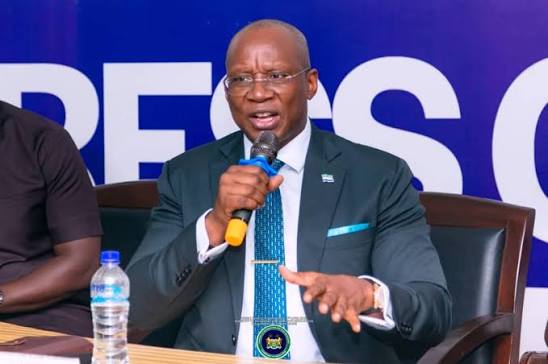
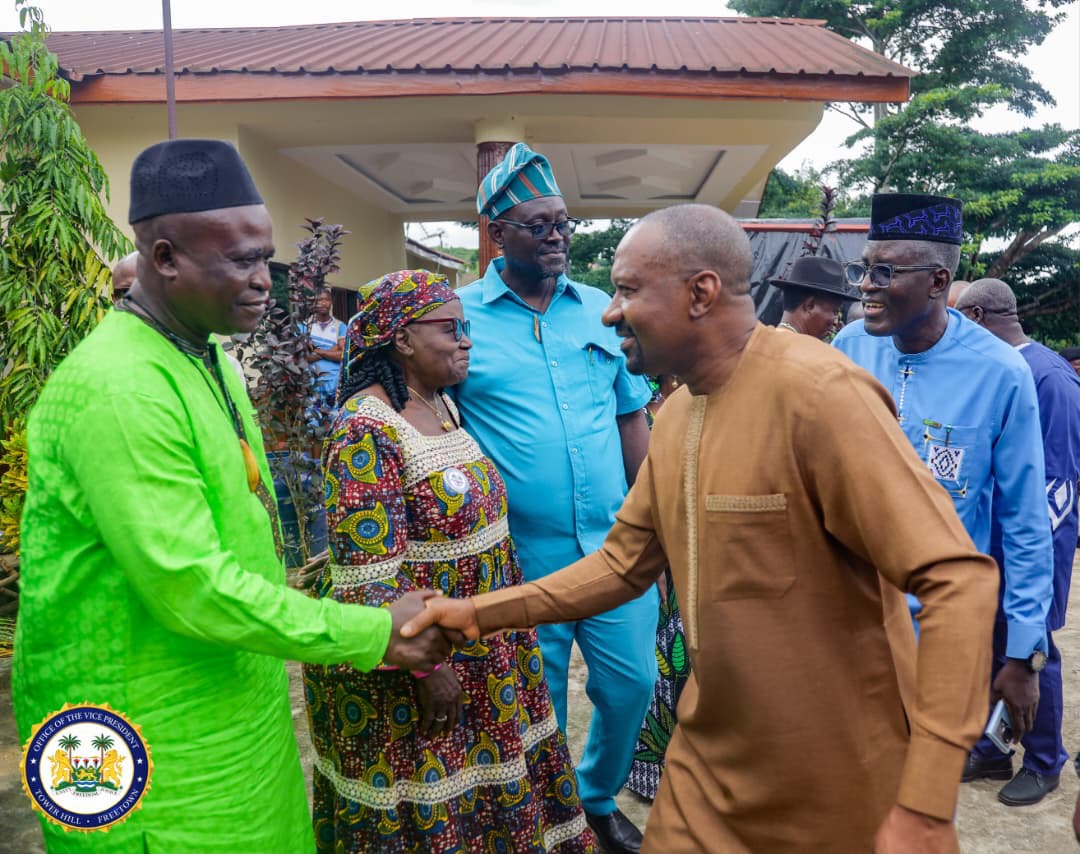
Vice President Dr. Mohamed Juldeh Jalloh’s engagements with Mayors, District Council Chairpersons, Paramount Chiefs, Administrators and other local authorities provided an opportunity to assess the progress of decentralization, identify implementation challenges and explore possible solutions.

Five major lessons emerged from the engagements:

One of the clearest lessons from the tour was the importance of listening as a tool of governance.

Vice President, Dr. Mohamed Juldeh Jalloh’s consultations allowed local authorities to explain the realities they face while implementing national policies and providing services to their communities.

Policies developed in Freetown may appear effective on paper but encounter significant challenges when implemented in districts such as Falaba, Pujehun and other parts of the country.

Local authorities are often better positioned to identify communities experiencing rapid population growth, inadequate infrastructure and difficulties accessing essential services. They also understand where gaps exist between national policy and implementation.

The Vice President’s approach demonstrated that policymaking should be informed by evidence gathered from the communities where Government programmes are implemented.

When local authorities speak and the central Government listens, national policies can be adjusted to reflect practical realities. Effective consultation, therefore, is not merely a political gesture but an essential component of responsible public administration.

The engagements also highlighted the need for reciprocal respect and cooperation between central and local Government institutions.

Local councils are responsible for services that directly affect citizens, but they operate within a national system where the central Government continues to control policy, funding and several functions that are yet to be fully devolved.

Decentralization should therefore be viewed as a shared distribution of authority rather than simply the transfer of power from Freetown to the districts.

Some responsibilities have been devolved to councils, while others remain with Ministries, Departments and Agencies. In certain instances, responsibilities have reportedly been transferred without adequate financial and logistical resources.

Holding local institutions accountable for services they lack the authority or resources to deliver remains a major governance challenge.

By engaging directly with local leaders, Vice President Dr. Mohamed Juldeh Jalloh recognized councils as democratic institutions with their own responsibilities to citizens.

The central Government must provide the support required for councils to perform effectively. Local authorities, in turn, must demonstrate transparency, accountability and responsible management of the powers and resources entrusted to them.

Another major issue emerging from the engagements was the financial sustainability of local councils.

Population growth and urban expansion are increasing demand for waste management, drainage systems, roads, markets, healthcare facilities, sanitation and public spaces.

Communities that previously had relatively modest needs are developing into major population and commercial centres. However, the revenue available to councils has not always increased at the same pace.

Central Government transfers will continue to play an important role but sustainable local governance will also require stronger revenue mobilization, sound financial management, improved planning and expanded economic activity within localities.

The long-term success of decentralization will not depend only on the number of functions transferred to councils. It will also depend on whether local institutions have the financial and administrative capacity to manage those responsibilities.

Building the capacity of councils to raise and properly manage revenue could therefore become one of the most important tests facing Sierra Leone’s decentralization programme.

The Vice President’s tour also reinforced the view that the central Government does not have all the answers to the challenges facing communities.

One of the core principles of decentralization is that people closest to a problem are often best placed to understand it and develop appropriate solutions.

Some councils may have effective approaches to waste management, while others may have developed stronger systems for mobilizing revenue or involving residents in local decision-making.

Such initiatives should not be treated as isolated experiments. Successful practices developed by one council could be studied, adapted and introduced in other localities.

The role of central Government should therefore include identifying effective local solutions and creating the conditions necessary for them to be expanded.

Local councils can serve as centres of governance innovation, testing practical responses to community challenges and sharing successful approaches with the wider national system.

Vice President Dr. Mohamed Juldeh Jalloh’s consultations created an important platform for local experiences and ideas to influence the national conversation on governance reform.

Despite the difficulties facing local councils, there is still reason to believe in the potential of decentralization.

Sierra Leone rebuilt its local Government system following the civil war and councils have since become an important part of the country’s democratic and administrative structure.

They provide a channel through which citizens interact with the state and remain central to the delivery of essential services at the community level.

Challenges persist in relation to capacity, financing, accountability and the completion of the devolution process. However, institutional development is rarely straightforward and the system still has considerable room to grow.

Vice President Dr. Mohamed Juldeh Jalloh’s tour did not resolve every problem affecting local Government. Its significance rested in the Government’s willingness to listen, acknowledge existing challenges and explore solutions with those responsible for managing councils.

Democracy is often a slow process because it requires consultation, negotiation, compromise and the balancing of competing interests. Decentralization operates in much the same way.

The process can be difficult and sometimes produce disagreements over institutional responsibilities, resources and expectations. However, those challenges also reflect the involvement of more citizens and institutions in governance.

The tour demonstrated that decentralization remains unfinished business in Sierra Leone. Moving forward will require more meaningful devolution, sustainable financing, stronger accountability and adequate space for councils to innovate.

Government does not operate only in Freetown. Citizens experience the state in council offices, markets, healthcare facilities, schools and communities throughout the country.

By travelling to those communities and listening directly to local leaders, Vice President, Dr. Mohamed Juldeh Jalloh, reaffirmed that decentralization is more than an administrative arrangement. It is a democratic commitment to bringing responsive and effective governance closer to every citizen. https://thecalabashnewspaper.com/archives/63735



Rokel Commercial Bank MD Walton Gilpin Named African Banker of the Year 2026
 

Managing Director and Chief Executive Officer of Rokel Commercial Bank (RCB), Dr. Walton Ekundayo Gilpin, has been named African Banker of the Year 2026 by The Voice Achievers Awards, marking another major international recognition for Sierra Leone’s banking sector.

Dr. Walton Ekundayo Gilpin received the prestigious honour on Friday, 21 August 2026, at an awards ceremony held at the London Hilton Kensington in the United Kingdom.

The Voice Achievers Awards recognizes outstanding African leaders, professionals and institutions whose work has contributed significantly to development, leadership and positive transformation across Africa and beyond.

Dr. Dr. Walton Ekundayo Gilpin’s recognition places him among a distinguished group of African personalities who have previously been honoured by the awards for their contributions in leadership, governance and professional service.

Among past recipients is the late former President of Zambia, Kenneth Kaunda, who received recognition in 2012. Former Chief Prosecutor of the International Criminal Court and current Gambian Ambassador to the United Kingdom, Fatou Bensouda, has also been recognized by the awards.

Former President of Sierra Leone, Ernest Bai Koroma, was similarly honoured in 2013, further highlighting the calibre of African personalities associated with The Voice Achievers Awards over the years.

Dr. Walton Ekundayo Gilpin, who holds several professional qualifications and distinctions, including FPMA, HCIB, MIA, PEPM and COOR, has led Rokel Commercial Bank through a period characterized by institutional transformation, expansion and increased emphasis on digital banking and financial inclusion.

His emergence as African Banker of the Year 2026 represents significant international recognition of his leadership in the financial services sector and places Sierra Leone among countries whose banking professionals are gaining greater recognition on the continental and international stage.

Under Dr. Walton Ekundayo Gilpin’s leadership, Rokel Commercial Bank has continued to strengthen its operations while pursuing initiatives aimed at modernizing banking services and expanding access to financial products for individuals, businesses and institutions.

The award also adds to Dr. Walton Ekundayo Gilpin’s growing profile within Africa’s banking and corporate leadership landscape, recognizing his contribution to the development of the financial sector and his stewardship of one of Sierra Leone’s leading commercial banks.

The London ceremony brought together African leaders, professionals and other distinguished personalities to celebrate achievements and contributions that have made a positive impact on the continent.

For Rokel Commercial Bank, the recognition of its Managing Director and Chief Executive Officer represents another milestone for the institution and underscores the growing visibility of Sierra Leonean professionals on major international platforms.

Dr. Walton Ekundayo Gilpin’s inclusion among The Voice Achievers Awards recipients also places him alongside prominent African figures whose leadership and professional accomplishments have earned recognition beyond their respective countries. https://thecalabashnewspaper.com/archives/63730

Friday, 21 August 2026


As MPs’ Calls Mount to Prioritise Kent Seaport Project… Karefa A.F. Kargbo Secures Parliamentary Approval, Outlines Revenue Reform Agenda
 

Sierra Leone’s drive to strengthen domestic revenue mobilization and improve fiscal management received renewed attention on Thursday, August 20, 2026, when Parliament approved Karefa Ansumana Francis Kargbo as the country’s new Minister of Finance. His approval was accompanied by bipartisan appeals for the Government to support the proposed Kent seaport as part of efforts to ease pressure on the existing port facility and stimulate national economic growth.

Karefa Ansumana Francis Kargbo replaces Sheku Ahmed Fantamadi Bangura and assumes responsibility for the Ministry of Finance at a critical period when the Government is seeking to increase domestic revenue, reduce financial leakages, control expenditure and protect public resources.

The approval followed the presentation of President Julius Maada Bio’s nominees by the Majority Leader and Leader of Government Business, Hon. Mathew Sahr Nyuma, who also serves as Chairman of the Committee on Appointments and the Public Service.

Hon. Mathew Sahr Nyuma informed the House that the Committee had thoroughly vetted the nominees and was satisfied with their qualifications, professional experience and suitability for their respective appointments. He subsequently moved a motion requesting Parliament to approve the Committee’s recommendations.

The sitting was presided over by Acting Speaker Hon. Ibrahim Tawa Conteh and attended by senior Government officials, high-ranking officers of the Republic of Sierra Leone Armed Forces, relatives, friends, supporters and other dignitaries.

A loud and prolonged round of applause filled the Chamber when Hon. Mathew Sahr Nyuma announced the name of Karefa Ansumana Francis Kargbo before outlining his professional profile. Members of Parliament who contributed to the debate described his appointment as timely and expressed confidence in his ability to manage the country’s financial affairs.

Karefa Ansumana Francis Kargbo is a Certified Public Accountant, financial expert and retired Lieutenant Colonel of the Republic of Sierra Leone Armed Forces. His professional career spans finance, auditing, management, corporate governance, public administration and international diplomacy.

He previously served as Minister of Foreign Affairs and International Cooperation. Before his appointment as Finance Minister, he was Executive Director and Chief Executive Officer of the Sierra Leone Mines and Minerals Development and Management Corporation.

He also served as Financial Controller in the Accounting Department of the Petroleum Directorate from August 2011 to January 2016.

Academically, Karefa Ansumana Francis Kargbo holds a Master of Business Administration in International Finance and Management, with Management and Entrepreneurship, from American University in Washington, D.C. He has also undertaken further studies at the Wharton School of Business.

During his vetting by the Committee on Appointments and the Public Service, Karefa Ansumana Francis Kargbo reportedly demonstrated an understanding of the importance of his new responsibility and the expectations attached to the timing of his appointment.

“I am aware of the timing of my appointment and the legacy President Julius Maada Bio wants to leave,” he was quoted as telling the Committee.

The new Finance Minister acknowledged the contribution of his predecessor, Sheku Ahmed Fantamadi Bangura, whom he credited with leaving the Ministry on a solid foundation. He pledged to build on the progress already made instead of starting afresh.

Strengthening domestic revenue mobilization will be among his main priorities. Karefa Ansumana Francis Kargbo said he would work closely with the National Revenue Authority to accelerate revenue collection and introduce stronger measures to reduce financial leakages through digitalization.

He also intends to fast-track the rollout of 10,000 electronic machines to improve the collection of Goods and Services Tax. He emphasized that revenue targets must be based on reliable data to enable the Ministry to determine how those targets were established and whether they were being achieved.

Karefa Ansumana Francis Kargbo further proposed entering into a performance contract with the National Revenue Authority. The agreement would be supported by measurable performance indicators through which the Ministry could objectively assess the Authority’s revenue-collection results.

Contributing to the parliamentary debate, Leader of the Opposition Hon. Abdul Kargbo expressed confidence in the new Minister’s ability to succeed and assured him of Parliament’s cooperation.

He acknowledged the difficulties involved in generating sufficient revenue to finance the operations of the State, but said his interaction with Karefa Ansumana Francis Kargbo had strengthened his confidence in the Minister’s competence.

Hon. Abdul Kargbo also called on the new Finance Minister and the Government to support the seaport being constructed at Kent by the Gento Group of Companies. He said the country’s existing quay was congested and overcrowded, making additional port infrastructure increasingly necessary.

“It is important that we boost the Kent project because the need is there,” he stated.

Deputy Leader of the Opposition, Hon. Daniel Koroma, made a similar appeal, urging the Finance Minister to give serious consideration to the project because of the operational challenges affecting the country’s existing ports.

Another lawmaker recounted an experience at the Cline Town Port, where severe congestion reportedly forced him to leave his vehicle at the facility until the following day. He said the incident demonstrated the need to expand Sierra Leone’s port capacity and improve the movement of goods.

In his concluding remarks, Hon. Mathew Sahr Nyuma said the success of the Minister’s revenue mobilization agenda would depend considerably on effective collaboration with the Commissioner-General of the National Revenue Authority, Abu Martin Kanneh. He also encouraged the Minister to exercise discipline and prudence in public expenditure.

Parliament subsequently approved the Committee’s recommendations, formally clearing Karefa Ansumana Francis Kargbo to assume leadership of the Ministry of Finance.

Outside Parliament, more than 1,000 supporters, many dressed in traditional Limba attire, reportedly gathered around Model Junction, Tower Hill and adjoining streets to celebrate his approval. The crowd displayed appreciation banners, performed traditional dances and expressed support for President Julius Maada Bio and his Government.

Alhaji Mohamed Gento Kamara, Chief Executive Officer of the Gento Group, was among those who joined the celebrations.

The parliamentary approval now places Karefa Ansumana Francis Kargbo at the centre of the Government’s efforts to strengthen fiscal discipline, increase domestic revenue, support productive investment and improve the overall management of Sierra Leone’s economy.

  https://thecalabashnewspaper.com/archives/63713


Caritas Freetown Trains Disaster Committees to Strengthen Emergency Preparedness in Vulnerable Communities
 

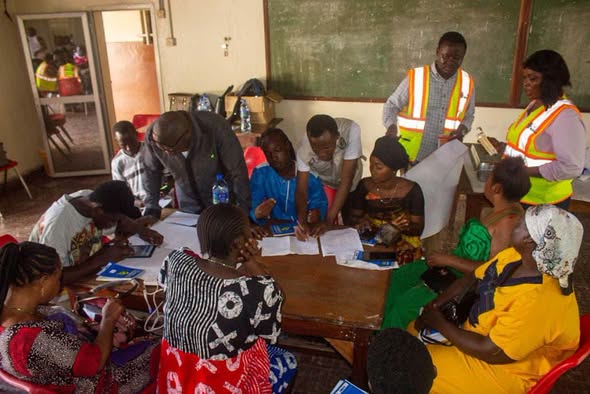
Caritas Freetown, with financial support from Trócaire, has conducted a two-day training and simulation exercise aimed at strengthening disaster preparedness, risk mapping and emergency-response capacity in vulnerable communities across Western Area Urban.

The exercise, held on August 17 and 18, 2026, formed part of a project titled: “Strengthening Community Disaster Preparedness, Flood Mitigation, Climate Resilience and Emergency Response Systems in Vulnerable Communities of Western Area Urban, Sierra Leone.”

A total of 45 people participated in the programme, including 30 members of Community Disaster Management Committees from Bottom Oku, Moa Wharf and Moyiba, as well as 15 Caritas Freetown project staff and volunteers.

The initiative was designed to improve participants’ understanding of disaster risks, hazards and vulnerabilities while strengthening community preparedness, early-warning mechanisms and basic emergency-response skills. It also promoted coordinated and inclusive action before, during and after disasters.

The first day of the training, held at St.Edwards Compound in Kingtom on August 17, focused on disaster preparedness, community risk mapping and first aid. Facilitators adopted a participatory approach that allowed participants to share their experiences and apply their knowledge of conditions within their respective communities.

Chairman of the Community Disaster Management Committee National Secretariat, Daniel Bob Jones, facilitated the opening session, which examined communities’ social memory of disasters, available emergency responders and preferred communication channels.

Participants reflected on major disasters and hazards that affected their communities between 2016 and 2026. Flooding, mudslides and fire outbreaks were identified among the most common emergencies experienced during the period.

The discussion demonstrated that residents possess valuable knowledge about the threats facing their communities. Facilitators stressed that such knowledge should serve as a foundation for effective disaster-preparedness planning, early-warning systems and community-led mitigation measures.

A second session, facilitated by Madam Philomena of the National Disaster Management Agency, introduced participants to important concepts associated with disaster-risk reduction. Those included hazards, risks, vulnerability, capacity, mitigation, preparedness and resilience.

Participants examined how hazards interact with existing community vulnerabilities and available capacities to determine the severity and potential consequences of a disaster.

They were also guided through the process of identifying hazard-prone areas, vulnerable people, available community resources, early-warning signs, safe locations and important public facilities. Particular attention was given to locations requiring urgent mitigation or preparedness interventions.

Paul Kargbo of the Sierra Leone Red Cross Society facilitated the final session of the first day, which focused on the principles and practice of first aid in disaster management.

Participants learned how to provide immediate assistance to injured or critically affected people while awaiting professional medical support. The session covered emergencies including fires, drowning, road accidents and other incidents that frequently occur within communities.

Practical demonstrations and interactive discussions provided participants with an opportunity to ask questions, share personal experiences and improve their understanding of first aid as an important component of community-level emergency response.

The second day of the training, held at Kolleh Town on August 18, built on the knowledge acquired during the opening sessions. It placed greater emphasis on practical disaster response, emergency safety, first aid, rescue preparedness and community risk identification.

Addressing participants, Daniel Bob Jones emphasized that disaster preparedness must begin before an emergency occurs. He encouraged Community Disaster Management Committee members to continuously identify threats, educate residents and support measures aimed at reducing vulnerabilities.

He urged communities to keep roads and pathways accessible, identify alternative routes for emergency responders and work collectively to address conditions that increase the risk of flooding and other disasters.

Participants also discussed rescue preparedness and the importance of providing trained community volunteers with basic equipment such as ropes, gloves, headlamps, cutters and hammers.

Facilitators, however, warned that volunteers must prioritize their own safety and understand how to use rescue equipment properly. Community responders were also encouraged to recognize situations that require the intervention of professionally trained emergency personnel.

First aid remained a major component of the second day’s activities. A representative of the Sierra Leone Red Cross Society conducted another practical session that enabled participants to explore how immediate assistance could be provided safely during emergencies before professional medical services arrive.

The risk-mapping exercise continued, with participants identifying flooding, fire outbreaks, blocked drainage systems, unsafe buildings and poor roads as some of the major hazards affecting their communities.

They also mapped essential community resources and facilities, including hospitals, health centres, schools, markets, roads, open spaces, water sources and communication facilities. Those resources are expected to support preparedness planning, evacuation and emergency coordination.

Simulation exercises allowed Community Disaster Management Committee members to apply the knowledge and skills acquired during the training. Participants are expected to continue using those skills during planned community risk-mapping exercises in Bottom Oku, Moa Wharf and Moyiba.

The upcoming activities will involve residents in identifying hazards, vulnerable areas, available resources and essential facilities within their respective communities.

The programme concluded with a call for participants to transform the knowledge acquired into practical and sustainable community action.

Caritas Freetown stressed that disaster preparedness is a shared responsibility requiring the participation of Government institutions, humanitarian organisations, local authorities, community leaders, disaster management committees, volunteers and residents.

Caritas Freetown and Trócaire believe that strengthening Community Disaster Management Committees and equipping local volunteers with practical skills will improve their ability to prevent and mitigate disaster risks. The intervention is also expected to enhance their capacity to serve as effective first responders when emergencies occur. https://thecalabashnewspaper.com/archives/63710


Health Ministry Begins First-Ever Local Production of Infection Prevention Supplies
 

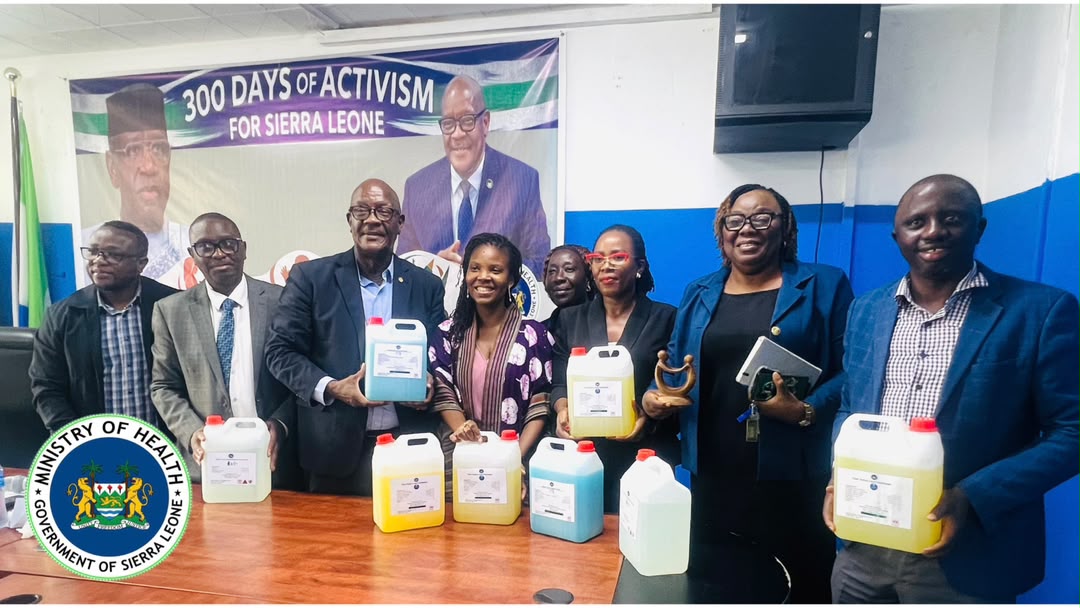
The Ministry of Health has recorded a significant breakthrough in Sierra Leone’s healthcare system by commencing the first-ever local production of essential infection prevention and control supplies for Government hospitals and health facilities nationwide.

The initiative was announced on Tuesday, August 18, 2026, at Youyi Building in Freetown as part of the Ministry’s 300 Days of Activism for Triple Zero campaign.

Implemented under the leadership of the Minister of Health and spearheaded by the Ministry’s National Infection Prevention and Control Programme, the initiative seeks to strengthen hygiene standards and reduce infections that contribute to maternal and child deaths.

The Triple Zero campaign focuses on achieving zero maternal deaths, zero child deaths and zero zero-dose children; children who have not received any routine vaccinations.

Through the new local production initiative, the Ministry is manufacturing liquid soap, hand sanitizer and liquid detergent for distribution to public healthcare facilities across the country.

The liquid soap will promote regular handwashing among healthcare workers, patients and visitors, while the hand sanitizer will support hand hygiene where soap and water may not be immediately available. The liquid detergent will be used to clean healthcare environments, surfaces and medical equipment.

Programme Manager of the National Infection Prevention and Control Programme, Nanah Fofanah, said infections remain a major contributor to maternal and child deaths, especially when they develop into sepsis.

She explained that strengthening infection prevention and control practices in hospitals and other health facilities is essential to reducing avoidable infections, protecting healthcare workers and improving patient safety.

Sepsis is a life-threatening condition that occurs when the body responds severely to an infection. Pregnant women, newborn babies, young children and people with weakened immune systems are particularly vulnerable to the condition.

The Ministry believes that ensuring a reliable supply of locally produced hygiene materials will help healthcare facilities maintain cleaner environments and promote consistent infection prevention practices.

Local production is also expected to reduce dependence on imported supplies, minimize shortages and improve timely access to essential hygiene materials throughout the public healthcare system.

The initiative represents another important step in the Government’s efforts to improve healthcare delivery and prevent avoidable maternal and child deaths in Sierra Leone.

The Ministry of Health has reaffirmed its commitment to expanding infection prevention measures and ensuring that hospitals and health facilities nationwide receive the supplies needed to maintain safe and hygienic environments. https://thecalabashnewspaper.com/archives/63707


JM Mining’s Licence Offer Lapsed Over Unpaid US$1.1 Million Fees, Government Says
 

The Ministry of Mines and Mineral Resources and the National Minerals Agency (NMA) have clarified that JM Mining Kenema (SL) Limited never obtained a Large-Scale Mining Licence in Sierra Leone, rejecting claims that such a licence was revoked or withdrawn by the Government.

According to a joint statement issued by the two institutions on August 5, 2026, JM Mining received only a conditional offer of mineral rights, which required the company to formally accept the offer and pay the prescribed statutory fees before a licence could be issued.

The Government said the conditional offer eventually lapsed after the company failed to meet the legal and financial requirements within the prescribed period, despite being granted several opportunities to comply.

The statement explained that JM Mining received the conditional offer on January 23, 2025, following a recommendation by the Minerals Advisory Board and approval by the Minister of Mines and Mineral Resources.

Under Section 108(5) of the Mines and Minerals Development Act, an applicant must accept a conditional offer in writing and settle all prescribed statutory fees before a mining licence can be granted.

“A conditional offer is not a licence,” the Government stressed, maintaining that no licence could have been revoked because none had been issued to the company.

The Ministry and NMA said the Government provided substantial institutional support to JM Mining throughout the application process. That assistance reportedly included intervention by the Minister of Mines and Mineral Resources to help resolve an earlier dispute between the company and the Environment Protection Agency.

The NMA also provided guidance to assist the company in meeting the requirements for an environmental licence and the proposed mineral right.

According to the statement, the NMA delayed issuing the statutory payment demand for approximately six months at the company’s request, allowing it additional time to secure financing.

Official Orders to Pay were eventually issued on July 24, 2025, requiring JM Mining to pay US$1 million in licence fees and US$100,000 in monitoring fees within 30 days.

The initial payment deadline expired on August 23, 2025, without the required fees being paid.

Following a formal payment demand from the National Revenue Authority on October 28, 2025, the company reportedly requested an extension until December 31, 2025. The Government said that deadline also passed without payment.

JM Mining subsequently requested a new Order to Pay on January 29, 2026, acknowledging that the earlier payment obligations had not been fulfilled.

On January 30, 2026, the Minister of Mines and Mineral Resources formally confirmed that the conditional offer had lapsed and rescinded it. The Government noted that this decision came 372 days after the offer was approved and 190 days after the payment orders were issued—well beyond the statutory payment period.

The Ministry and NMA further disclosed that JM Mining admitted its payment default in three separate written communications.

The company reportedly acknowledged the outstanding licence and monitoring fees in a letter to the Commissioner-General of the National Revenue Authority on October 31, 2025. Similar admissions were made to the Director of Mines on January 15 and January 29, 2026.

The Government rejected suggestions that its handling of the matter was arbitrary or hostile to foreign investment. It said the process was reviewed by the Minerals Advisory Board and conducted in accordance with the Mines and Minerals Development Act, with all relevant decisions supported by official records.

According to the statement, waiving US$1.1 million in statutory fees for a single applicant would undermine regulatory integrity, weaken equal treatment and disadvantage mining operators that have complied with the country’s licensing requirements.

The Government reaffirmed its commitment to welcoming responsible local and foreign investment in Sierra Leone’s mineral sector while insisting that every investor must fulfil the same legal and financial obligations.

“Sierra Leone’s mineral resources belong to the people of Sierra Leone and will be entrusted only to those who meet their obligations under the law,” the joint statement concluded. https://thecalabashnewspaper.com/archives/63704


Melron Nicol-Wilson Esq. Urges Supreme Court to Nullify Constitutional Amendment Bill
 

Legal practitioner Melron C. Nicol-Wilson Esq. has challenged the procedure used by Parliament to pass the Constitution of Sierra Leone (Amendment) Bill, 2025, arguing that the required two-thirds majority was not obtained during the parliamentary vote.

In a letter dated August 18, 2026, and addressed to the Right Honourable Speaker of Parliament, Segepoh Solomon Thomas, Melron C. Nicol-Wilson maintained that Parliament’s reported reliance on Section 91(1) of the 1991 Constitution was inappropriate for determining the voting threshold required to alter the country’s supreme law.

The letter, written under the name of Nicol-Wilson & Co., also known as Malaika Chambers, expressed what the law firm described as grave public-interest concerns over the proceedings conducted in Parliament on August 10, 2026.

The Bill seeks, among other changes, to amend Section 42(2)(e) of the Constitution by reducing the presidential electoral threshold from 55 per cent of valid votes cast to 50 per cent plus one.

Melron C. Nicol-Wilson said his concerns were consistent with arguments advanced by other legal practitioners and jurists who have publicly questioned the procedure Parliament followed.

He also noted that members of the main opposition All People’s Congress withdrew from the parliamentary proceedings before the vote, except for two lawmakers who remained in the Chamber.

According to Melron C. Nicol-Wilson, the 1991 Constitution is Sierra Leone’s supreme law and remains binding on every state institution, including Parliament and the Office of the Speaker.

He argued that Parliament cannot use what he described as unlawful, abusive or extra-constitutional methods to alter the Constitution, warning that doing so would amount to an unconstitutional constitutional amendment.

The legal practitioner stressed that constitutional safeguards governing amendments are not matters of parliamentary convenience or internal procedure. Rather, he said, they are mandatory legal conditions that determine whether Parliament has validly exercised its authority to amend the Constitution.

Melron C. Nicol-Wilson claimed that the Speaker wrongly directed Members of Parliament to apply Section 91(1) when voting on the Bill.

Section 91(1) provides that, except where the Constitution states otherwise, any question placed before Parliament should be determined by a majority of members present and voting.

Melron C. Nicol-Wilson, however, contended that the provision applies to ordinary parliamentary decisions and not to constitutional amendments for which the Constitution establishes a separate and higher voting threshold.

He identified Section 108(2)(b) as the applicable provision for amending the non-entrenched clauses of the Constitution.

Section 108(2)(b) states that a Bill seeking to alter the Constitution cannot be passed unless it is supported during its second and third readings by the votes of not less than two-thirds of Members of Parliament.

Melron C. Nicol-Wilson therefore argued that the constitutional threshold was not satisfied during the August 10 sitting and that the Bill could not have been validly passed under Section 91(1).

He explained that Section 91(1) refers specifically to members “present and voting,” while Section 108(2)(b) requires the support of “not less than two-thirds of the Members of Parliament.”

According to him, the framers’ decision to use different language in the two provisions means they were intended to establish different voting requirements.

He said there was no legal basis for inserting the words “present and voting” into Section 108(2)(b), as those words do not appear in the provision.

To support his argument, Melron C. Nicol-Wilson cited several judicial authorities, including R v Judge of the City of London Court, Alhaji Sam Sumana v Attorney-General and Minister of Justice and Victor Foh, and the South African Constitutional Court decision in S v Zuma.

He argued that the decisions reinforce the legal principle that clear constitutional language must be respected and given its ordinary meaning.

Melron C. Nicol-Wilson also invoked the Latin maxim generalia specialibus non derogant, which means that a specific legal provision takes precedence over a general one.

He described Section 91(1) as the general rule governing ordinary parliamentary voting and Section 108(2)(b) as the special rule governing constitutional amendments.

According to him, the special provision must prevail, particularly because Section 91(1) begins with the words, “Except as otherwise provided in this Constitution.”

He further argued that interpreting Section 108(2)(b) as requiring only two-thirds of members present would undermine the purpose of the constitutional safeguard.

Such an interpretation, he said, would cause the threshold for amending the Constitution to fluctuate depending on the number of lawmakers attending Parliament on a particular day.

Melron C. Nicol-Wilson maintained that both the literal and purposive approaches to constitutional interpretation produce the same conclusion: the special two-thirds threshold under Section 108(2)(b) cannot be displaced by the general majority rule under Section 91(1).

The legal practitioner also questioned the Speaker’s reported reliance on Section 94(2) of the Constitution.

Section 94(2) states that decisions, orders or directions of Parliament, its committees or the Speaker concerning Parliament’s rules of procedure or the application and interpretation of those rules cannot be investigated by any court.

Melron C. Nicol-Wilson argued that the provision does not grant constitutional immunity or infallibility to Parliament and the Speaker.

He said Section 94(2) protects decisions relating to Parliament’s internal rules but does not prevent the courts from examining whether Parliament complied with the Constitution when exercising its powers.

According to him, there is a fundamental difference between interpreting Parliament’s internal procedures and determining the proper meaning of a constitutional provision.

He maintained that a constitutional question does not become an internal parliamentary matter merely because it arose during proceedings in the House.

Melron C. Nicol-Wilson cited APC and Others v Speaker and Others to support his position that parliamentary autonomy does not amount to parliamentary sovereignty.

He said Parliament and the Speaker remain subject to the Constitution because their respective powers and authority are derived from it.

“A decision of the Speaker cannot rewrite the Constitution from the Chair,” Melron C. Nicol-Wilson stated, adding that Section 94(2) cannot place such a decision above the Constitution.

Melron C. Nicol-Wilson also addressed the Speaker’s stated intention to refer the controversy to the Supreme Court for interpretation.

He argued that if sufficient uncertainty existed over the correct interpretation of Sections 91(1) and 108(2)(b), the appropriate step would have been to obtain judicial clarification before Parliament proceeded with the vote.

According to him, a referral made after the vote cannot retrospectively correct an alleged failure to meet the constitutionally prescribed threshold.

He said the referral cannot provide votes that were not cast, alter the number of lawmakers against whom the voting threshold should have been calculated or cure an alleged failure to obtain the required majority.

“The constitutional requirement was either satisfied when the vote was taken or it was not,” Melron C. Nicol-Wilson stated.

He maintained that the issue should not be regarded as a minor procedural irregularity because it affects Parliament’s constitutional authority to pass the Bill.

Melron C. Nicol-Wilson consequently described the decision to permit the Bill to proceed under the lesser threshold as unconstitutional. He further argued that the purported passage of the Bill was null, void and without legal effect.

The legal practitioner expressed confidence that whether the Supreme Court considers a referral for interpretation or an application seeking a declaration of invalidity, it should determine that Section 108(2)(b) cannot be displaced by Section 91(1).

He therefore urged the Supreme Court to declare the purported constitutional amendment invalid when the matter comes before it.

Melron C. Nicol-Wilson concluded the letter with the Latin expression Fiat justitia ruat caelum—“Let justice be done though the heavens fall.” https://thecalabashnewspaper.com/archives/63701