Sierra Leone’s Minister of Finance, Karefa A.F. Kargbo, has outlined a series of fiscal reforms and financing priorities as the Government begins preparations for the Fiscal Year 2027 National Budget, with stronger domestic revenue mobilisation, fiscal sustainability and efficient management of public resources placed at the centre of the process.
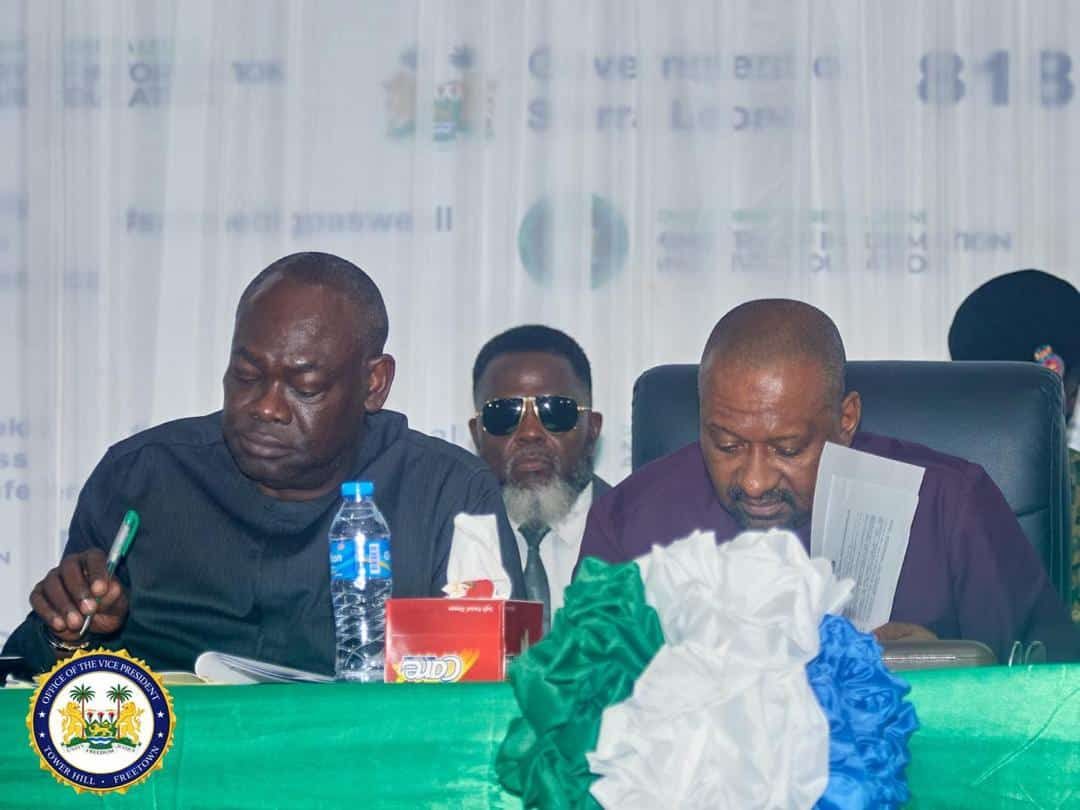
Minister Kargbo made the disclosure on Wednesday, 16 September 2026, during the National Policy Hearings held at the Miatta Civic Centre, Youyi Building, Freetown, marking the formal commencement of the FY2027 Budget Preparation Process under the theme, “Building Resilience to Create Jobs.”
The National Policy Hearings brought together Ministries, Departments and Agencies, Local Councils, development partners and private-sector representatives to review national policies and priorities and ensure that proposed expenditure is aligned with the Medium Term National Development Plan.
Presenting the priorities for the 2027 budget, Karefa Kargbo said the 2027–2029 Medium Term Expenditure Framework would focus on accelerating economic growth, strengthening fiscal sustainability, creating employment, increasing private-sector participation, investing in infrastructure and technology, and improving public service delivery.
He said the Ministry of Finance had issued budget preparation guidelines to government institutions to ensure that their proposals, strategic plans and expenditure estimates were consistent with the Medium Term Expenditure Framework and the Government’s development priorities.
A major concern highlighted by the Finance Minister was the need to increase domestic revenue mobilisation, particularly against the backdrop of declining external development financing. He said Government would strengthen revenue collection, improve tax compliance and ensure that resources generated within the country were efficiently collected and directed towards national priorities.
Karefa Kargbo said the Ministry of Finance, working with the National Revenue Authority, would introduce a more rigorous performance contract system for revenue mobilisation, moving away from passive target-setting towards stricter benchmarks designed to ensure that approved collection mechanisms were implemented and revenue targets achieved.
He also raised concerns about businesses that fail to issue proper sales invoices or undervalue their sales for tax purposes. According to him, stronger enforcement would be applied across commercial sectors, while electronic tax systems would be used to ensure that legally mandated taxes are collected at the point of sale.
The Minister further announced a stricter approach to tax exemptions, noting that specialised tax incentives had affected Government revenue. He said exemptions would only be granted where they were tied to strategic investments and demonstrable benefits such as employment creation and technology transfer.
Karefa Kargbo also drew attention to warehouse operations, saying stronger controls would be introduced to prevent facilities from being used to facilitate the movement of goods into the local market without payment of appropriate duties. The proposed measures include electronic access controls, automated tracking and mandatory audit trails.
On the extractive sector, the Finance Minister stressed the need for Sierra Leone to derive greater economic benefits from its natural resources. He said Government would focus on increasing production, diversifying mining products and improving the value of exports.
He disclosed that he had instructed his staff to examine economic losses associated with natural resources and provide data that could assist Government in addressing existing challenges. He stressed that the country must maximise the value of its exports rather than rely solely on external assistance.
Karefa Kargbo also outlined reforms in public financial management. He said the Ministry of Finance was working on the revision of the Public Financial Management Act, with the proposed changes intended to strengthen fiscal governance, transparency, accountability and the efficient management of public resources.
According to the Minister, the revised framework would strengthen macroeconomic planning, budget preparation and execution, cash management, internal controls, internal audit and financial reporting.
Work is also progressing on the review of the Public Procurement Act. Karefa Kargbo said the review would seek to improve efficiency, transparency, accountability and value for money in public procurement while promoting sustainable development and greater use of technology.
He emphasised that public procurement should ensure that Government obtains value for money and that public expenditure produces the intended results.
The Finance Minister expressed concern over situations where funds allocated to development projects are not fully utilised. He said there had been instances in which substantial resources were provided for projects over several years but remained unspent and were eventually returned.
Karefa Kargbo called for stronger project management and accountability, urging project managers and contractors to take greater responsibility for ensuring that projects are properly implemented and that public funds deliver the infrastructure and services for which they were allocated.
The energy sector also featured prominently in his presentation. Karefa Kargbo highlighted the financial burden associated with the sector, saying existing obligations had grown to about US$150 million. He clarified that the figure represented an existing obligation and was not money Government was preparing to spend on new infrastructure or investment in the power sector.
He said the situation required reforms within the energy sector and should not be viewed solely as a Ministry of Finance problem, while Government would continue exploring ways of addressing the sector’s financial challenges and expanding access to electricity.
The Minister also disclosed that Government had provided about NLe196.8 million in fuel subsidies between February and the end of August 2026 as part of efforts to cushion citizens from rising fuel prices and transportation costs. He noted that increases in fuel prices had contributed to inflationary pressures and said Government had been reluctant to immediately pass the full impact of international price increases on to consumers.
Health and education remain among the sectors identified for additional financing. Karefa Kargbo said Government was exploring debt-related financing arrangements that could create additional resources for both sectors while maintaining fiscal sustainability and supporting the delivery of essential services.
He also said Government would continue working with development partners to mobilise resources for national priorities. He explained that budget support provides financial assistance through the consolidated revenue system to help finance national priorities and strengthen macroeconomic stability, although such support is generally linked to agreed conditions, performance indicators and prior actions.
The Minister therefore stressed the importance of implementing agreed reforms on time to maintain access to development financing.
Climate priorities, he added, would be embedded within Government’s development framework, with attention to sustainable infrastructure and climate-responsive technology.
Karefa Kargbo said the FY2027 Budget would seek to balance recurrent and capital expenditure while directing available resources towards critical areas including domestic revenue mobilisation, agriculture, health, education, energy, infrastructure and technology.
He further identified reducing production costs, improving investment confidence, supporting entrepreneurship and developing a skilled workforce as important elements of the Government’s economic strategy.
The Finance Minister called on public institutions to improve efficiency and accountability in the use of public resources, stressing that budget proposals must be realistic and linked to programmes capable of producing measurable results.
The wider budget discussions also highlighted the growing financing challenge facing Sierra Leone’s development programme. Minister of Planning and Economic Development, Kenyeh Barlay, disclosed that the financing gap for the national development plan had increased from approximately US$2.56 billion in 2024 to more than US$5 billion, underscoring the need for stronger domestic resource mobilisation, diversified financing and greater value from every loan and development dollar.
Private-sector representatives called for stronger engagement with Government throughout the budget process and raised concerns relating to taxation, access to finance, infrastructure, port operations, fuel costs, land and local content.
Vice President Dr. Mohamed Juldeh Jalloh, delivering the keynote address, said the national budget should serve as a practical instrument for delivering development priorities rather than simply a statement of Government revenue and expenditure. He also stressed implementation, particularly in relation to Government’s target of creating 500,000 jobs for young people by 2030, with at least 30 per cent expected to benefit women.
The FY2027 Budget Preparation Process will now proceed to detailed bilateral discussions and further consultations as the Ministry of Finance and the Ministry of Planning and Economic Development review submissions and consolidate Sierra Leone’s revenue and expenditure priorities for the 2027 financial year. https://thecalabashnewspaper.com/archives/64455

No comments:
Post a Comment