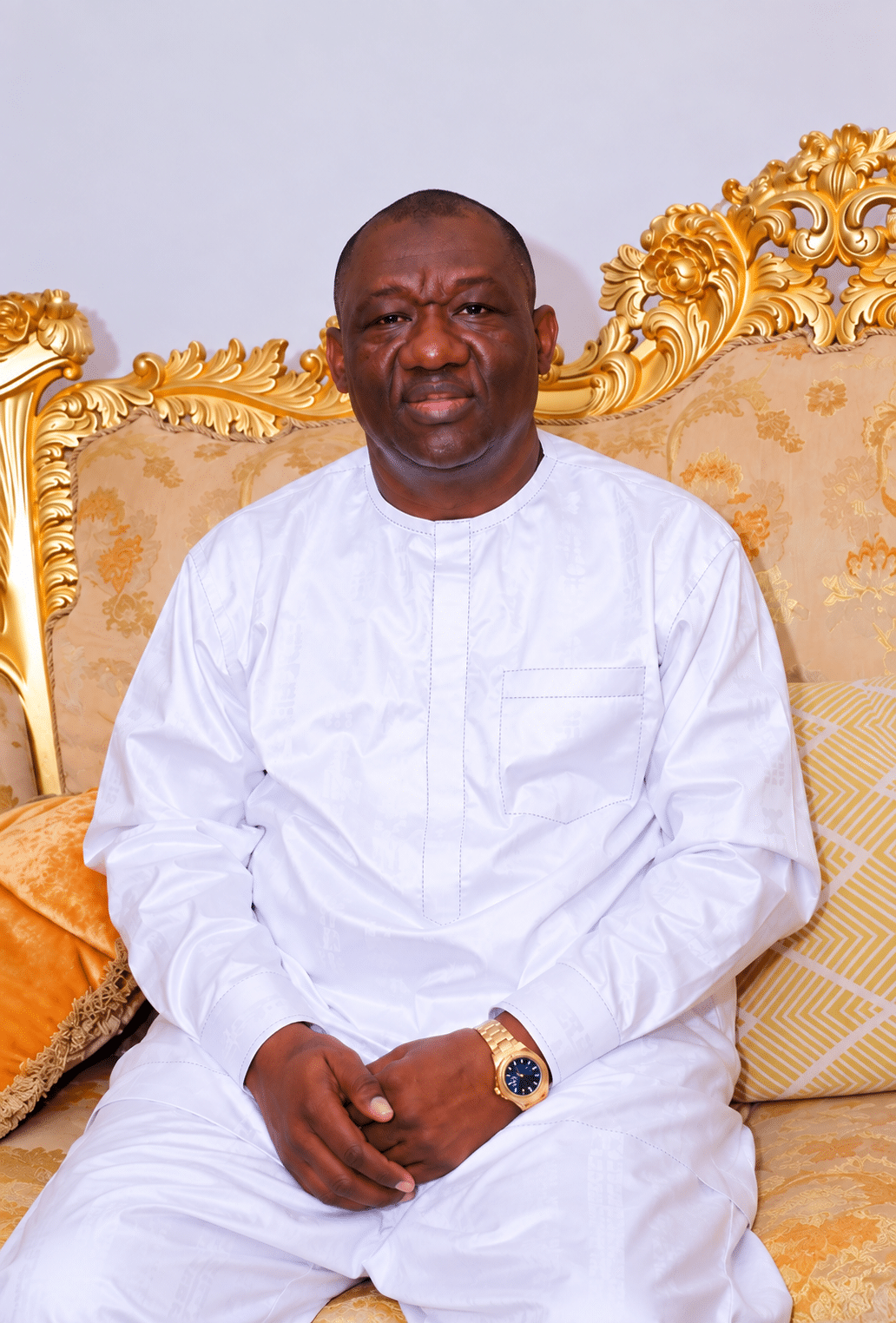
A recent statement by Hon. Alhaji Musa Tarawally declaring that “we are all guilty” has generated considerable public discussion, but supporters of the politician insist that the message was never intended as a confession of criminal wrongdoing or a threat to Sierra Leone’s national security. Rather, they describe it as a call for collective responsibility, national conscience and unity in confronting the country’s longstanding challenges.
In a short video widely circulated on social media, Hon. Alhaji Musa Tarawally reflected on Sierra Leone’s political, social and economic situation and urged citizens to recognize their collective responsibility for building a better country.
At the centre of the discussion is his statement: “Everybody is guilty.”
Supporters maintain that understanding those words requires looking beyond the sentence itself and considering the wider context in which it was delivered. Their interpretation is that Hon. Alhaji Musa Tarawally was not referring to criminal guilt but to what he considers a collective failure by successive generations to sufficiently confront problems affecting Sierra Leone.
From that perspective, “we are all guilty” simply means that no section of society should completely absolve itself of responsibility for the state of the nation. Political leaders, public officials, community stakeholders and ordinary citizens all have roles to play in strengthening national unity and improving the lives of Sierra Leoneans.
One of the major concerns raised in the speech was national cohesion. Decades after independence, political, regional and other divisions continue to feature prominently in public discourse. Hon. Alhaji Musa Tarawally’s message, according to his supporters, was therefore an appeal for Sierra Leoneans to place the national interest above narrow political considerations.
The politician also drew attention to drug abuse, particularly the devastating impact of Kush on young people. Families and communities continue to confront the consequences of substance abuse, making the issue an important national concern. His remarks suggested that dealing with the crisis requires collective action rather than leaving responsibility entirely with Government institutions.
Poverty and the struggle of ordinary citizens to meet basic needs were also central to his message. His supporters say references to people struggling for food, shelter and other necessities were intended to remind political leaders and citizens that national development must ultimately translate into improvements in people's everyday lives.
Hon. Alhaji Musa Tarawally further reflected on Sierra Leone’s troubled past, recalling the civil war associated with Revolutionary United Front leader Foday Sankoh and the period of military rule under Major Johnny Paul Koroma. His broader argument was that Sierra Leoneans had previously demonstrated the ability to unite during difficult periods and could again mobilize collectively against contemporary challenges.
Against this background, those defending the speech reject interpretations portraying it as a call for instability. They contend that its underlying message was about confronting political division, drug abuse, poverty and other social problems through national cooperation.
The remarks have also attracted attention because of Hon. Alhaji Musa Tarawally’s long political history and his willingness over the years to publicly express strong views on national and party affairs.
His supporters point to interventions he made during the administrations of former President Ahmad Tejan Kabbah and former President Ernest Bai Koroma, as well as his longstanding political relationship with President Dr. Julius Maada Bio. They portray those interventions as evidence of a politician prepared to publicly express his position even when his views may be uncomfortable to political leaders.
Recent controversy surrounding Hon. Alhaji Musa Tarawally’s political status within the Sierra Leone People’s Party has added another dimension to interpretations of his remarks. Questions surrounding his membership have generated competing public claims, while his supporters maintain that he remains legitimately connected to the party.
Within that context, references to a possible political crisis have also been interpreted differently. Supporters argue that Hon. Alhaji Musa Tarawally was speaking about the possible breakdown of political relationships and the pursuit of alternative democratic alliances if his grievances are not addressed, rather than threatening violence or unconstitutional action.
They maintain that his stated approach remains the pursuit of political objectives through democratic processes, including dialogue, legal action, elections and other mechanisms provided under the rule of law.
The debate surrounding the speech also touches on the wider issue of freedom of expression. Section 25 of Sierra Leone’s 1991 Constitution protects freedom of expression, including the freedom to hold opinions and receive and impart ideas and information. That protection is not absolute, however, as the Constitution permits certain restrictions prescribed by law, including for public safety, public order and protection of the reputations and rights of others
Sierra Leone also took a significant step in reforming its speech laws in 2020 when Parliament repealed Part V of the Public Order Act of 1965, which dealt with defamatory and seditious libel.
Whether any particular statement breaches another applicable law would ultimately depend on its precise wording, context and determination by the competent authorities or courts where necessary.
For supporters of Hon. Alhaji Musa Tarawally, however, the central message of his speech remains straightforward: Sierra Leone’s problems require collective responsibility.
Seen through that interpretation, “we are all guilty” was not presented as an admission of criminal guilt. It was a challenge to the national conscience: an argument that Government, political leaders, communities and citizens must all examine their responsibilities and contribute towards addressing the problems confronting the country.
The wisdom his supporters identify in the speech therefore lies in its appeal for Sierra Leoneans to look beyond partisan divisions, confront the drug crisis, improve the welfare of vulnerable citizens and strengthen national unity.
For them, the message was not a threat against Sierra Leone. It was an appeal for Sierra Leoneans to work together for Sierra Leone. https://thecalabashnewspaper.com/archives/64912

No comments:
Post a Comment