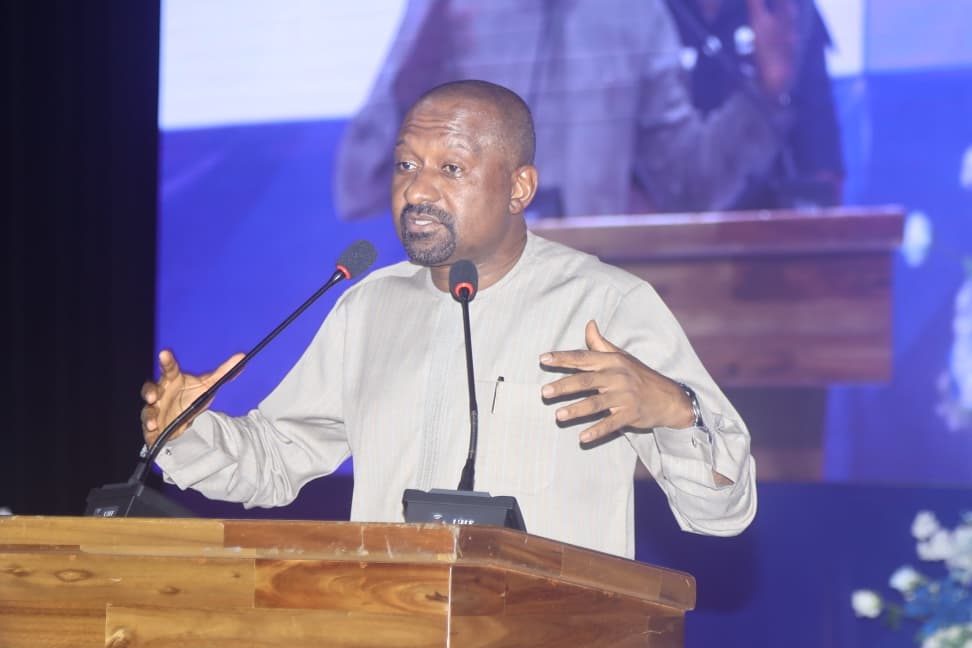
Sierra Leone’s Vice President, Dr Mohamed Juldeh Jalloh, has called for greater political inclusiveness, increased women’s representation and public support for Proportional Representation (PR), describing those as important measures for strengthening national unity, addressing social injustice and building lasting trust among Sierra Leoneans.
The Vice President made the appeal on Tuesday, 27 October 2026, during the closing session of the two-day National Unity and Social Cohesion Conference held at the Bintumani Conference Centre in Freetown.
Organized by the Independent Commission for Peace and National Cohesion (ICPNC), the conference brought together senior Government officials, political leaders, representatives of international organisations, Civil Society Organisations and other stakeholders to examine practical approaches to strengthening reconciliation, democratic governance and peaceful coexistence.
Addressing the gathering, Dr Mohamed Juldeh Jalloh identified exclusion and social injustice as significant challenges that must be addressed to consolidate Sierra Leone’s peace and strengthen public confidence in national institutions.
“One critical pathway to building trust and cohesion is to progressively address the fears of exclusion and social injustice,” the Vice President stated.
His remarks highlighted the importance of creating a political and governance environment in which citizens, regardless of their backgrounds, feel adequately represented and have meaningful opportunities to participate in national decision-making.
Drawing on his professional background in political science, security, governance, electoral systems and post-war reconstruction, Dr Mohamed Juldeh Jalloh emphasized that political inclusion remains an essential component of sustainable peace.
He particularly encouraged Sierra Leoneans to support Proportional Representation, drawing attention to its potential to broaden political participation and strengthen women's representation in governance.
The Vice President's position placed electoral representation within the broader national conversation about fairness, political stability and the need to address longstanding concerns over exclusion.
His emphasis on women's participation also reinforced the argument that national development and social cohesion require greater opportunities for women to contribute to political leadership and decision-making.
The appeal came against the backdrop of continuing national efforts to strengthen democratic institutions, promote political tolerance and ensure that citizens from different political, regional and social backgrounds have confidence in the country's governance structures.
For Dr Mohamed Juldeh Jalloh, addressing perceptions of marginalization and unequal participation is closely connected to the wider objective of building a society in which political differences do not undermine national solidarity.
The conference opened on Monday, 26 October 2026, with President Dr Julius Maada Bio, Vice President Dr Mohamed Juldeh Jalloh and former President Dr Ernest Bai Koroma participating in a high-level gathering that underscored the importance of sustained engagement among national leaders.
Representatives of the United Nations, the Economic Community of West African States (ECOWAS), political parties, Civil Society Organisations and other national stakeholders also participated in discussions on Sierra Leone's peacebuilding journey and the implementation of the Agreement for National Unity.
During his opening address, President Dr Julius Maada Bio called for a renewed national commitment to reconciliation, justice and collective responsibility, stressing that peace must extend beyond political agreements and become an integral part of everyday life.
“Peace must become part of our national culture,” President Bio declared, emphasizing that tolerance, mutual respect and reconciliation should guide the conduct of political leaders, public institutions and ordinary citizens.
In one of the significant moments of the conference, the President apologized on behalf of the State to victims and survivors of Sierra Leone's civil war, acknowledging the suffering endured by amputees, bereaved families and other citizens affected by the conflict.
He further directed relevant national institutions to review and strengthen existing reparations programmes to ensure that victims receive appropriate recognition and support.
President Bio also called for a comprehensive public report on the implementation of the recommendations of the Truth and Reconciliation Commission, directing that it be presented by the end of January 2027.
The announcement placed renewed attention on outstanding post-war commitments and the need to address historical grievances as part of Sierra Leone's continuing reconciliation process.
Former President Dr Ernest Bai Koroma, who also addressed the conference, urged political leaders to protect the country's hard-won peace by placing national interests above partisan considerations.
He emphasized the importance of dialogue, mutual respect and political maturity in resolving disagreements, warning against allowing political differences to threaten national stability.
His participation alongside President Bio and Vice President Juldeh Jalloh reflected the significance of continued engagement between Government and opposition leaders in strengthening national confidence and democratic cooperation.
Representatives of the United Nations and ECOWAS similarly acknowledged Sierra Leone's progress in maintaining peace since the end of the civil war while encouraging stronger democratic institutions, inclusive governance and sustained political dialogue.
Throughout the two-day conference, participants examined the importance of translating commitments under the Agreement for National Unity into practical institutional reforms and measurable improvements in political cooperation.
Discussions also highlighted the responsibilities of Government institutions, political parties, traditional authorities, religious leaders, women, young people and civil society in preventing conflict and promoting peaceful coexistence.
Against this background, Vice President Dr Mohamed Juldeh Jalloh's closing remarks brought renewed attention to the relationship between political representation, social justice and national stability.
His advocacy for Proportional Representation and greater women's participation reinforced the argument that sustainable national cohesion requires governance arrangements that encourage broad participation and respond to concerns about exclusion.
The conference concluded with renewed calls for political goodwill, institutional accountability and concrete measures to strengthen public trust and advance reconciliation.
As Sierra Leone continues efforts to consolidate its democratic progress, the Vice President's message highlighted the importance of ensuring that the pursuit of national unity is accompanied by meaningful political inclusion, fair representation and sustained action against social injustice.
The challenge now facing national stakeholders is to translate the commitments made at Bintumani into practical reforms capable of strengthening democratic participation, rebuilding confidence and securing a more peaceful and inclusive Sierra Leone. https://thecalabashnewspaper.com/archives/65761

No comments:
Post a Comment