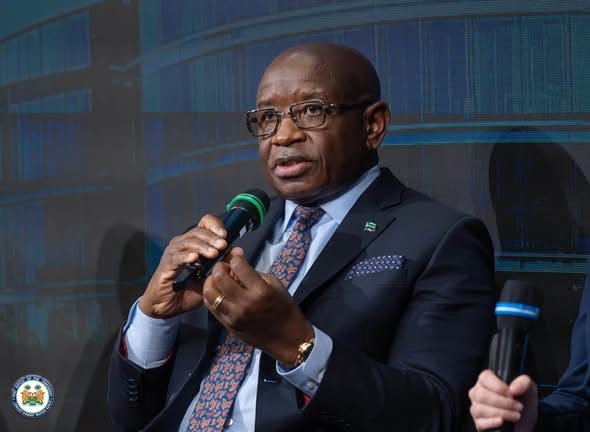
President Dr. Julius Maada Bio has outlined five priorities for securing lasting peace in Africa, calling for stronger democratic institutions, preventive diplomacy, regional cooperation, people-centred security and sustainable financing for African-led peace operations.
Delivering a keynote lecture at the Geneva Graduate Institute in Geneva, Switzerland, on Tuesday, 13 October 2026, President Bio stressed that lasting peace requires more than ending hostilities. It also demands sustained efforts to address the underlying conditions that drive conflict.
The lecture, titled “Building Lasting Peace in Africa: The Catalytic Role of ECOWAS,” formed part of the institute’s Director’s Global Leadership Series.
“The absence of war is the beginning of peace. It is not its guarantee,” President Bio declared.
Drawing on his experience as a former soldier, Sierra Leone’s post-war recovery and his tenure as the immediate past Chairman of the ECOWAS Authority, the President highlighted the country’s transition from receiving international peacekeeping support to contributing to peacekeeping efforts abroad.
He emphasized that regional and international solidarity can help create the conditions for peace, but national ownership, justice and effective institutions remain essential to sustaining it.
President Bio identified preventive diplomacy and early intervention as critical measures for averting conflict. He proposed a Regional Prevention Compact under which agreed early-warning triggers would automatically initiate mediation before crises escalate.
He also called for stronger democratic institutions and accountable governance, stressing that peaceful political transitions and public confidence in institutions are fundamental to preventing instability.
Citing Sierra Leone’s peaceful transfers of power in 2007 and 2018, the President urged policymakers to assess peacebuilding efforts by considering both the wars brought to an end and the conflicts prevented.
On regional cooperation, President Bio advocated “cooperative sovereignty,” urging West African states to respond collectively to shared security threats. He reaffirmed the importance of dialogue with Burkina Faso, Mali and Niger, while acknowledging that ECOWAS must learn from its shortcomings and deliver tangible results for citizens.
The President further called for people-centred security and greater investment in opportunities for young people. He stressed that peace is difficult to sustain where insecurity, injustice and economic exclusion persist.
He underscored the need for sustainable financing for African-led peace operations and reiterated Sierra Leone’s support for reform of the United Nations Security Council to give Africa a fairer voice in global peace and security decisions.
“The greatest achievements in peacebuilding are the wars that never began, the elections that passed peacefully, the young people who found work instead of weapons,” President Bio said.
He concluded that lasting peace must be measured by more than the silence of guns. It must also be reflected in whether people, especially young people, have the security, opportunities and confidence to build a better future. https://thecalabashnewspaper.com/archives/65452

No comments:
Post a Comment