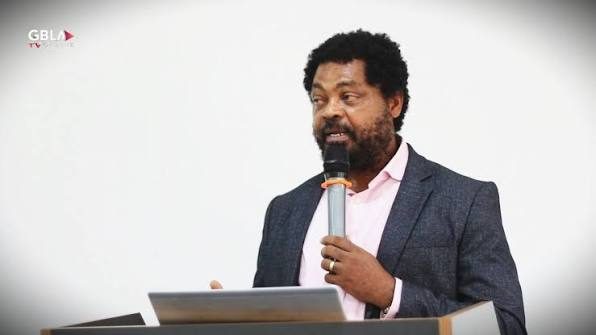
Chairman of the All Works of Life (AWOL), Ahmed Sahid Nasralla, has called on the Government of Sierra Leone, through the Ministry of Health, to declare mental health a national health emergency, warning that the growing challenges surrounding mental wellbeing require urgent attention, stronger institutional responses and sustained national commitment.
He made the appeal on Thursday, 15 October 2026, while delivering a statement at the National Mental Health Symposium organized by the Ministry of Health at the Miatta Conference Centre, Youyi Building, Freetown, as part of activities commemorating World Mental Health Day 2026.
The symposium, held under the theme, “Lived Experiences Heard: Real Voices, Real Change,” brought attention to the importance of strengthening mental healthcare services, addressing stigma, promoting public awareness and ensuring that individuals experiencing mental-health challenges are actively involved in discussions and decisions affecting their wellbeing.
Addressing participants, Ahmed Sahid Nasralla reflected on Sierra Leone’s longstanding struggles with mental healthcare, recalling the contributions of the late Dr Nahim, who was widely recognized for many years as one of the country’s most prominent mental-health professionals.
He recalled that Dr Nahim was frequently described in media reports as Sierra Leone’s only psychiatrist, highlighting the severe shortage of specialists that characterized mental-health service delivery during that period.
According to him, Dr Nahim regularly appeared on Radio Democracy 98.1 FM during World Mental Health Day commemorations, where he discussed mental-health challenges with renowned broadcaster Asmaa James and drew public attention to the scale of the problem.
Ahmed Sahid Nasralla recounted how Dr Nahim would cite alarming statistics, including claims that as many as 80 per cent of Sierra Leoneans experience one mental-health condition or another.
He also recalled a humorous exchange during one of those radio discussions when Asmaa James jokingly asked the psychiatrist whether treating so many patients single-handedly might eventually affect his own mental health.
The AWOL Chairman used the occasion to pay tribute to the late psychiatrist, acknowledging his dedication and contribution to mental-healthcare delivery under extremely difficult circumstances.
He encouraged participants to recognize Dr Nahim’s service to the nation, describing his work as an important part of Sierra Leone’s mental-health history.
Turning to developments in the sector, Ahmed Sahid Nasralla acknowledged the contributions of Dr Abdul Jalloh, Director of Mental Health and Non-Communicable Diseases at the Ministry of Health, whom he described as another prominent figure in the country’s continuing efforts to improve mental healthcare.
He expressed satisfaction that Sierra Leone now has more than one psychiatrist, describing the increase in specialized personnel as an encouraging development compared with the situation in previous years.
Ahmed Sahid Nasralla also welcomed ongoing legislative efforts to replace the outdated Lunacy Act of 1902 with a modern Mental Health Bill designed to strengthen the protection of patients’ rights, promote dignity and improve access to appropriate care.
He described the proposed legislation as an important step towards establishing a more humane, inclusive and responsive mental-healthcare system.
Despite acknowledging those improvements, the AWOL Chairman maintained that the magnitude of the challenges confronting the country demand more decisive intervention.
“As Chairman of AWOL, I would make bold to urge the Government of Sierra Leone, through the Ministry of Health, to declare mental health a national health emergency. Yes, that is how serious the situation is,” he stated.
Explaining his position, Ahmed Sahid Nasralla expressed concern over the increasing levels of anger, hostility, intolerance and abusive exchanges frequently witnessed on social media and in public discussions.
While acknowledging that such behaviour cannot automatically be attributed to mental-health conditions, he maintained that it raises broader concerns about emotional wellbeing, social relationships and the need to promote healthier interactions within society.
He argued that national development cannot be separated from the mental wellbeing of citizens, particularly those responsible for driving economic productivity, public administration, education and other essential sectors.
According to him, a healthy and productive workforce remains central to national progress, making mental healthcare an important development priority rather than an issue to be addressed only during commemorative events.
“A nation’s development depends, among other things, on a healthy and productive workforce. We cannot talk about national progress without taking seriously the mental wellbeing of the people expected to drive that progress,” he emphasized.
Ahmed Sahid Nasralla further used the occasion to highlight AWOL’s longstanding partnership with the Ministry of Health, tracing the relationship to the early 2000s when the organisation began undertaking initiatives to support healthcare delivery and other national development priorities.
He recalled that during AWOL’s formative years, Connaught Hospital lacked an X-ray machine, a situation that affected the provision of essential diagnostic services.
In response, the organisation donated an X-ray machine to the hospital and subsequently procured a generator to address electricity challenges affecting the department.
He disclosed that AWOL members also volunteered their time to clean, scrub and repaint the X-ray department, helping improve its physical environment and working conditions.
The AWOL Chairman explained that the organisation continued its humanitarian interventions during major national health emergencies, including the Ebola outbreak in 2014.
During that crisis, he said, AWOL donated Le150 million to the Government of Sierra Leone to support the national response against the deadly disease.
Beyond the financial contribution, the organisation provided food, water and assorted drinks to people affected by the emergency and the restrictions imposed during the outbreak across the country’s districts.
Similarly, during the COVID-19 pandemic in 2020, AWOL contributed support valued at Le150 million towards the Government’s efforts to contain the disease and protect vulnerable communities.
Ahmed Sahid Nasralla maintained that those interventions demonstrate AWOL’s consistent commitment to supporting national healthcare priorities, particularly during periods when communities face serious health and humanitarian challenges.
He said the organization’s participation in the Mental Health Awareness Walk held on Saturday, 10 October 2026, was therefore a continuation of its longstanding partnership with the Ministry of Health and its development partners.
According to him, the awareness walk provided an opportunity to educate the public, challenge misconceptions surrounding mental illness and demonstrate solidarity with individuals and families experiencing mental-health difficulties.
He commended the Ministry of Health and its partners for successfully organizing the activity, noting that growing public participation reflects increasing recognition of mental health as an important national concern.
Ahmed Sahid Nasralla stressed that people experiencing mental-health challenges should never be made to feel abandoned, isolated or ashamed of their conditions.
He said AWOL remains committed to supporting initiatives that encourage understanding, compassion and inclusion while helping to dismantle the stigma that continues to discourage many people from seeking professional assistance.
Reflecting on the symposium’s theme, “Lived Experiences Heard: Real Voices, Real Change,” the AWOL Chairman emphasized the importance of placing individuals with personal experiences of mental-health challenges at the centre of policy discussions and service improvements.
He argued that meaningful progress cannot be achieved through discussions involving only medical professionals, Government officials, policymakers and institutions without adequately considering the experiences of those directly affected.
According to him, individuals living with mental-health conditions, their relatives and caregivers possess valuable knowledge that can help identify weaknesses in existing services and guide the development of more effective responses.
He explained that personal experiences can reveal difficulties in accessing treatment, gaps in community support, challenges facing families and areas where healthcare institutions must improve their approaches.
Ahmed Sahid Nasralla further stressed that public awareness campaigns must produce measurable improvements in the lives of affected individuals rather than remain limited to speeches, commemorations and symbolic activities.
“As AWOL Chairman, I believe awareness is important, but it must lead to action; better access to care, stronger community support, greater public understanding and an end to the stigma that prevents people from seeking help,” he stated.
He also drew attention to the difficulties confronting caregivers, particularly family members who provide continuous assistance to relatives experiencing mental-health conditions, often without adequate financial, emotional or professional support.
The AWOL Chairman observed that many caregivers carry enormous responsibilities quietly, making significant personal sacrifices while receiving limited recognition or assistance.
He therefore called for greater consideration of their needs in national mental-health programmes, including access to guidance, counselling, community assistance and other forms of practical support.
Ahmed Sahid Nasralla encouraged participants at the symposium to move beyond identifying problems and instead develop realistic recommendations capable of influencing policies, strengthening services and improving the wellbeing of affected communities.
He urged stakeholders to ensure that commitments emerging from the discussions are translated into sustained interventions that continue long after the commemorative activities have ended.
The AWOL Chairman reaffirmed his organization’s willingness to collaborate with the Ministry of Health, development partners, healthcare professionals and community stakeholders in promoting mental wellbeing and supporting people affected by mental-health challenges.
He maintained that improving mental healthcare requires collective responsibility, sustained investment, stronger public education and a compassionate national approach that recognizes the dignity and rights of every individual.
Concluding his statement, Ahmed Sahid Nasralla called on Government institutions, civil society organisations, healthcare providers and the wider public to listen more attentively to people sharing their experiences of mental-health difficulties and to use those experiences to inform meaningful reforms.
“Let us ensure that when people speak about their experiences, we listen, learn and act!” he concluded. https://thecalabashnewspaper.com/archives/65526

No comments:
Post a Comment