Monday, 28 September 2026


Columbia University Masterclass Equips Sierra Leone Ministers with Government Delivery Skills
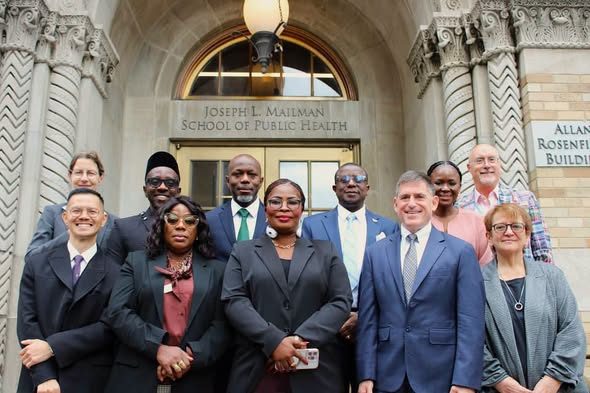
Sierra Leonean Cabinet Ministers attending the 81st Session of the United Nations General Assembly in New York have participated in a specially designed executive seminar at Columbia University aimed at strengthening leadership, critical thinking, problem-solving and effective Government service delivery.

Held on September 23, 2026, at Columbia University’s Mailman School of Public Health, the high-level programme brought together about a dozen Ministers for intensive sessions on systems thinking, implementation science and the use of evidence in policy and practice.

The training was designed to expose the Ministers to practical approaches that could help Government leaders navigate complex challenges, improve coordination across Ministries and strengthen the implementation of public policies and programmes.

Minister of Information and Civic Education, Chernor Bah, facilitated the initiative through the Ministry of Information and Civic Education as part of its ongoing Memorandum of Understanding and partnership with Columbia University.

Taking advantage of the presence of senior Government officials in New York for UNGA 81, the programme provided an opportunity for the Ministers to combine international diplomatic engagements with professional development and capacity building.

President Dr. Julius Maada Bio supported the participation of the Ministers in the programme, encouraging members of the delegation to use their time in New York not only for international engagements but also to acquire knowledge and skills that could strengthen Government delivery.

Chernor Bah said continuous learning remains important for public officials responsible for implementing Government programmes and responding to increasingly complex national challenges.

“UNGA is an extraordinarily busy period, but President Bio encouraged and supported us to make space for learning and capacity building,” Chernor Bah said.

“If we want to accelerate delivery, we must continuously strengthen our ability as leaders to solve complex problems, work across the Government and turn policy into results.”

Senior faculty members from Columbia University’s Heilbrunn Department of Population and Family Health conducted the sessions, providing participants with insights into approaches that could be applied to governance, policy implementation and institutional coordination.

The sessions covered systems thinking, implementation science and influencing discourse and were led by Helen DePinho, Patrick Kachur and Nicole Haberland. Professor Thoại D. Ngô, Chair of the Heilbrunn Department of Population and Family Health, led the overall programme.

A major focus of the seminar was encouraging participants to look beyond the responsibilities of individual Ministries and examine how Government priorities and challenges are interconnected.

The systems-thinking approach particularly highlighted the importance of understanding how decisions taken in one sector could affect outcomes in other areas, requiring stronger collaboration among Ministries and public institutions.

Minister of Energy, Cyril Arnold Grant, said the programme created an opportunity for participants to consider their responsibilities within the Government’s broader development agenda.

“It gave us the time to think through and discuss the whole-of-Government plan as it relates to our individual portfolios,” Cyril Arnold Grant said, noting that issues handled by individual Ministries could also have wider implications, including for public health.

Participants were also introduced to implementation science, which focuses on how policies, programmes and evidence-based interventions can be effectively translated into practice.

The seminar further examined critical thinking and structured problem-solving approaches that could assist Government officials in identifying challenges, evaluating available evidence and developing practical responses.

Organisers said strengthening such skills among senior public officials could contribute to improved decision-making, better coordination, more efficient use of public resources and stronger implementation of Government programmes.

Following the seminar, Professor Thoại D. Ngô thanked Chernor Bah for his role in facilitating the participation of the Sierra Leonean delegation and acknowledged the Ministers for dedicating time to the programme despite their demanding UNGA schedule.

Professor Thoại D. Ngô also reaffirmed Columbia University’s commitment to its continuing collaboration with Sierra Leone, particularly in areas related to health, development, research, leadership and institutional capacity building.

For the Ministry of Information and Civic Education, the Columbia University engagement forms part of efforts to ensure that Sierra Leone’s international partnerships produce practical benefits for the country.

The Ministry believes access to global expertise, research and professional networks can provide public officials with additional tools to address domestic challenges and improve the quality of Government services.

Chernor Bah stressed that international partnerships should ultimately translate into meaningful benefits for Sierra Leone and its citizens.

“Our partnerships must ultimately create value for Sierra Leone,” Chernor Bah said. “Through our MOU with Columbia, we are connecting our leaders to world-class knowledge and expertise that can help us deliver better for our people.”

The executive seminar formed part of a wider series of engagements involving Sierra Leonean officials during UNGA 81 in New York, where the delegation participated in bilateral meetings, policy discussions and international forums covering development, investment, peace, governance and other national priorities.

Beyond the diplomatic engagements, the Columbia University programme provided participating Ministers with an opportunity to examine practical tools that could be applied to their respective Ministries upon their return to Sierra Leone.

The training also underscored the growing importance of evidence-based decision-making and cross-Government collaboration as public institutions respond to economic, social, environmental and institutional challenges.

From Cabinet meetings in Sierra Leone to the classroom at Columbia University in New York, the initiative demonstrated an emphasis on continuous learning among senior Government officials, with the central objective of translating acquired knowledge into improved policy implementation and public service delivery. https://thecalabashnewspaper.com/archives/64923

UBA Sierra Leone Announces Leadership Transition as Mohamed Alhajie Samoura Resigns
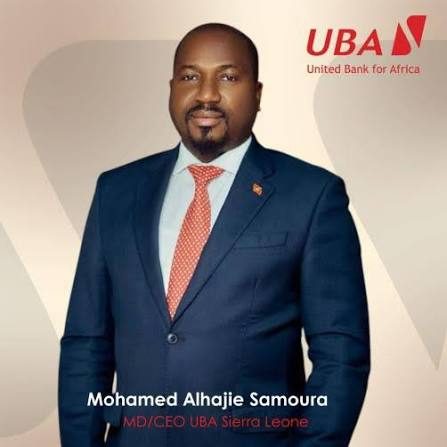
United Bank for Africa (Sierra Leone) Limited has announced a leadership transition following the resignation of its Managing Director and Chief Executive Officer, Mohamed Alhajie Samoura, effective September 30, 2026.

The announcement was contained in a Press Release issued by the bank in Freetown on September 25, 2026.

According to the statement, the Board of United Bank for Africa (Sierra Leone) Limited has accepted Mohamed Alhajie Samoura’s resignation and expressed appreciation for his dedicated service to the institution.

Following his departure, Executive Director Francis Esiemokhai is expected to serve as Acting Managing Director, subject to the requisite approval of the Bank of Sierra Leone.

The leadership transition comes as United Bank for Africa (Sierra Leone) Limited continues its operations in the country, serving individuals, businesses and communities through its range of banking services.

In its statement, the bank reaffirmed its commitment to maintaining trusted, innovative and customer-focused banking services across Sierra Leone.

United Bank for Africa (Sierra Leone) Limited did not provide further details regarding the circumstances surrounding Mohamed Alhajie Samoura’s resignation or indicate when a substantive Managing Director and Chief Executive Officer would be appointed. https://thecalabashnewspaper.com/archives/64918


Moses Mambu’s Power-Drunk Rhetoric Risks Tearing the SLPP Apar
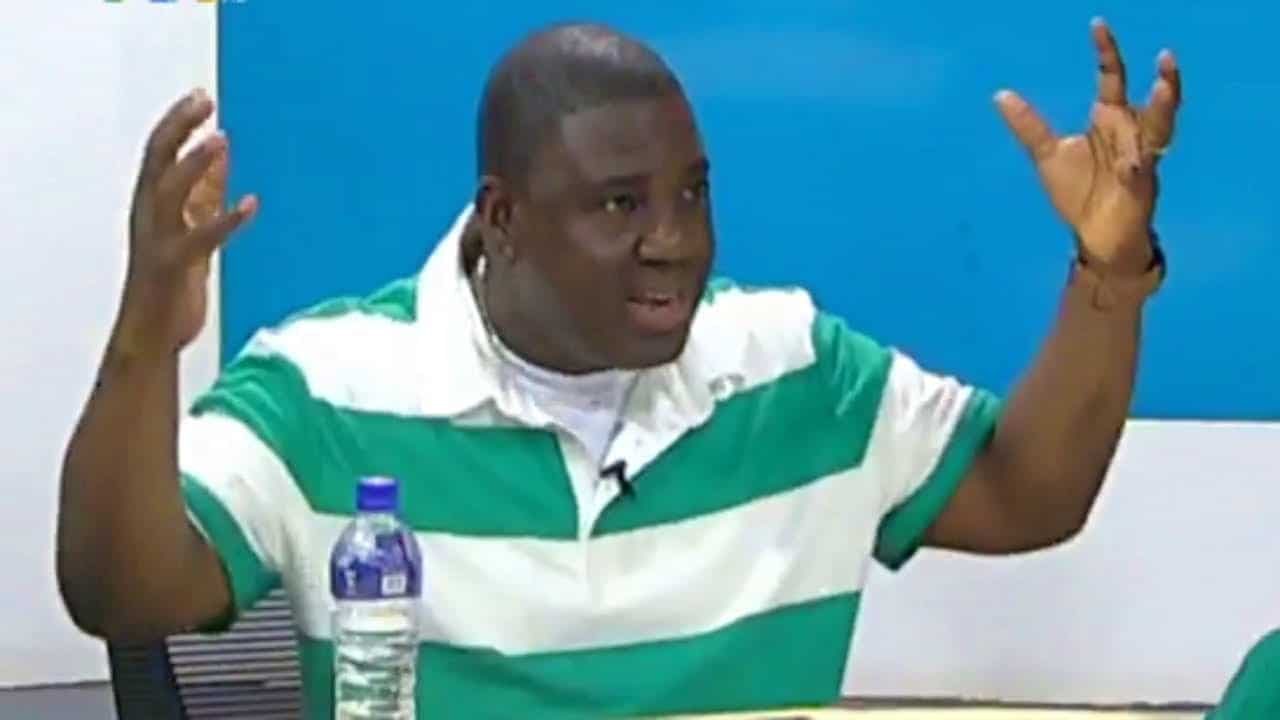
Moses Mambu, National Public Relations Officer of the ruling Sierra Leone People’s Party (SLPP), is increasingly attracting attention over what critics may regard as an overzealous and unnecessarily combative approach to political communication across social media and traditional media platforms. At times, his rhetoric creates an impression of political triumphalism that could be interpreted as being power-drunk, particularly when pronouncements from such a senior party official touch sensitive questions of elections, party membership and internal political competition. Besides he is taking the SLPP as his personal property rather than a political party making utterances that have the propensity of bringing divisions within the party.

A National Public Relations Officer should ordinarily serve as a bridge connecting the leadership, stakeholders, grassroots supporters and wider public. The position demands clarity, discipline, political maturity and an ability to manage disagreements without unnecessarily escalating them. Yet some of Moses Mambu’s interventions have instead generated controversy and raised questions about whether his communication style is consolidating the SLPP or potentially widening disagreements within its ranks.

Nothing demonstrated the danger of loose political rhetoric more clearly than his controversial reference to “2030” while discussing the next presidential election. Moses Mambu subsequently explained that the reference was made “out of fun” and as a political “jab.” That explanation, however, does not completely erase the legitimate questions generated by the original statement.

Election dates and presidential tenure are serious constitutional matters. When the National Public Relations Officer of the governing party introduces 2030 into a conversation about an election expected in 2028, Sierra Leoneans will naturally scrutinize his words and question the political message being conveyed.

Equally concerning is the potential effect of combative public pronouncements on internal party cohesion. Founded in 1951, the SLPP is one of Sierra Leone’s oldest political parties and has played a central role in the country’s political history, including the journey to Independence. Having survived different political eras, periods in opposition and returns to Government, the party prides itself on its democratic traditions and substantial nationwide support.

Against that background, it is unfortunate when its National Public Relations Officer becomes publicly confrontational towards major stakeholders who may command considerable influence and support within the party. Whatever disagreements exist, publicly disparaging influential stakeholders can potentially alienate their supporters, deepen factional differences and undermine the broader unity the SLPP will require heading towards the 2028 elections.

Moses Mambu’s frequent reliance on provisions of the SLPP Constitution to justify positions in internal debates must equally be accompanied by political sensitivity. The party Constitution must unquestionably be respected, but constitutional provisions should not become instruments for publicly diminishing political stakeholders. Rules can regulate membership, conduct and eligibility; they cannot, by themselves, create genuine political cohesion.

Sierra Leone’s political history provides an important lesson. Internal disagreements within the SLPP contributed to political realignment ahead of the 2007 elections, when Charles Margai broke away and formed the People’s Movement for Democratic Change. The PMDC subsequently made significant inroads into traditional SLPP territory, particularly in parts of Southern Sierra Leone, before Charles Margai supported Ernest Bai Koroma of the APC during the presidential runoff. The SLPP eventually lost power.

Today’s circumstances are certainly different and that history does not determine what will happen in 2028. It nevertheless demonstrates an enduring political reality: unresolved internal divisions can carry electoral consequences.

The SLPP is bigger than Moses Mambu or any individual stakeholder. Its membership contains different ambitions, personalities, generations and political tendencies. Managing those differences requires diplomacy, consultation and mutual respect rather than inflammatory exchanges.

Confidence about winning elections is legitimate. Political entitlement is different. Neither Moses Mambu nor any party executive determines who occupies State House. Sierra Leoneans ultimately make that decision through the electoral process.

Political office is temporary. Party positions are temporary. Political influence can rise and disappear.

For a party with the SLPP’s history, internal cohesion should therefore take precedence over unnecessary political confrontation. As 2028 approaches, its spokesperson should help build bridges rather than deepen fault lines.

Sierra Leone’s political history has already demonstrated the cost that major parties can pay when internal disagreements become political fractures.

That lesson deserves serious attention. https://thecalabashnewspaper.com/archives/64917


The Wisdom in Hon. Alhaji Musa Tarawally’s Speech: What He Actually Meant
A recent statement by Hon. Alhaji Musa Tarawally declaring that “we are all guilty” has generated considerable public discussion, but supporters of the politician insist that the message was never intended as a confession of criminal wrongdoing or a threat to Sierra Leone’s national security. Rather, they describe it as a call for collective responsibility, national conscience and unity in confronting the country’s longstanding challenges.

In a short video widely circulated on social media, Hon. Alhaji Musa Tarawally reflected on Sierra Leone’s political, social and economic situation and urged citizens to recognize their collective responsibility for building a better country.

At the centre of the discussion is his statement: “Everybody is guilty.”

Supporters maintain that understanding those words requires looking beyond the sentence itself and considering the wider context in which it was delivered. Their interpretation is that Hon. Alhaji Musa Tarawally was not referring to criminal guilt but to what he considers a collective failure by successive generations to sufficiently confront problems affecting Sierra Leone.

From that perspective, “we are all guilty” simply means that no section of society should completely absolve itself of responsibility for the state of the nation. Political leaders, public officials, community stakeholders and ordinary citizens all have roles to play in strengthening national unity and improving the lives of Sierra Leoneans.

One of the major concerns raised in the speech was national cohesion. Decades after independence, political, regional and other divisions continue to feature prominently in public discourse. Hon. Alhaji Musa Tarawally’s message, according to his supporters, was therefore an appeal for Sierra Leoneans to place the national interest above narrow political considerations.

The politician also drew attention to drug abuse, particularly the devastating impact of Kush on young people. Families and communities continue to confront the consequences of substance abuse, making the issue an important national concern. His remarks suggested that dealing with the crisis requires collective action rather than leaving responsibility entirely with Government institutions.

Poverty and the struggle of ordinary citizens to meet basic needs were also central to his message. His supporters say references to people struggling for food, shelter and other necessities were intended to remind political leaders and citizens that national development must ultimately translate into improvements in people's everyday lives.

Hon. Alhaji Musa Tarawally further reflected on Sierra Leone’s troubled past, recalling the civil war associated with Revolutionary United Front leader Foday Sankoh and the period of military rule under Major Johnny Paul Koroma. His broader argument was that Sierra Leoneans had previously demonstrated the ability to unite during difficult periods and could again mobilize collectively against contemporary challenges.

Against this background, those defending the speech reject interpretations portraying it as a call for instability. They contend that its underlying message was about confronting political division, drug abuse, poverty and other social problems through national cooperation.

The remarks have also attracted attention because of Hon. Alhaji Musa Tarawally’s long political history and his willingness over the years to publicly express strong views on national and party affairs.

His supporters point to interventions he made during the administrations of former President Ahmad Tejan Kabbah and former President Ernest Bai Koroma, as well as his longstanding political relationship with President Dr. Julius Maada Bio. They portray those interventions as evidence of a politician prepared to publicly express his position even when his views may be uncomfortable to political leaders.

Recent controversy surrounding Hon. Alhaji Musa Tarawally’s political status within the Sierra Leone People’s Party has added another dimension to interpretations of his remarks. Questions surrounding his membership have generated competing public claims, while his supporters maintain that he remains legitimately connected to the party.

Within that context, references to a possible political crisis have also been interpreted differently. Supporters argue that Hon. Alhaji Musa Tarawally was speaking about the possible breakdown of political relationships and the pursuit of alternative democratic alliances if his grievances are not addressed, rather than threatening violence or unconstitutional action.

They maintain that his stated approach remains the pursuit of political objectives through democratic processes, including dialogue, legal action, elections and other mechanisms provided under the rule of law.

The debate surrounding the speech also touches on the wider issue of freedom of expression. Section 25 of Sierra Leone’s 1991 Constitution protects freedom of expression, including the freedom to hold opinions and receive and impart ideas and information. That protection is not absolute, however, as the Constitution permits certain restrictions prescribed by law, including for public safety, public order and protection of the reputations and rights of others

Sierra Leone also took a significant step in reforming its speech laws in 2020 when Parliament repealed Part V of the Public Order Act of 1965, which dealt with defamatory and seditious libel.

Whether any particular statement breaches another applicable law would ultimately depend on its precise wording, context and determination by the competent authorities or courts where necessary.

For supporters of Hon. Alhaji Musa Tarawally, however, the central message of his speech remains straightforward: Sierra Leone’s problems require collective responsibility.

Seen through that interpretation, “we are all guilty” was not presented as an admission of criminal guilt. It was a challenge to the national conscience: an argument that Government, political leaders, communities and citizens must all examine their responsibilities and contribute towards addressing the problems confronting the country.

The wisdom his supporters identify in the speech therefore lies in its appeal for Sierra Leoneans to look beyond partisan divisions, confront the drug crisis, improve the welfare of vulnerable citizens and strengthen national unity.

For them, the message was not a threat against Sierra Leone. It was an appeal for Sierra Leoneans to work together for Sierra Leone. https://thecalabashnewspaper.com/archives/64912


Peak Electrical in the Spotlight Over Alleged Sale of Suspected Fake RR Cables
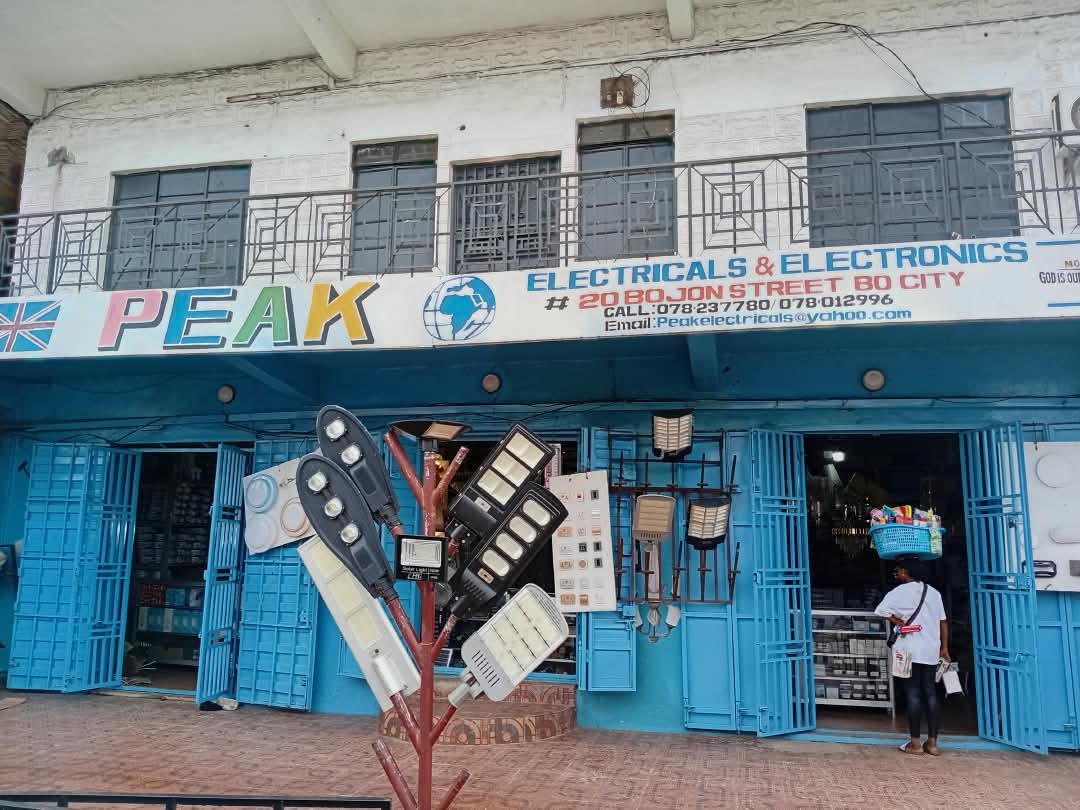
An investigation conducted by The Calabash Newspaper has uncovered allegations that  Ogha Toochukwu and Samuel, owners of Peak Electrical/Electronic a Nigerian-owned business operating in Sierra Leone, with its head office situated  on 17 Regent Road, by Goderich Street in Freetown, has been involved in the importation and sale of electrical cables suspected of being counterfeit RR Cables.

The allegations have raised fresh concerns about the circulation of suspected counterfeit electrical products on the Sierra Leonean market and the potential risks they could pose to consumers, electricians, businesses and property.

According to information obtained by The Calabash Newspaper, Peak Electrical/Electronic operates from several locations with business addresses in Bo and Kenema.

The locations identified include 38 Dambala Road, Bo, opposite Albertson Supermarket; 32 Dambala Road, Bo; Box Point 20 Bojon Street, Bo; beside Union Trust Bank on 5 Jany Street, Kenema; and St. James Secondary School.

Among the products identified during the investigation is a cable bearing markings purporting to identify it as an RR Kablo product.

The latest allegations come against the backdrop of previous concerns over suspected counterfeit RR Cables circulating in Sierra Leone.

In an earlier report, The Calabash Newspaper reported allegations involving businesses in Freetown accused of selling suspected counterfeit RR Cables.

According to that report, the Sierra Leone Police had reportedly acted on intelligence concerning suspected counterfeit RR products and conducted operations at business premises linked to the allegations.

Individuals were reportedly invited to the Criminal Investigation Department (CID) for questioning, while several rolls of electrical cables suspected of being counterfeit RR products were reportedly seized during the operations.

The reported seizures and investigations have heightened concerns about how suspected counterfeit electrical products may be entering and circulating within the local market.

The allegations involving Peak Electrical/Electronic also come amid public warnings concerning the authenticity of RR Cables in Sierra Leone.

Following this developments, SV Electrical – Sierra Leone’s Trusted Source for Genuine RR Cables,” SV Electrical warned consumers about suspected counterfeit RR Cables allegedly circulating in the country.

According to the company, it has been the exclusive importer and distributor of authentic RR Cables in Sierra Leone since 2019.

SV Electrical identified its reported official outlets as its premises on Siaka Stevens Street, Freetown and Hastings Junction, while urging consumers to exercise caution when purchasing RR-branded electrical cables from other sources.

The company warned that counterfeit cables may be manufactured using inferior materials and could potentially overheat, spark or contribute to electrical fires.

SV Electrical consequently encouraged consumers to verify the source and authenticity of electrical cables before making purchases.

The circulation of suspected counterfeit electrical cables is a matter of public safety, as electrical wiring forms an essential component of residential, commercial and industrial installations.

Electrical experts have warned that substandard cables can present significant risks when their materials, insulation, conductivity and load-bearing capacity do not meet required standards.

Such products may potentially contribute to overheating, short circuits, electrical faults and fires, particularly when they are used in installations requiring cables capable of safely carrying specified electrical loads.

The issue therefore extends beyond trademark protection and commercial competition to broader concerns about ensuring that electrical materials placed on the Sierra Leonean market meet applicable safety and quality requirements.

The allegations surrounding Peak Electrical/Electronic also raise questions about the supply chain through which RR-branded cables enter Sierra Leone, including their country of manufacture, import documentation, distribution channels and verification procedures.

Determining whether the identified cables are genuine would require appropriate technical and documentary verification, including examination of the products and, where necessary, confirmation from the manufacturer or authorized distributor.

Consumers are meanwhile advised to exercise caution when purchasing branded electrical products and to request information about their source and authenticity, particularly where products appear significantly cheaper than comparable products sold through authorized distributors.

The Calabash Newspaper is seeking a response from Peak Electrical/Electronic regarding the allegations, including the source of the identified cables, the company's authorization to distribute RR-branded products and any documentation demonstrating their authenticity. https://thecalabashnewspaper.com/archives/64909

Friday, 25 September 2026


President Bio Calls for Greater Global Investment in Peace and Development Over Military Spending
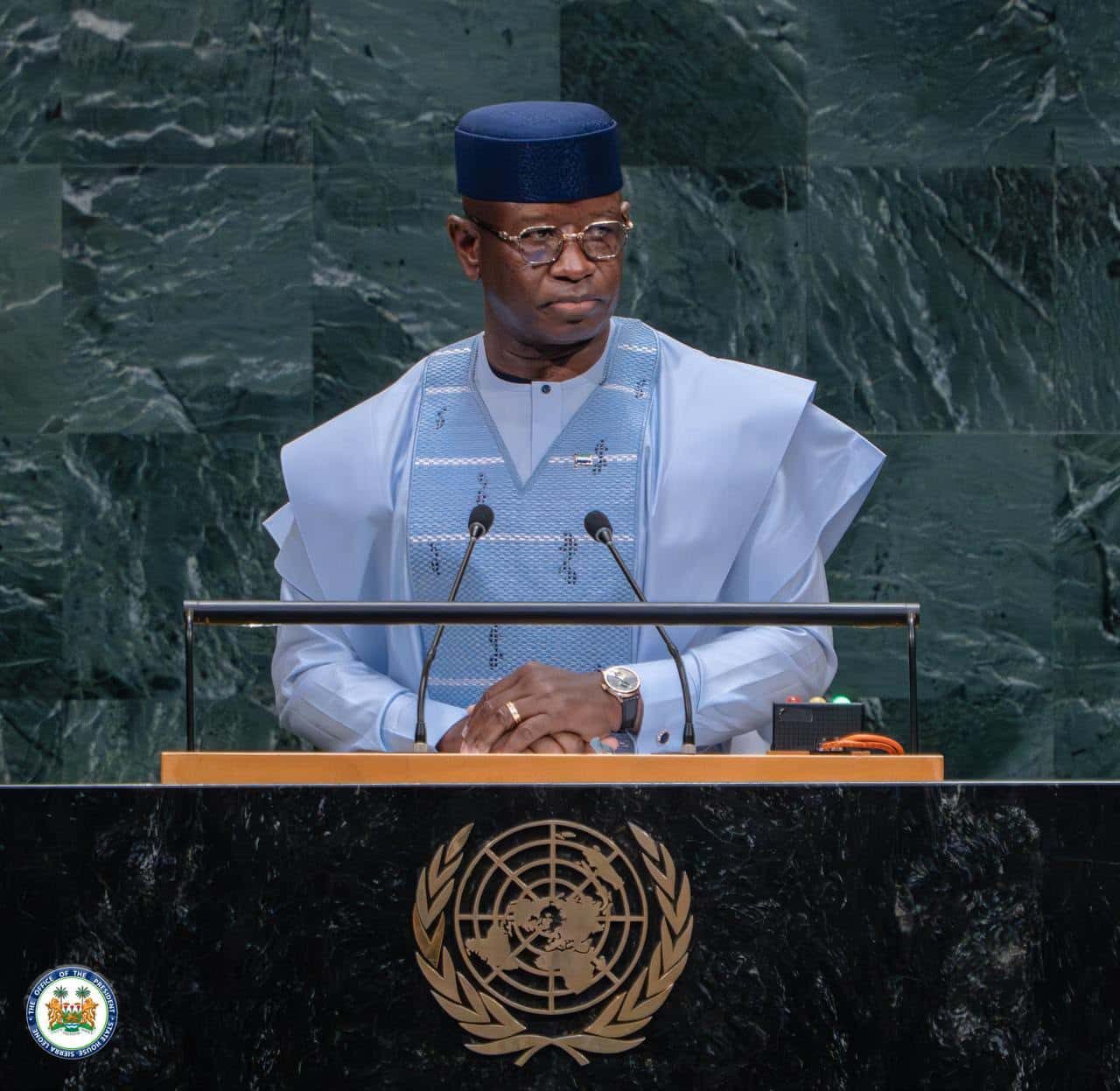
President Dr. Julius Maada Bio has urged world leaders to invest more in preventing conflict and improving lives, warning that military action alone cannot deliver lasting peace.

Speaking at the General Debate of the 81st United Nations General Assembly in New York on Tuesday, 22 September 2026, President Julius Maada Bio said global military expenditure reached almost US$2.9 trillion in 2025, its eleventh consecutive annual increase. Countries had legitimate security needs, he acknowledged, but the resources available for war stood in troubling contrast to those committed to development.

“The connection between peace and development must therefore move from our resolutions into our budgets,” President Julius Maada Bio said. He argued that hunger, exclusion, unemployment and weak institutions create conditions in which insecurity takes root.

The President cited atrocities and displacement in Sudan, continuing violence in the eastern Democratic Republic of the Congo and terrorism across West Africa and the Sahel. Although each conflict has different causes, he said, they demonstrate the limits of a response based on military force alone.

Drawing on Sierra Leone’s recovery from civil war, President Julius Maada Bio recalled that the formal end of fighting was only the beginning of peace. Families had to return home, communities had to rebuild relationships and institutions had to regain public confidence. The United Nations supported Sierra Leone through disarmament, elections and peacebuilding, he said, showing what international cooperation can achieve.

That experience shaped his message on the Assembly’s theme: “Restoring Trust, Managing Transformation: A United Nations That Delivers for All.” The phrase “for all,” he said, should be judged by whose voices influence decisions and whether those decisions reach people furthest from power.

President Julius Maada Bio called for international law to be applied consistently. On the Middle East, he urged the protection of civilians, humanitarian access and respect for the Palestinian people’s right to self-determination through a viable Palestinian state living alongside Israel in peace and security. He also called for progress on nuclear disarmament through diplomacy.

A major part of the address focused on reforming the UN Security Council. President Julius Maada Bio said the Council still reflects the power structure of 1945, while Africa, a continent of more than 1.6 billion people, has no permanent seat despite being the subject of much of its work.

He reaffirmed the Common African Position, set out in the Ezulwini Consensus and Sirte Declaration, which seeks at least two permanent African seats and five non-permanent seats. If the veto is retained, he said, African permanent members should have the same rights and privileges as other permanent members.

As Coordinator of the African Union Committee of Ten, Sierra Leone would continue pressing for reform, President Julius Maada Bio said. He called on UN Member States to produce a consolidated reform model before the end of the current General Assembly session.

The President also pointed to Sierra Leone’s 2024–2025 term on the Security Council. He said the country had drawn attention to Africa’s historical exclusion, placed conflict-related food insecurity on the agenda and worked with Guyana on a resolution concerning young people’s role in peace and security.

President Julius Maada Bio argued that unequal representation also affects international financial institutions. Developing countries need stronger voting power, affordable finance, concessional resources and fairer treatment of debt, he said. They should also have an equal role in setting international tax rules, a goal Sierra Leone supports through a proposed UN Framework Convention on International Tax Cooperation.

Reparatory justice was another focus of the speech. President Julius Maada Bio referred to a UN General Assembly resolution led by Ghana concerning the trafficking and enslavement of Africans. For Sierra Leone, he said, that history is close to home: thousands of Africans were transported into enslavement from Bunce Island, while Freetown later became a home for formerly enslaved and liberated Africans.

He called for acknowledgement, a formal apology, the return of cultural heritage and fair redress, saying the effects of slavery remain visible in global disparities of wealth, power and opportunity.

Turning to Africa’s critical minerals, President Julius Maada Bio warned that the global shift to cleaner energy must create jobs and industry in the countries supplying those resources. Processing minerals at source, transferring technology and building local industries could give young Africans better opportunities, he said.

“The green transition must not reproduce the extractive terms of the past,” he told the Assembly. He linked access to jobs and skills with peace, warning that young people denied opportunity can become vulnerable to exploitation, smuggling and dangerous migration.

The President cited Feed Salone, Free Quality School Education and Sierra Leone’s 2024 Prohibition of Child Marriage Act as examples of his Government’s domestic priorities. Protecting girls’ education and freedom, he said, forms part of meaningful development.

He also urged developing countries to participate in writing the rules for artificial intelligence. The technology could improve education, healthcare, agriculture and public administration, but it could widen inequality if knowledge and decision-making remain concentrated in a few countries.

On climate change, President Julius Maada Bio described families in Shenge watching the sea take land, fishing grounds and ancestral graves. He called for predictable climate finance, support for adaptation and effective arrangements to address loss and damage.

President Julius Maada Bio supported reforms to make the United Nations more effective and called on Member States to consider appointing a woman as its next Secretary-General. He also sought support for Sierra Leone’s nominee, Professor Charles Chernor Jalloh, in the November election for a judge of the International Court of Justice.

He closed by urging the Assembly to give people reason to believe that cooperation works and promises made at the United Nations will be honoured. The words “for all,” he said, must become the measure of its work. https://thecalabashnewspaper.com/archives/64891


Caritas Freetown Delivers Trocaire-Supported MPCA to Strengthen Disaster Preparedness for 80 Households
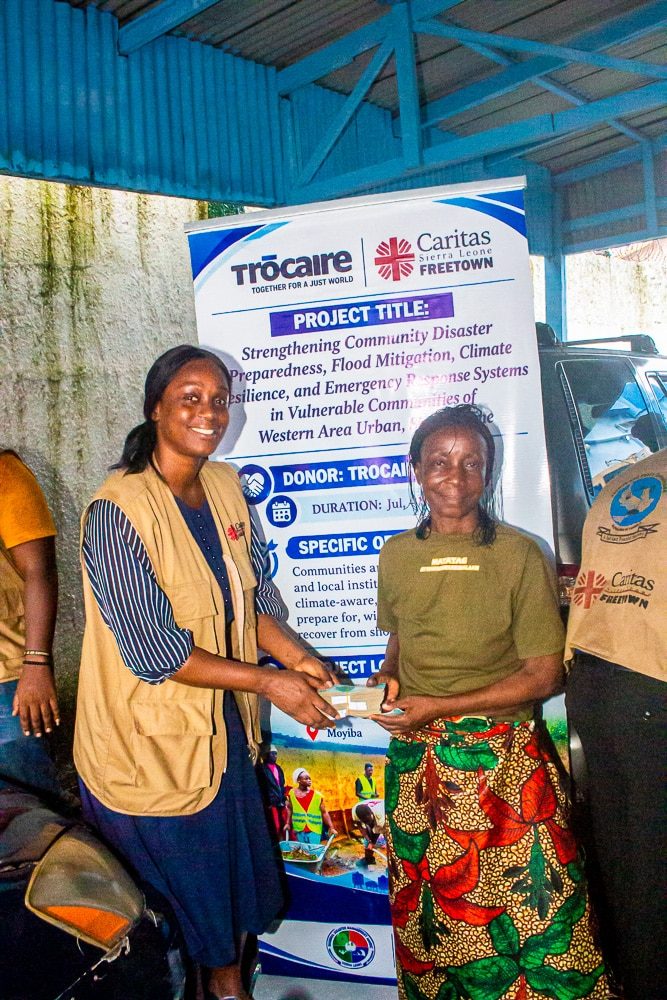
Caritas Freetown, with funding from Trocaire, has disbursed Multi-Purpose Cash Assistance (MPCA) of NLe3,480 each to 80 households in three disaster-prone communities in the Western Area Urban as part of efforts to strengthen community disaster preparedness and mitigation.

The beneficiaries are from Moyiba, Moa Wharf and Bottom Oku in Wellington, with the distribution taking place at Rokel Commercial Bank, Wellington PMB Branch, on Wednesday September 23, 2026.

The intervention forms part of a project titled: “Strengthening Community Disaster Preparedness, Flood Mitigation, Climate Resilience and Emergency Response Systems in Vulnerable Communities of Western Area Urban, Sierra Leone.”

Speaking during the disbursement, Eliza G. O. C. Sillah, Programs Manager at Caritas Freetown, said the project was developed following an assessment which identified gaps in disaster management structures within the targeted communities. She said the assessment found that the communities lacked structured Community Disaster Management Committees (CDMCs) to effectively mitigate and respond to disasters.

According to Eliza G. O. C. Sillah, the project is therefore supporting the strengthening of the CDMCs, including providing them with tools to carry out mitigation activities such as community cleaning and identifying houses located in disaster-prone areas.

She described the cash transfer as one of the key components of the project, intended to enable beneficiaries to strengthen their homes and support their families.

Eliza G. O. C. Sillah explained that the disbursement was preceded by financial literacy training to help beneficiaries properly manage and utilize the funds. She added that Caritas will conduct post-distribution monitoring two weeks after the cash transfer to assess how the money was used, its impact on beneficiaries and their level of satisfaction with the intervention.

Meanwhile, Gerald King, Deputy Director of Disaster Risk Reduction and Preparedness at the National Disaster Management Agency (NDMA), described the intervention as an important complement to Government’s disaster management efforts.

Gerald King said the Government faces challenges in preparing for, mitigating and responding to disasters, making partnerships with organisations such as Caritas and Trocaire important. He noted that residents in disaster-prone communities are particularly vulnerable to flood-related incidents during the rainy season.

“What is good about this intervention is that it's not a response to disaster but preparedness,” Gerald King said, while describing the approach as anticipatory action, which equips communities before a disaster occurs.

He said such support gives vulnerable households a starting point to cope with the effects of a disaster should one occur.

Gerald King also stressed the importance of resources in disaster management, saying the sector requires significant resources to effectively prepare for and respond to emergencies.

He said Sierra Leone has made significant progress in disaster management over the years, noting that prior to 2020, the country did not have a stand-alone agency responsible for disaster management and response.

He added that the NDMA has since undertaken several policy actions aimed at strengthening disaster preparedness, mitigation and response. Gerald King further noted that many disaster-related incidents in Sierra Leone are linked to human activities, including the continued occupation of disaster-prone areas and activities that increase vulnerability to disasters.

For beneficiaries, the cash support is expected to help address some of the challenges they face during the rainy season.

Alusine Bangura, a beneficiary from Moyiba, said earning a living has been difficult since the death of his parents and that his household often struggles during the rainy season. Alusine Bangura said he would use part of the money to strengthen his house, which is usually affected by heavy rainfall.

He plans also to use the remainder to establish a small kiosk selling phone recharge cards to support himself and his brother.

Another beneficiary, Dora Mansaray from Moa Wharf, said heavy rainfall sometimes forces her family to temporarily leave their home because of flooding. She said the flooding has also resulted in the loss of household properties.

Dora Mansaray said she would use the money to purchase sand and cement to repair sections of her house that have been damaged by heavy rainfall. She expressed gratitude to Caritas for the financial support, saying it would make a difference for her and her children.

The cash transfer is part of the broader intervention aimed at strengthening the capacity of vulnerable communities to prepare for, mitigate and recover from disasters. https://thecalabashnewspaper.com/archives/64883