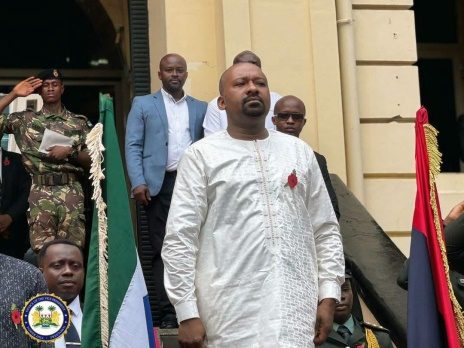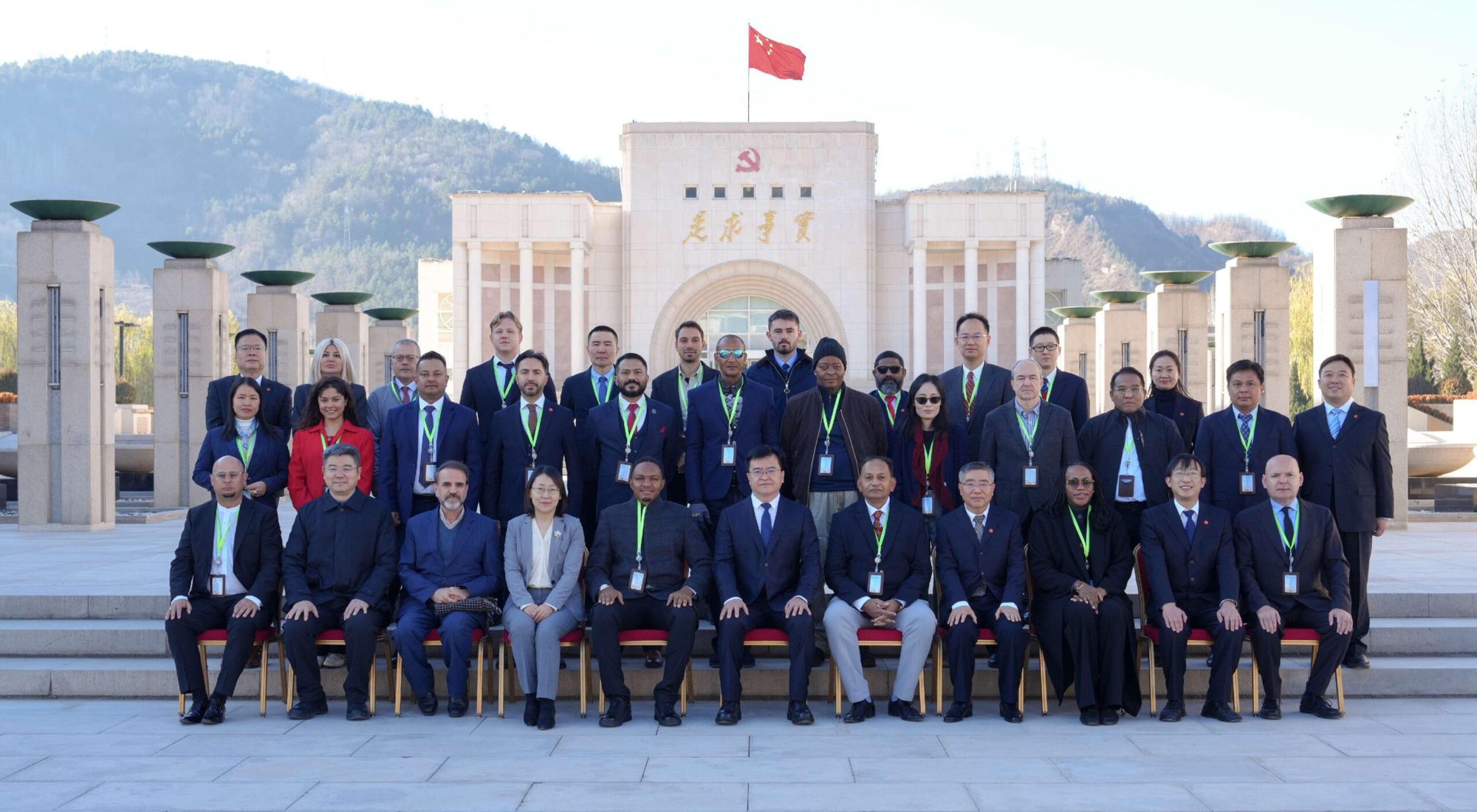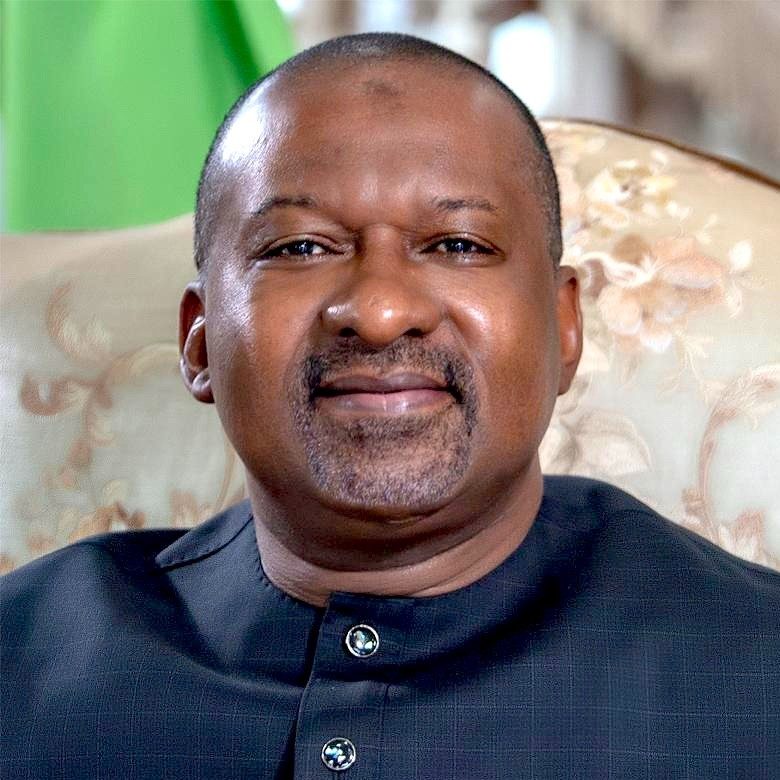
The ability of any Government to maintain national stability depends not only on its capacity to formulate policies and implement development programmes but also on its willingness to engage, negotiate and resolve disagreements before they escalate into major national crises. In Sierra Leone, one institution increasingly demonstrating its relevance in this regard is the Office of the Vice President, currently occupied by Dr Mohamed Juldeh Jalloh.
Over the years, Vice President Juldeh Jalloh has emerged as an influential figure in facilitating high-level negotiations, addressing industrial grievances and encouraging political dialogue among stakeholders whose differences could otherwise threaten institutional stability and national cohesion.
His interventions have extended beyond routine executive responsibilities, placing his office at the intersection of Government decision-making, industrial relations, political engagement and conflict resolution.
The latest example is his involvement in resolving the industrial dispute between the Government of Sierra Leone and the Union of Academic Staff Associations (UASA), which had disrupted academic activities and raised concerns about the future of university education.
In a Press Release issued on Friday, 6 November 2026, UASA acknowledged the Vice President's intervention, following which the union agreed to suspend its industrial action and resume work while awaiting a written agreement from the Ministry of Finance.
That development represents more than the temporary suspension of a strike. It reinforces the importance of credible leadership, constructive engagement and high-level mediation in addressing disputes involving essential public institutions.
For a country seeking to strengthen its democratic institutions, improve public service delivery and consolidate national unity, such interventions deserve serious consideration.
The Vice President's involvement in the latest university dispute should not be viewed as an isolated development. Rather, it forms part of a broader record of engagement with organized labour, particularly within Sierra Leone's higher education sector.
In January 2021, Dr Mohamed Juldeh Jalloh convened representatives of university lecturers and Government officials at Fourah Bay College to address an industrial dispute concerning salaries and conditions of service.
At the time, the disagreement had generated uncertainty within the university system, with lecturers demanding improvements in their remuneration and working environment.
Recognizing the potential consequences of prolonged industrial action, the Vice President facilitated discussions that resulted in the establishment of a 14-member committee comprising representatives of relevant Government Ministries, universities and academic staff associations.
During those engagements, he appealed for what he described as "national shared solidarity", encouraging both sides to approach the negotiations with a sense of collective responsibility.
The process subsequently contributed to a Government commitment to increase academic staff salaries, demonstrating the potential value of sustained dialogue over confrontation.
Five years later, the latest UASA dispute has again brought the Vice President into the centre of negotiations involving university lecturers and Government authorities.
The recurrence of such interventions raises an important governance question: Should Sierra Leone further strengthen the institutional mechanisms through which the Office of the Vice President facilitates negotiations on matters of national importance?
There is a compelling argument that it should.
Industrial disputes affecting universities, healthcare institutions and other essential services often require coordination among several Government Ministries and agencies. Without effective leadership, negotiations can become prolonged, fragmented and unnecessarily confrontational.
The Vice President's position within the executive provides an opportunity to bring the relevant institutions together, encourage compromise and facilitate decisions requiring high-level political attention.
Nevertheless, successful mediation must go beyond securing an immediate return to work. The real test lies in ensuring that negotiated commitments are documented, implemented and respected by all parties.
Beyond industrial relations, Vice President Dr Mohamed Juldeh Jalloh has also played an important role in engagements intended to address political disagreements and promote dialogue between the Government and opposition stakeholders.
The political tensions that followed Sierra Leone's June 2023 general elections presented significant challenges to national confidence and democratic cooperation.
In response, President Dr Julius Maada Bio announced plans for an electoral systems review committee to be led by the Vice President.
The subsequent Agreement for National Unity, reached in October 2023 between the Government and the opposition All People's Congress (APC), established a framework for addressing electoral concerns and strengthening political cooperation.
It is important to distinguish the respective roles played during that process. The October 2023 mediation was facilitated by the Economic Community of West African States (ECOWAS), the African Union and the Commonwealth, while the Government's negotiating delegation was led by Chief Minister Dr David Moinina Sengeh.
The Vice President's significance has been particularly evident in subsequent engagements surrounding the implementation of the agreement and efforts to sustain dialogue between the political actors.
In April 2026, Dr Mohamed Juldeh Jalloh led a Government delegation in discussions involving international moral guarantors and representatives of the APC.
He also engaged APC-led mayors and district council chairpersons as efforts continued to address outstanding political disagreements.
Following one such engagement, the Vice President explained: "We discussed our mutual desire for a swift resolution to the current political impasse."
He further emphasized that "The IMC has a distinct role in facilitating dialogue and joint solutions."
Those statements reflect an approach that recognizes negotiation, institutional cooperation and mutual understanding as essential components of democratic governance.
In a politically competitive environment, maintaining communication between governing and opposition institutions is particularly important.
Political disagreements are inevitable in a democracy. However, allowing those disagreements to undermine public administration, local governance or national development can have consequences far beyond partisan interests.
The Vice President's participation in such engagements illustrates how his office can help maintain channels of communication between political stakeholders, even during periods of heightened tension.
It also demonstrates the importance of approaching national disagreements as governance challenges requiring institutional solutions rather than merely political contests requiring winners and losers.
The strategic relevance of the Office of the Vice President derives largely from its position within Sierra Leone's executive structure.
While the President remains the country's principal executive authority and provides overall political direction, the Vice President occupies a position that enables him to support executive coordination and represent the Presidency in important national engagements.
This position can be particularly valuable when disagreements involve several Ministries, public institutions, professional associations, labour organisations, political parties or development partners.
Such disputes frequently require more than administrative correspondence or ministerial meetings. They demand political authority, institutional coordination and the confidence of stakeholders who must believe that negotiated outcomes will receive serious Government consideration.
Dr Mohamed Juldeh Jalloh's growing involvement in those processes suggests that the Presidency increasingly relies on his office to facilitate dialogue on sensitive national matters.
From university lecturers demanding improved conditions of service to opposition stakeholders seeking political assurances, the common factor has been the need for an authoritative platform capable of bringing competing interests together.
The Vice President's office has demonstrated the potential to provide that platform.
However, the growing prominence of the office should not be confused with the creation of a formally designated national negotiation institution. Its current influence is better understood through the responsibilities assigned to it, the confidence placed in its leadership and its practical involvement in resolving disputes.
There is also an important distinction between facilitating negotiations and possessing the legal or financial authority to implement every agreement reached.
For instance, commitments involving salary adjustments, budgetary allocations or institutional reforms may still require decisions by the Ministry of Finance, relevant Ministries, Parliament or other legally mandated authorities.
Consequently, the effectiveness of the Vice President's interventions depends substantially on cooperation across Government and the willingness of participating institutions to honour their responsibilities.
This is precisely why structured follow-up mechanisms are necessary.
Agreements reached through high-level mediation should include clear responsibilities, implementation timelines and transparent monitoring arrangements wherever appropriate.
Without those safeguards, even successful negotiations risk becoming temporary political settlements rather than lasting institutional solutions.
The broader lesson emerging from Vice President Juldeh Jalloh's interventions is that Sierra Leone needs strong, credible and accessible mechanisms for resolving national disagreements.
A Government cannot eliminate every industrial dispute, political disagreement or institutional grievance. What it can do is establish reliable processes through which competing interests are heard, legitimate concerns are addressed and negotiated solutions are pursued.
The Office of the Vice President is increasingly demonstrating its potential to contribute to that objective.
However, Sierra Leone should aspire to move beyond a system in which high-level intervention becomes necessary only after disputes have escalated into strikes, political standoffs or disruptions to public services.
A more sustainable approach would involve strengthening early-warning arrangements, improving communication between government institutions and stakeholders, and ensuring that unresolved grievances receive timely attention.
The Vice President's office could play an important coordinating role in such a framework without displacing existing constitutional institutions, statutory bodies or established dispute-resolution mechanisms.
This would help transform the experience gained from individual negotiations into a more predictable and effective approach to national dialogue.
The latest UASA intervention provides an opportunity to reflect on that possibility.
Although the suspension of industrial action is a welcome development, the outstanding written agreement and the implementation of any commitments will ultimately determine whether the settlement produces lasting stability within the university system.
Similarly, political dialogue with opposition stakeholders must be assessed by the extent to which it produces measurable progress, strengthens institutional confidence and promotes democratic cooperation.
Dr Mohamed Juldeh Jalloh's contribution should therefore be evaluated not merely through the visibility of his interventions but through their practical and lasting outcomes.
His growing prominence in negotiations demonstrates the value of a Vice Presidency that is actively involved in addressing national challenges rather than remaining confined to ceremonial engagements.
At the same time, lasting institutional success requires more than the personal diplomatic abilities of any officeholder. It requires transparent processes, continuity, accountability and a commitment to implementing agreements.
The central argument is clear: Sierra Leone has an opportunity to develop the Office of the Vice President into an even more effective strategic platform for national dialogue, coordination and consensus-building.
The repeated involvement of Dr Mohamed Juldeh Jalloh in labour negotiations and political engagements provides a practical foundation for considering how that objective could be achieved.
Ultimately, the strength of democratic governance is reflected not in the absence of disagreements but in the capacity of national institutions to resolve them peacefully, fairly and constructively.
If the Office of the Vice President continues to build confidence among Government institutions, organized labour, opposition stakeholders and the wider public, it could become an increasingly valuable pillar of Sierra Leone's governance architecture.
For Vice President Juldeh Jalloh, the challenge ahead is not simply to bring disputing parties to the negotiating table. It is to help ensure that dialogue produces durable agreements, that commitments translate into action and that every successful intervention contributes to a stronger culture of national consensus.
That is the standard by which an effective strategic centre for national dialogue and negotiations should ultimately be judged.
https://thecalabashnewspaper.com/archives/66085