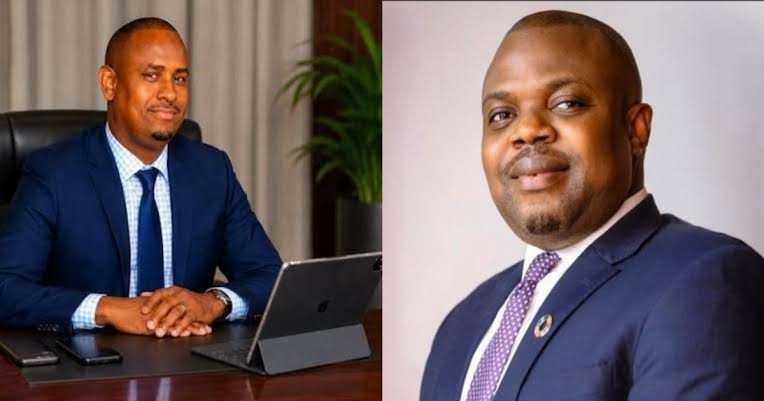
The Campaign for Human Rights and Development International (CHRDI) has come under scrutiny following its decision to disqualify the All People’s Congress (APC) flagbearer opinion poll amid allegations of voting irregularities, with questions emerging over why Hon. Chernor Ramadan Maju Bah, popularly known as Chericoco, was specifically identified in its latest public statement while other contestants remained unnamed.
The controversy intensified on Monday, 9 November 2026, when CHRDI issued an official statement announcing that the entire polling exercise had been disqualified following investigations that reportedly uncovered suspicious voting patterns and attempts by unidentified individuals to interfere with the voting platform.
In its statement, CHRDI acknowledged that it had initially trusted the platform after receiving assurances from its Information Technology and Cybersecurity expert regarding its security and credibility.
The organisation explained that its confidence was partly influenced by the platform's reported use by prominent international media organisations and institutions, including CNN, Sky Sports and TED.
However, subsequent investigations reportedly revealed significant weaknesses in the voting process, prompting CHRDI to conclude that the results could no longer be considered sufficiently reliable.
According to the statement, investigators detected sudden increases in votes associated with Chericoco's voting slot, alongside similar suspicious patterns involving other contestants.
CHRDI stated: "After further investigation, we discovered burst votes from the Chernor Bah voting slot and we saw something similar with other candidates."
The organisation further alleged that unidentified individuals had attempted to interfere with the voting system, with suspicious activity reportedly originating from outside Sierra Leone.
Importantly, CHRDI acknowledged that it could not establish any connection between the detected interference and the campaign teams of contestants participating in the exercise.
This admission has become central to the controversy, particularly among those questioning the decision to identify Chericoco specifically while referring only generally to other candidates allegedly affected by similar irregularities.
Critics of the statement argue that naming one contestant in connection with suspicious voting activity, without publicly presenting equivalent findings concerning other candidates, risks creating an impression of selective scrutiny.
They maintain that if suspicious voting patterns were detected across multiple contestants, transparency and procedural fairness require consistent disclosure of the findings rather than singling out one individual.
The controversy has also revived questions surrounding earlier reports of unusual voting activity allegedly involving another APC flagbearer aspirant, Ibrahim Bangura, commonly identified as DIB.
In a separate formal notice issued on 9 November 2026, the Chericoco Media Team referred to earlier figures attributed to CHRDI indicating that votes recorded for DIB increased from approximately 6,100 at 9:36 p.m. to 8,400 at 9:40 p.m., representing an increase of 2,300 votes within four minutes.
The notice also cited voting records allegedly showing numerous entries with identical or closely clustered timestamps and accounts displaying blank profile images.
Those figures, as presented by the Chericoco Media Team, have not been independently verified. Nevertheless, they form part of the campaign's argument that CHRDI should disclose the technical evidence underlying its findings against every affected contestant.
The central question being raised is why Chericoco was expressly identified in CHRDI's latest statement when the organisation itself acknowledged detecting similar irregularities involving other candidates.
For the Chericoco camp, the issue extends beyond the cancellation of an online opinion poll to the principles of fairness, consistency and accountability expected of an organisation conducting politically sensitive public exercises.
In its formal notice addressed to CHRDI's representative, Abdul Fatoma, the Chericoco Media Team expressed serious concern over what it described as conflicting public statements regarding the credibility and integrity of the exercise.
The team argued that CHRDI had initially reassured participants about the security of its voting platform before subsequently acknowledging irregularities serious enough to warrant disqualification.
It questioned whether the organisation had applied consistent investigative standards in assessing voting patterns associated with different contestants.
The campaign team also categorically rejected any suggestion that Chericoco or his supporters had engaged in, authorized or facilitated fraudulent voting.
According to the team, supporters participated in good faith, investing their time, energy and resources in an exercise they believed had been adequately secured by its organizers.
It maintained that allegations capable of damaging a political contestant's reputation should never be advanced without credible and verifiable supporting evidence.
Consequently, the Chericoco Media Team formally demanded the disclosure of technical findings, including voting records, timestamps, investigative methodology and evidence supporting any allegation of irregularities involving votes attributed to Chericoco.
The team also requested an explanation of CHRDI's conflicting public statements, the technical justification for disqualifying the exercise and clarification regarding any external involvement in the platform's design, administration or financing.
Furthermore, it called for appropriate public clarification wherever allegations or implications of misconduct against contestants could not be substantiated.
Meanwhile, CHRDI has accepted responsibility for relying on a platform that ultimately proved unsuitable for the intended exercise.
The organisation acknowledged that WhatsApp polls could not adequately verify voters' identities or prevent bulk voting, making the process vulnerable to manipulation.
It maintained that its decision to disqualify the exercise was intended to preserve fairness rather than favour any particular candidate.
CHRDI also announced plans to audit a similar opinion poll involving the Sierra Leone People's Party (SLPP), indicating that concerns over the platform's reliability were not limited to the APC exercise.
The organisation further disclosed that discussions were underway to introduce a new, more inclusive voting platform with stronger safeguards against external interference.
While those commitments may represent an attempt to restore confidence, the controversy surrounding the identification of Chericoco has raised additional questions about how organisations should communicate technical findings involving politically exposed individuals.
The distinction between detecting suspicious votes and establishing responsibility for those votes remains particularly important.
A sudden increase in votes associated with a candidate does not, by itself, establish that the candidate or campaign organized, authorized or benefited knowingly from manipulation.
Indeed, CHRDI's own acknowledgement that it could not link the suspicious activity to any campaign team reinforces the need for caution in attributing responsibility.
The Chericoco Media Team has insisted that the controversy will not distract it from its political objectives, reaffirming its commitment to strengthening unity within the APC and advancing Chericoco's leadership aspirations ahead of the 2028 general elections.
The team also reiterated its commitment to the Wan Salone Agenda, which it identifies as a central pillar of its political vision.
As the dispute continues, attention is shifting towards whether CHRDI will release comprehensive technical findings covering all contestants affected by the alleged irregularities.
For observers concerned about fairness and institutional credibility, the fundamental issue is not simply whether the poll was correctly disqualified, but whether the evidence has been communicated consistently and without creating unjustified suspicion against particular contestants.
Ultimately, CHRDI's admission that it cannot link the suspected interference to any campaign team makes one principle especially important: no contestant should be publicly associated with wrongdoing without credible evidence establishing responsibility.
Until the organisation provides a fuller account of the irregularities involving all affected contestants, questions surrounding its selective identification of Chericoco are likely to remain at the centre of the controversy. https://thecalabashnewspaper.com/archives/66097

No comments:
Post a Comment