Wednesday, 23 September 2026


Vice President Jalloh Joins Saudi Community to Celebrate 96th National Day in Freetown
 

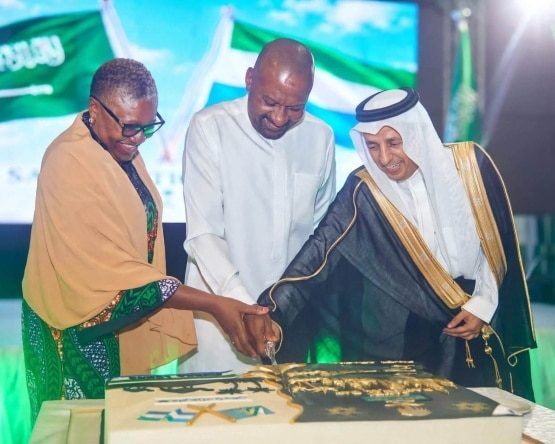
Vice President of the Republic of Sierra Leone, Dr Mohamed Juldeh Jalloh, joined members of the Saudi Arabian community and the diplomatic corps in Freetown to celebrate the 96th National Day of the Kingdom of Saudi Arabia.

The celebration was held on Monday, September 21, 2026, at the Radisson Blu Hotel in Freetown, where Dr Mohamed Juldeh Jalloh served as Guest of Honour.

The occasion brought together senior Government officials, diplomats, representatives of international organisations and other distinguished guests to celebrate Saudi Arabia’s history, traditions and national development.

It also highlighted the longstanding friendship and growing cooperation between Sierra Leone and Saudi Arabia in trade, investment, healthcare, humanitarian assistance, education and religious affairs.

Saudi Arabia’s Ambassador to Sierra Leone, Suad Al Musaed, outlined the Kingdom’s expanding support to Sierra Leone, particularly in healthcare, education, humanitarian programmes and religious affairs.

Speaking on behalf of His Excellency President Dr Julius Maada Bio, the Government and people of Sierra Leone, Vice President Dr Mohamed Juldeh Jalloh congratulated the leadership and people of Saudi Arabia on the country’s 96th National Day.

The Vice President also highlighted ongoing bilateral initiatives between the two countries, noting that productive and sensible investments could create trade and economic opportunities for the mutual benefit of their citizens.

He reaffirmed Sierra Leone’s commitment to strengthening its relationship with Saudi Arabia and expanding cooperation in areas that support national development and economic growth.

Deputy Minister of Foreign Affairs and International Cooperation, Madam Jeneba Bangura, also congratulated the leadership and people of Saudi Arabia on the occasion.

She commended the Kingdom for its development and humanitarian assistance to Sierra Leone, describing Saudi Arabia as an important bilateral partner.

Madam Jeneba Bangura said Sierra Leone welcomed increased Saudi investment, particularly in agriculture, mining, renewable energy, infrastructure, tourism and human capital development.

The celebration reaffirmed the cordial relations between Sierra Leone and Saudi Arabia and demonstrated the commitment of both countries to deepening diplomatic, economic and development cooperation. https://thecalabashnewspaper.com/archives/64788


Justice Glenna Thompson Represents Chief Justice Komba Kamanda at Dakar Conference
 

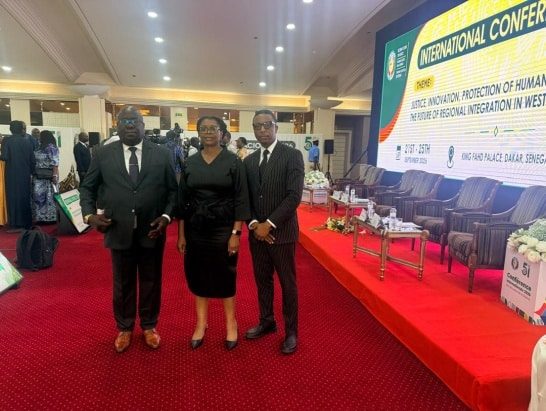
Supreme Court Judge, Honourable Justice Glenna Thompson, led a delegation from the Judiciary of Sierra Leone to a five-day international conference organized by the Economic Community of West African States (ECOWAS) in Dakar, Senegal.

The conference, being held at the King Fahd Palace from 21 to 25 September 2026, is themed: “Justice, Innovation and Protection of Human Rights and the Future of Regional Integration in West Africa.”

Justice Glenna Thompson is representing the Chief Justice of Sierra Leone, His Lordship Honourable Justice Komba Kamanda, at the high-level regional gathering. She is accompanied by Supreme Court Judge, Honourable Justice M. F. Deen Tarawally and High Court Judge, Honourable Justice Augustine K. Musa.

The conference comes at a significant period for ECOWAS as the regional organisation intensifies efforts to strengthen democratic governance, judicial institutions, the rule of law, human rights protection and regional integration across West Africa.

Justice Glenna Thompson’s appointment to lead the Sierra Leone delegation reflects the inclusive leadership approach of Chief Justice Komba Kamanda’s administration, particularly its commitment to providing women judges with opportunities to participate in major national, regional and international judicial engagements.

Throughout the five-day conference, participants are expected to examine the relationship between justice, technological and institutional innovation, human rights protection and the future of regional integration.

The gathering will also provide a platform for judges, legal practitioners, policymakers and other stakeholders to exchange experiences, strengthen judicial cooperation and explore innovative approaches to addressing emerging challenges within justice systems across the region.

Sierra Leone’s participation demonstrates the Judiciary’s continued engagement with regional judicial institutions and its commitment to contributing to discussions aimed at shaping the future of justice, human rights and the rule of law in West Africa. https://thecalabashnewspaper.com/archives/64785


Mines Minister Unveils Mining Fiscal Framework Projecting US$3.63 Billion from Model Bauxite Mine
 

Minister of Mines and Mineral Resources, Julius Daniel Mattai, has presented a detailed explanation of Sierra Leone’s mining fiscal regime, showing how a model bauxite operation could generate approximately US$3.63 billion for the Government and host communities over 25 years.

The presentation, titled: “From Ore to Treasury: Sierra Leone’s Mining Fiscal Regime Explained in Plain Language,” was prepared in collaboration with the National Minerals Agency and delivered in Freetown in September 2026.

Minister Julius Daniel Mattai said Sierra Leone’s mining fiscal regime should not be viewed as a single tax, but as a system comprising 11 distinct charges drawn from four principal statutes and applied in an order fixed by law.

He explained that seven of the 11 charges are payable whether or not a mining company makes a profit, while only four depend on profitability. According to him, understanding the distinction is crucial to assessing what the country receives from its mineral resources.

The presentation used a fictitious company, Mining Company A Limited, operating a large-scale bauxite mine in Port Loko District, to demonstrate how the fiscal system works. The model is illustrative and does not represent any existing mining company in Sierra Leone.

Under the assumptions, the company would operate for 25 years, producing five million tonnes of bauxite in its first year, six million tonnes in the second year and 10 million tonnes annually from the third year.

With an assumed free-on-board price of US$60 per tonne, the company would generate US$300 million in its first year, US$360 million in its second year and US$600 million annually thereafter. Its total gross revenue over the licence period was estimated at US$14.46 billion.

The model assumes operating costs equivalent to 50 per cent of revenue, capital expenditure of US$250 million over the first three years and a US$200 million debt facility carrying annual interest of 5.5 per cent. Payments to contractors were estimated at 15 per cent of revenue.

Minister Julius Daniel Mattai identified the 11 applicable fiscal charges as royalty, mining income tax, minimum alternate tax, mineral resource rent tax, withholding tax on contractors, withholding tax on interest, withholding tax on dividends, State participation, surface rent, rehabilitation funding and the Community Development Fund.

Royalty on bulk minerals, including bauxite, rutile and iron ore, is charged at three per cent of market value. In the model, royalty payments would amount to US$9 million in the first year, US$10.8 million in the second year and US$18 million annually from the third year.

Over 25 years, total royalty payments would reach US$433.8 million, of which US$86.76 million, representing 20 per cent, would be allocated to mining districts.

The Minister stressed that royalty is payable regardless of whether a company records a profit because it represents the price of the mineral removed from the ground. He noted that royalty losses normally occur through weaknesses in determining tonnage, moisture content, mineral grade and reference prices rather than through the royalty rate itself.

Mining income tax is charged at 30 per cent of chargeable income under the Extractive Industries Revenue Act 2018, as amended by the Finance Act 2026. In a mature year, the model company would record chargeable income of US$276 million and pay US$82.8 million in mining income tax.

The mineral resource rent tax, which targets exceptional returns after a project has recovered its expenditure, would generate US$27.6 million in a mature year. Minister Julius Daniel Mattai warned against incorrectly applying the resource rent tax rate directly to chargeable income, saying the law requires it to be calculated on accumulated net receipts.

Together, mining income tax and the mineral resource rent tax would take exactly 40 per cent of chargeable returns under the model.

Withholding tax on contractor payments is fixed at 20 per cent. Based on contractor payments equivalent to 15 per cent of revenue, this charge would generate another US$433.8 million over the project’s lifespan—the same amount generated by royalty.

Withholding tax on annual interest payments would generate US$55 million over 25 years. The model excludes dividend withholding tax because no dividend policy was assumed, meaning actual Government revenue could be higher if dividends were declared.

The State is also entitled to a 10 per cent free-carried and non-dilutable interest in large-scale mining operations under the Mines and Minerals Development Act 2022. It may acquire a further 35 per cent interest on agreed terms, subject to the required approvals.

Host communities would receive additional support through the Community Development Fund. Mining companies are required to contribute not less than one per cent of annual gross revenue directly to communities under publicly accessible community development agreements.

For the model bauxite mine, the fund would receive US$3 million in the first year and US$6 million in a mature year, amounting to US$144.6 million over the entire project.

Surface rent would be distributed separately, with 70 per cent going to landowners, 10 per cent to the Paramount Chief, 10 per cent to the Constituency Development Fund and 10 per cent to the District Council.

In a mature year, the model shows that the Government and host communities would receive US$154.6 million from US$600 million in gross sales, equivalent to 25.8 per cent. Across the full 25-year period, their combined share would amount to US$3.627 billion, or approximately 25.1 per cent of total gross revenue.

Mining income tax would contribute US$1.92 billion, followed by the mineral resource rent tax at US$640.16 million. Royalty and contractor withholding tax would each contribute US$433.8 million, while the Community Development Fund and interest withholding tax would provide US$144.6 million and US$55 million, respectively.

The Mines Minister recommended that the Government consistently model resource rent tax on its statutory base, clarify unresolved fiscal questions, digitize community development agreements and strengthen the measurement of mineral production and exports.

He also called for every mining project to be modelled against the statutory fiscal baseline before agreements are signed.

The Minister maintained that the presentation did not advocate an increase in mining tax rates or pass judgment on any company. Instead, it demonstrated the importance of applying existing laws correctly, strengthening transparency and ensuring that public officials fully understand the financial implications of mining agreements.

“We cannot put the ore back,” he stated, emphasizing that every tonne of bauxite exported leaves Sierra Leone only once. He said the country must ensure that the price charged for its mineral resources is determined by informed officials and subjected to transparent public scrutiny. https://thecalabashnewspaper.com/archives/64775

Caritas Freetown Intensifies Flood Prevention with  Three-Day Community & Main Street Cleaning Exercise
 

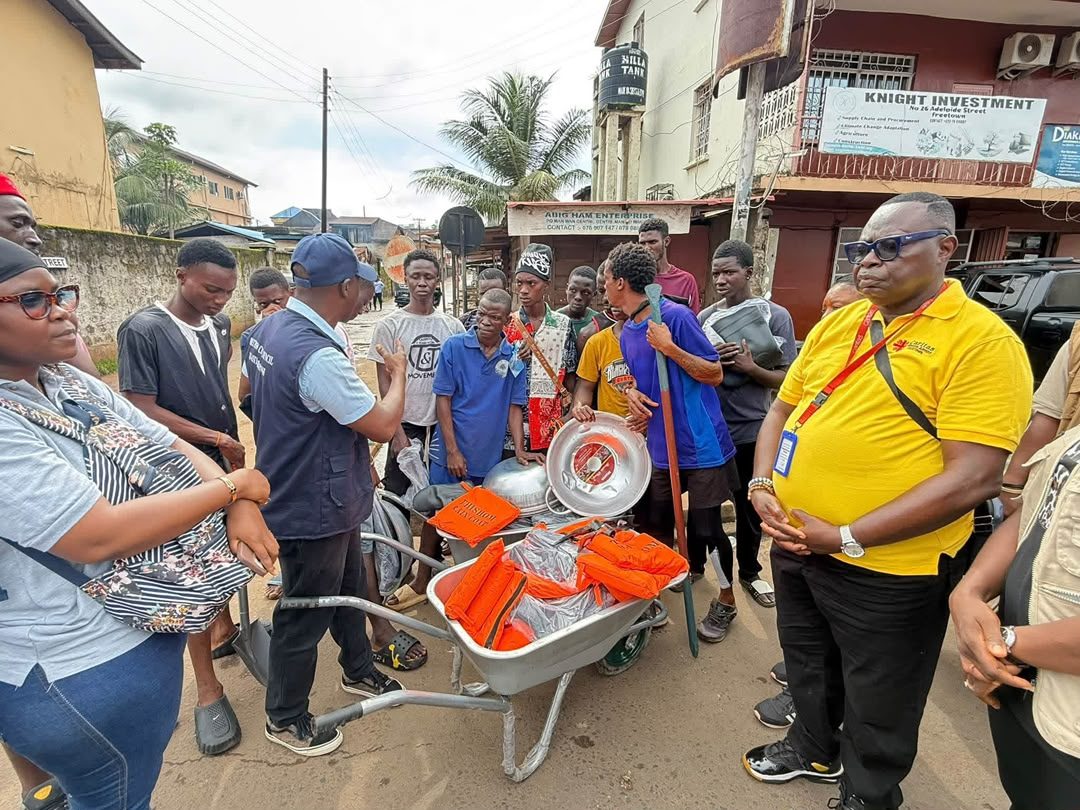
Caritas Freetown has strengthened efforts to reduce flood risks in vulnerable communities through a three-day community and main street cleaning exercise across selected areas in the Western Area.

The exercise, which ran from September 17 to 20, 2026, with September 18 excluded, formed part of Caritas Freetown’s project, “Strengthening Community Flood Preparedness and Early Humanitarian Response for Vulnerable Communities and Households in Western Area Urban and Rural Districts,” funded by CAFOD.

The project is being implemented in eight flood-prone communities, including Culvert, Portee, Kroo Bay and Gray Bush in the Western Area Urban District, as well as Goderich-Crab Town, Levuma, Waterloo Bofla and Grafton in the Western Area Rural District.

As part of the exercise, main street cleaning targeting clogged drainages was also conducted in several areas. In the Western Area Rural District, the exercise covered Bassa Town, Campbell Town, Jui and Regent, while in the Western Area Urban District, cleaning was carried out along Wilberforce Street, Priscilla Street, Gabriel Street and the Salad Ground Market.

According to, Alimatu Turay, Project Officer at Caritas Freetown, a needs assessment conducted in disaster-prone communities identified blocked drainage as one of the factors contributing to flooding.

She said the cleaning exercise forms part of Caritas’ broader effort to promote preparedness rather than waiting to respond after disasters occur.

“We’re doing this as a preparedness mechanism and not always reacting to disaster,” Alimatu Turay said.

She added that Caritas, in collaboration with the National Disaster Management Agency (NDMA) and Freetown City Council, has also trained Community Disaster Management Committees on disaster preparedness and response.

Alimatu Turay stated that indiscriminate waste disposal is a major challenge and said the exercise was also intended to sensitize residents about the link between proper waste management and flood prevention.

“Indiscriminate waste disposal poses a risk to our communities. People should understand that a healthy environment is a safe environment,” she said.

Gabriel John Hallowel, Deputy Disaster Officer at Freetown City Council, said community ownership of the cleaning exercise was important because residents are often among those most affected when flooding occurs.

He said the support provided by Caritas was significant to the council’s flood mitigation efforts, particularly before and during the rainy season.

Gabriel John Hallowel also highlighted other interventions aimed at improving waste management, noting that Catholic Relief Services (CRS) had supported the Council with tricycles to help some communities remove household waste.

He called for continued collaboration between the Council, Non-Governmental Organisations and communities to address waste management and flood risks.

“Beyond this exercise, we look forward to more coordination with other NGOs with similar initiatives and expect communities to take responsibility of waste management within their household and the community,” Gabriel John Hallowel said.

Meanwhile, Rachael Dumbuya, a Community Disaster Management Committee volunteer in Grafton said the cleaning exercise had contributed to reducing the community’s flood risk but called for additional support.

She said Grafton remains vulnerable and requires continued interventions, particularly to improve its drainage system.

Rachael Dumbuya suggested the use of machinery to clear and deepen some drainage to reduce water overflow, which she said sometimes contributes to flooding.

She also called for stronger community bylaws to discourage indiscriminate waste disposal and urged the police to support their enforcement.

Rachael Dumbuya further raised concerns about the construction of structures in waterways, saying such activities are worsening the community’s vulnerability to flooding.

The cleaning exercise was part of Caritas Freetown’s broader efforts to strengthen community preparedness, promote environmental cleanliness and minimize the risk and impact of flooding before disasters occur. https://thecalabashnewspaper.com/archives/64774


LEJ Enterprises Partners with Global Arcus to Expand Educational Opportunities for Sierra Leoneans
 

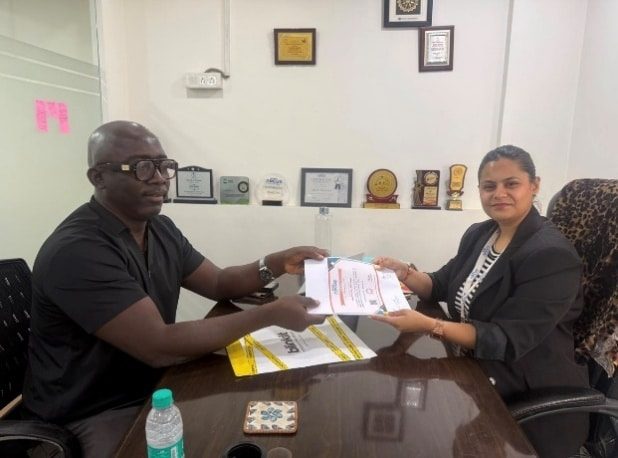
Sierra Leonean company LEJ Enterprises has signed a Memorandum of Understanding (MOU) with Global Arcus-Study in India, aimed at creating new educational and professional opportunities for Sierra Leonean students and young people. The agreement was signed in New Delhi during an engagement involving Samuel Squire, Founder and Director of LEJ Enterprises and representatives of Global Arcus, including Chief Executive Officer Sachin Shekhar and Associate Director Ayushi Srivastava.

The partnership is expected to facilitate opportunities for Sierra Leoneans in several areas, including higher education in India, medical tourism, digital services and international collaboration.

According to LEJ Enterprises, the partnership is intended to create additional pathways for young Sierra Leoneans seeking access to educational opportunities and other services beyond the country's borders.

“This partnership is about creating real opportunities for our young people and building a brighter future for Sierra Leone through global collaboration,” Samuel Squire said.

He added: “Education is the key to a stronger, healthier and more prosperous Sierra Leone.”

The partnership comes against the backdrop of Sierra Leone's stated focus on Human Capital Development, with education identified as a central component of the Government's development agenda.

The Government has highlighted investment in education and the implementation of the Free Quality School Education programme as key elements of its Human Capital Development agenda.

In March 2026, the Global Partnership for Education also announced President Julius Maada Bio as a Champion for Sustainable Education Financing, emphasizing the role of political leadership and international cooperation in strengthening education systems.

LEJ Enterprises said its partnership with Global Arcus is intended to complement those broader efforts by connecting Sierra Leonean students with international educational opportunities.

As part of the engagement in India, Samuel Squire was also presented with a Certificate of Brand Ambassador for Global Arcus – Study in India for the 2026 session. The certificate carries Ambassador ID ARCUS70.

Beyond education, the MOU provides a framework for exploring cooperation in healthcare, digital services and other areas of mutual interest.

The partnership is expected to strengthen links between Sierra Leone and India while providing young Sierra Leoneans with opportunities to access international education and services. https://thecalabashnewspaper.com/archives/64770


Africell and Street Child Launch 13th Edition of Street Child Marathon
 

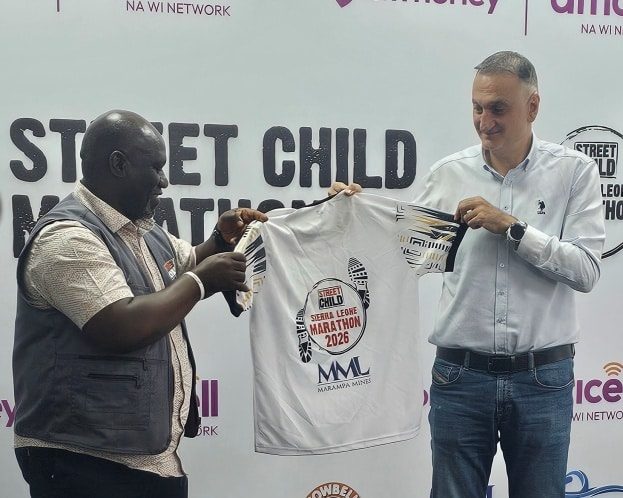
Africell Sierra Leone and Street Child have launched the 13th Edition of the Sierra Leone Street Child Marathon, with this year’s event scheduled to take place in Makeni on Sunday 25 October 2026.

The launch was held on Tuesday 22 September 2026 at Africell’s headquarters on Wilberforce in Freetown, bringing together representatives of Street Child, Africell, the Sierra Leone Athletes Association and other stakeholders.

The marathon will feature four categories, 5K, 10K, 21K half marathon and 42K full marathon.

Speaking at the launch, Africell Sierra Leone Media Manager, Abdul Karim Sesay, reaffirmed the company’s continued support for Street Child and its initiatives aimed at improving the lives of children across the country.

He said Africell is proud to continue its partnership with Street Child, noting that the collaboration over the years had supported vulnerable children and communities while providing platforms to amplify children’s voices and promote education and development.

He said Africell had consistently supported Street Child’s efforts to reach communities and improve the lives of children across Sierra Leone. He also described the marathon as more than a sporting event, saying it represents concern for children, their education and empowerment.

Abdul Karim Sesay said Africell would provide technical, media and graphic design support to promote this year’s marathon and encourage wider participation. He also encouraged journalists and other stakeholders to use their platforms to raise awareness about the event and the importance of supporting children’s education and physical wellbeing.

Street Child Sierra Leone Country Director, Emmanuel Kelfa Kargbo, highlighted the marathon’s role in supporting children while promoting healthy living among participants.

He said the marathon is not only a sporting event but also a platform for Street Child to showcase its work and encourage support for children facing challenges in accessing education.

He disclosed that Street Child is approaching the completion of 55 schools across the country as part of its efforts to improve access to education.

According to him, this year's marathon has already attracted more than 1,000 participants even before its official launch furthering that the organisation is considering how to accommodate increased participation as interest in the event continues to grow.

The Street Child Country Director encouraged people of different ages and abilities to participate, noting that those unable to run could walk. According to him, participation could contribute to an individual’s health while supporting Street Child’s work to improve children’s access to education.

He cited communities where children face difficulties reaching schools, including situations where they have to cross rivers and walk long distances. The Country Director pointed out that such experiences reinforce the importance of ensuring that every child has an opportunity to access education.

National Race Manager of the Sierra Leone Athletes Association, Ibrahim Moses Kargbo commended Street Child for organizing the marathon, describing it as an important platform for promoting athletics, healthy lifestyles and the development of sporting talent.

He said the event had also created opportunities for athletes to develop through competitive running. Reflecting on his involvement with the marathon since 2017, he said two athletes he worked with participated in the event and subsequently achieved notable success.

Ibrahim Moses Kargbo explained that the athletes initially competed in the 5K before progressing to the 10K, with their development eventually leading to their representation of Sierra Leone at the 2024 Olympic Games in Paris.

The National Race Manager said the experience demonstrated the opportunities that the marathon could provide for young athletes. He commended Street Child’s continued support for athletics and expressed his willingness to strengthen collaboration between the organisation and the Sierra Leone Athletes Association.

On his statement, Afrimoney Marketing Director, John Konteh encouraged members of the public to participate in the marathon, saying the event promotes healthy living, networking and support for children’s education.

He said participants should take part according to their abilities, noting that those unable to run could walk.

John Konteh explained that registration could be completed through Afrimoney by dialing *161*4# and entering the marathon merchant code 760817. Participants would then select their preferred race category and complete payment using their Afrimoney PIN.

He said registration fees is Le40 for the 5K, Le50 for the 10K, Le60 for the half marathon and Le75 for the full marathon.

The Afrimoney Marketing Director said successful registration would generate a transaction ID, which participants should keep as it would be required when collecting their marathon race materials from designated Street Child locations.

He further encouraged participants to remain physically active through activities such as walking and running, saying the marathon will provide an opportunity to promote healthier lifestyles while contributing to a cause focused on children’s education.

The 13th Edition of the Sierra Leone Street Child Marathon will take place in Makeni on Sunday 25 October 2026, with participants expected to compete across the 5K, 10K, 21K half marathon and 42K full marathon categories. https://thecalabashnewspaper.com/archives/64764


ECSL Validates Draft University Curriculum on Electoral and Political Studies
 

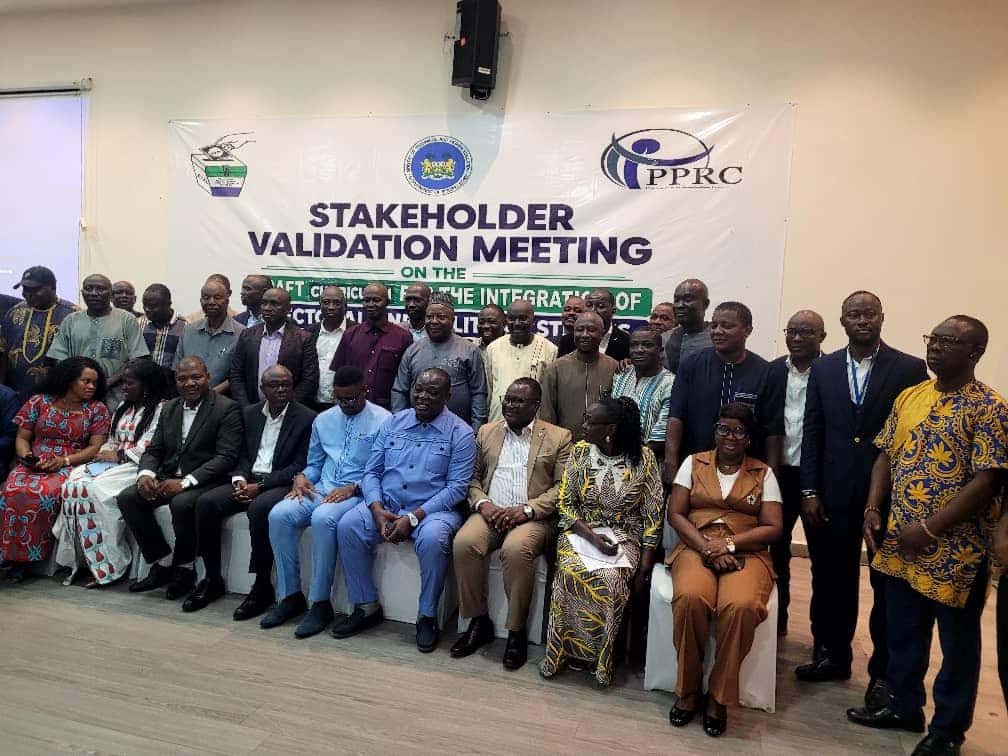
The Electoral Commission for Sierra Leone on Tuesday, September 22, 2026, convened a stakeholders’ validation meeting to review a draft curriculum for the proposed introduction of Diploma and Degree programmes in Electoral and Political Studies at universities across Sierra Leone.

The meeting, held at the New Brookfields Hotel on Jomo Kenyatta Road in Freetown, brought together representatives from the electoral, political, education and academic sectors to examine the proposed curriculum and make recommendations for its improvement.

Participants included officials from the Electoral Commission for Sierra Leone, the Political Parties Regulation Commission, the Ministry of Technical and Higher Education and the Tertiary Education Commission. University Vice-Chancellors, Principals, lecturers, curriculum experts and other stakeholders also attended the engagement.

The initiative was designed to strengthen electoral and political education among University students and deepen their understanding of Sierra Leone’s democratic processes, electoral systems and civic responsibilities.

The proposed curriculum is expected to provide students with academic and practical knowledge of elections, political institutions, democratic governance, civic engagement and the responsibilities of citizens within a democratic society.

The validation meeting gave stakeholders an opportunity to assess the academic quality, relevance and practicality of the draft curriculum. Participants examined its proposed content and shared recommendations intended to ensure that the programme meets acceptable academic standards, aligns with national education priorities and responds to Sierra Leone’s democratic needs.

Opening the engagement, Electoral Commissioner, Zainab Umu Moseray, who oversees the Training and Procedures Department of the Electoral Commission for Sierra Leone, described the meeting as a significant milestone in the country’s efforts to strengthen democratic education.

Electoral Commissioner, Zainab Umu Moseray, underscored the importance of developing a comprehensive programme that would equip University students with the knowledge and skills required to understand and participate responsibly in electoral and political processes.

The initiative reflects the Electoral Commission for Sierra Leone’s recognition of the important role universities can play in building democratic awareness, encouraging responsible political participation and preparing young people to contribute meaningfully to national governance.

Introducing electoral and political studies into university programmes could also help students better understand the functions of electoral management bodies, political parties and other democratic institutions. It could further enhance knowledge of electoral laws, political participation, governance structures and peaceful democratic engagement.

Stakeholders used the validation exercise to scrutinize the draft curriculum and determine whether its contents were suitable for implementation within Sierra Leone’s higher education system. Their contributions focused on improving the programme’s academic relevance and ensuring a balance between theoretical learning and practical experience.

The proposed Diploma and Degree programmes are expected to contribute to the development of professionals with specialized knowledge in electoral administration, political studies, civic education and democratic governance. Graduates could potentially serve within electoral institutions, political organisations, civil society bodies, academic institutions and other governance-related sectors.

The engagement also highlighted the need to provide young people with credible information about elections and politics, particularly at a time when misinformation, political intolerance and limited civic knowledge can undermine public confidence in democratic institutions.

By incorporating electoral and political studies into university education, the initiative seeks to encourage informed participation and provide students with a structured understanding of the principles, institutions and processes that support democratic governance.

The Electoral Commission for Sierra Leone is expected to carefully consider the observations and recommendations presented by stakeholders before finalizing the curriculum.

Once completed and approved by the relevant authorities, the curriculum could be integrated into university programmes across Sierra Leone, creating a formal academic pathway for students interested in elections, politics and democratic governance.

The validation meeting therefore marked an important step towards establishing Electoral and Political Studies as a recognized area of university education and strengthening the capacity of young Sierra Leoneans to participate responsibly in the country’s democratic development. https://thecalabashnewspaper.com/archives/64765