Friday, 2 October 2026


RCBank’s Umaru Abdulsalam Shyllon Earns Prestigious ACIB Qualification
 

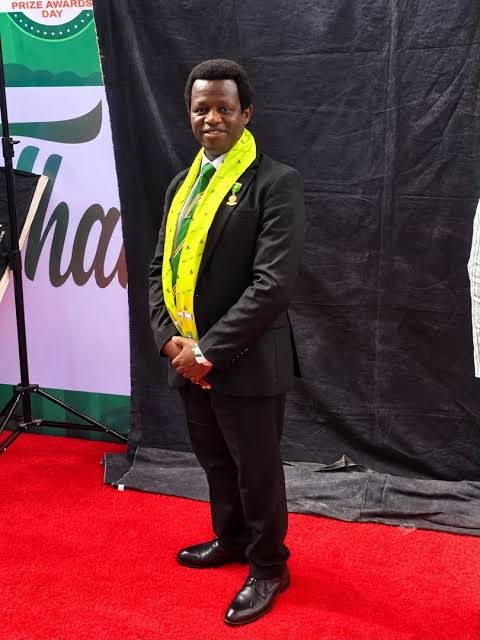
Umaru Abdulsalam Shyllon, Business Center Manager of Rokel Commercial Bank’s FSSST Branch, has attained the Associate of the Chartered Institute of Bankers of Nigeria (ACIB) qualification, strengthening his professional credentials in the banking industry.

The achievement has attracted commendation from the Senior and Junior Staff Association of Rokel Commercial Bank (RCBank), which congratulated Umaru Abdulsalam Shyllon for successfully completing the professional programme.

In its congratulatory message, the Association described the accomplishment as evidence of his dedication, hard work and commitment to professional development. It expressed pride in the milestone and wished him continued progress as he advances in his banking career.

Umaru Abdulsalam Shyllon received the qualification following the 2026 Stream II Chartered Banker Induction and Prize Awards Ceremony organized by the Chartered Institute of Bankers of Nigeria (CIBN) in Lagos.

The ceremony brought together banking and financial services professionals as the institute inducted 2,178 new chartered banking professionals through different professional pathways.

Held under the theme, “The Future-Ready Banker: Leadership, Innovation and Ethics in a Disruptive Global Economy,” the ceremony highlighted the growing need for bankers to adapt to technological advancement, artificial intelligence and other developments transforming the global financial services industry.

Addressing the newly inducted professionals, President and Chairman of Council of the Chartered Institute of Bankers of Nigeria, Dr Dele Alabi, stressed the importance of maintaining high ethical standards while embracing innovation and continuous professional development.

Dr Dele Alabi noted that trust and integrity remain fundamental to banking and urged professionals to uphold conduct that strengthens public confidence in financial institutions.

He also stated that the Chartered Institute of Bankers of Nigeria would continue reviewing its professional curriculum to ensure banking professionals acquire skills relevant to emerging realities within the financial sector.

The inductees were admitted through five professional pathways: the Standard Chartered Banker (ACIB) Route, Chartered Banker/MBA Route, Lagos Business School/Chartered Banker Route, MSc/Chartered Banker Route and Microfinance Certified Bankers (MCIB).

Registrar and Chief Executive Officer of the Chartered Institute of Bankers of Nigeria, Akin Morakinyo, similarly encouraged the professionals to make honesty and trust central to their responsibilities as they assume greater roles within the industry.

For Umaru Abdulsalam Shyllon, attaining the ACIB qualification represents another important step in his professional development and reflects his continued investment in knowledge and banking expertise.

The Senior and Junior Staff Association of Rokel Commercial Bank reaffirmed its appreciation of his accomplishment, describing it as a source of pride while encouraging him to continue pursuing higher standards of professional excellence. https://thecalabashnewspaper.com/archives/65091


Peak Electrical Exposed in Suspected Fake RR Cables Investigation
 

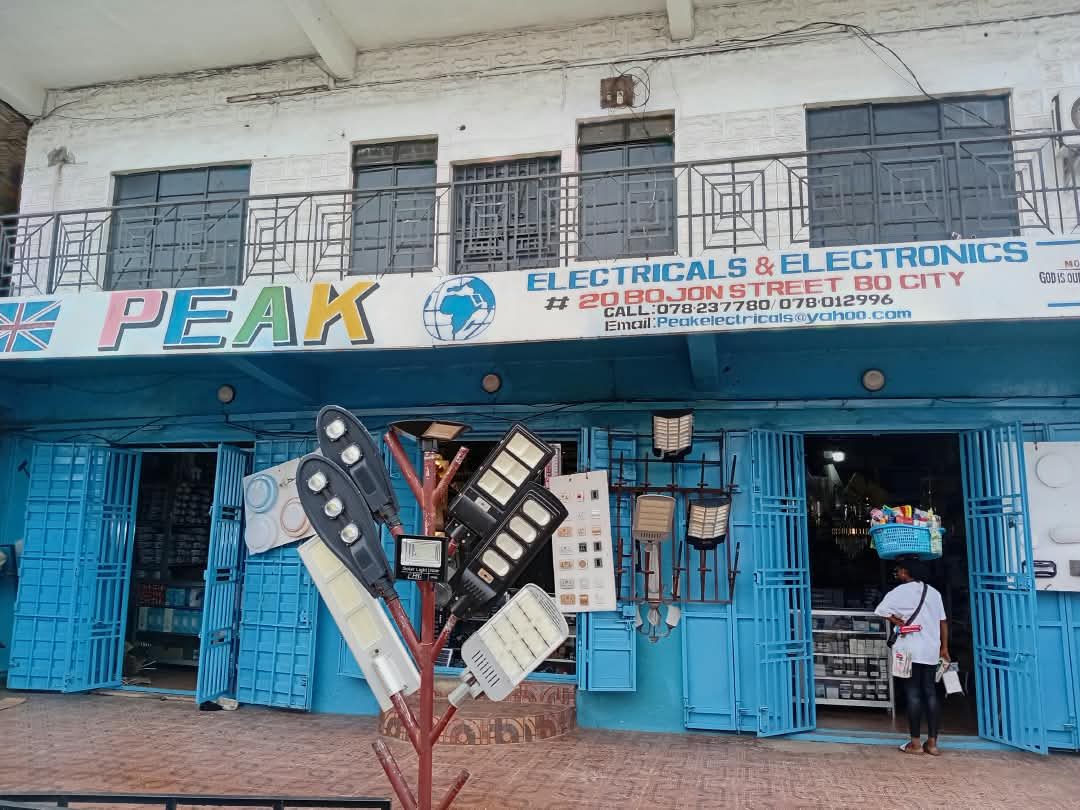
Peak Electrical/Electronic has come under intense scrutiny following an investigation by The Calabash Newspaper into the sale of electrical cables bearing the RR brand, amid allegations that suspected counterfeit products are being marketed through outlets associated with the company in Sierra Leone.

The investigation has raised serious questions about the source of the RR-branded kables, their importation into the country and whether Peak Electrical/Electronic has the necessary manufacturer or distribution authorization to sell products carrying the RR identity.

Peak Electrical/Electronic, reportedly owned by Ogha Toochukwu and Samuel, is a Nigerian-owned business operating in Sierra Leone. Its head office has been identified at 17 Regent Road, by Goderich Street in Freetown, while information gathered by this medium points to additional business locations in Bo and Kenema.

Among the locations identified are 38 Dambala Road, opposite Albertson Supermarket in Bo; 32 Dambala Road, Bo; Box Point, 20 Bojon Street, Bo; and an outlet beside Union Trust Bank at 5 Jany Street in Kenema. Another location associated with the business was identified around St. James Secondary School.

At the centre of the investigation are electrical cables carrying markings purporting to identify them with the RR brand. One of the products identified carried RR Kablo-related markings, prompting further questions about its manufacturer, supplier and route into Sierra Leone.

However, the appearance of the product within the company's reported distribution network has added to existing concerns about suspected counterfeit RR-branded electrical cables circulating in Sierra Leone.

The Calabash Newspaper had previously investigated allegations involving businesses suspected of trading in counterfeit RR-branded kables in Freetown. Information obtained during that investigation indicated that the Sierra Leone Police acted on intelligence relating to suspected counterfeit RR products and conducted operations at business premises connected to the allegations.

Several individuals were reportedly invited to the Criminal Investigation Department for questioning, while quantities of electrical cables suspected of carrying counterfeit RR branding were reportedly seized for further investigation.

The latest findings involving Peak Electrical/Electronic have therefore shifted attention to another important part of the issue: the supply chain through which RR-branded products are imported and distributed across the country.

A key question is whether Peak Electrical/Electronic can produce documentary evidence establishing the source of the kables it reportedly sells.

SV Electrical, which says it has been the exclusive importer and distributor of genuine RR Cables in Sierra Leone since 2019, has previously cautioned the public about suspected counterfeit RR-branded  kables allegedly circulating on the local market.

According to SV Electrical, its recognized outlets are located on Siaka Stevens Street in Freetown and at Hastings Junction. The company has advised customers purchasing RR-branded electrical materials elsewhere to verify their authenticity.

That position places greater importance on establishing the precise source of the RR-branded cables associated with Peak Electrical/Electronic.

Among the questions requiring answers are whether Peak Electrical/Electronic obtained the products directly from the RR manufacturer or an authorized supplier; whether it possesses invoices and importation records for the kables; whether manufacturer certificates or distributorship documents exist; and whether the products have undergone appropriate standards and safety verification in Sierra Leone.

Producing those records could provide important evidence capable of confirming or challenging the allegations.

The issue extends beyond questions of trademarks and competition between businesses. The authenticity and quality of electrical cables can have direct consequences for homes, offices, businesses and construction projects.

Electrical cables that do not meet required specifications may pose safety concerns, particularly where conductor size, insulation, electrical resistance or load capacity falls below the standards represented on the product.

Substandard cables can potentially overheat or contribute to short circuits and other electrical failures. That makes independent technical testing particularly important before a final determination is made regarding the products identified during the investigation.

Relevant authorities could examine the conductor material and dimensions, insulation, resistance, load capacity and other specifications of the cables. Such testing, combined with scrutiny of customs declarations, invoices, certificates of origin and manufacturer documentation, could establish both the quality and source of the products.

The investigation has also brought renewed attention to market surveillance and the controls applied to imported electrical materials in Sierra Leone.

With branded electrical products passing through different importers, wholesalers and retailers before reaching consumers, effective customs checks, standards verification and market inspections remain important safeguards against counterfeit and substandard goods.

Electricians, contractors, property developers and ordinary consumers are therefore encouraged to exercise caution when purchasing branded electrical materials. Receipts and other transaction records should be retained, while buyers with doubts about a product's authenticity can seek verification from the manufacturer, authorized distributor or appropriate regulatory authority.

The Calabash Newspaper is seeking a formal response from Peak Electrical/Electronic and is giving the company an opportunity to address the allegations.

In particular, Peak Electrical/Electronic is being called upon to clarify where its RR-branded kables originate, identify its suppliers and explain the importation and distribution arrangements under which the products are being sold in Sierra Leone.

The company also has an opportunity to produce invoices, customs documentation, certificates, manufacturer authorization or other verifiable records demonstrating that the RR-branded products it reportedly sells are genuine and obtained through legitimate channels.

The Calabash Newspaper will continue pursuing the matter in the public interest and remains open to publishing the full response of Peak Electrical/Electronic, together with any documentary or technical evidence the company may provide concerning the source, authenticity and quality of the RR-branded cables under investigation. https://thecalabashnewspaper.com/archives/65088


President Bio Tells Harvard: Africa Must Put African Interests First in Global Partnerships
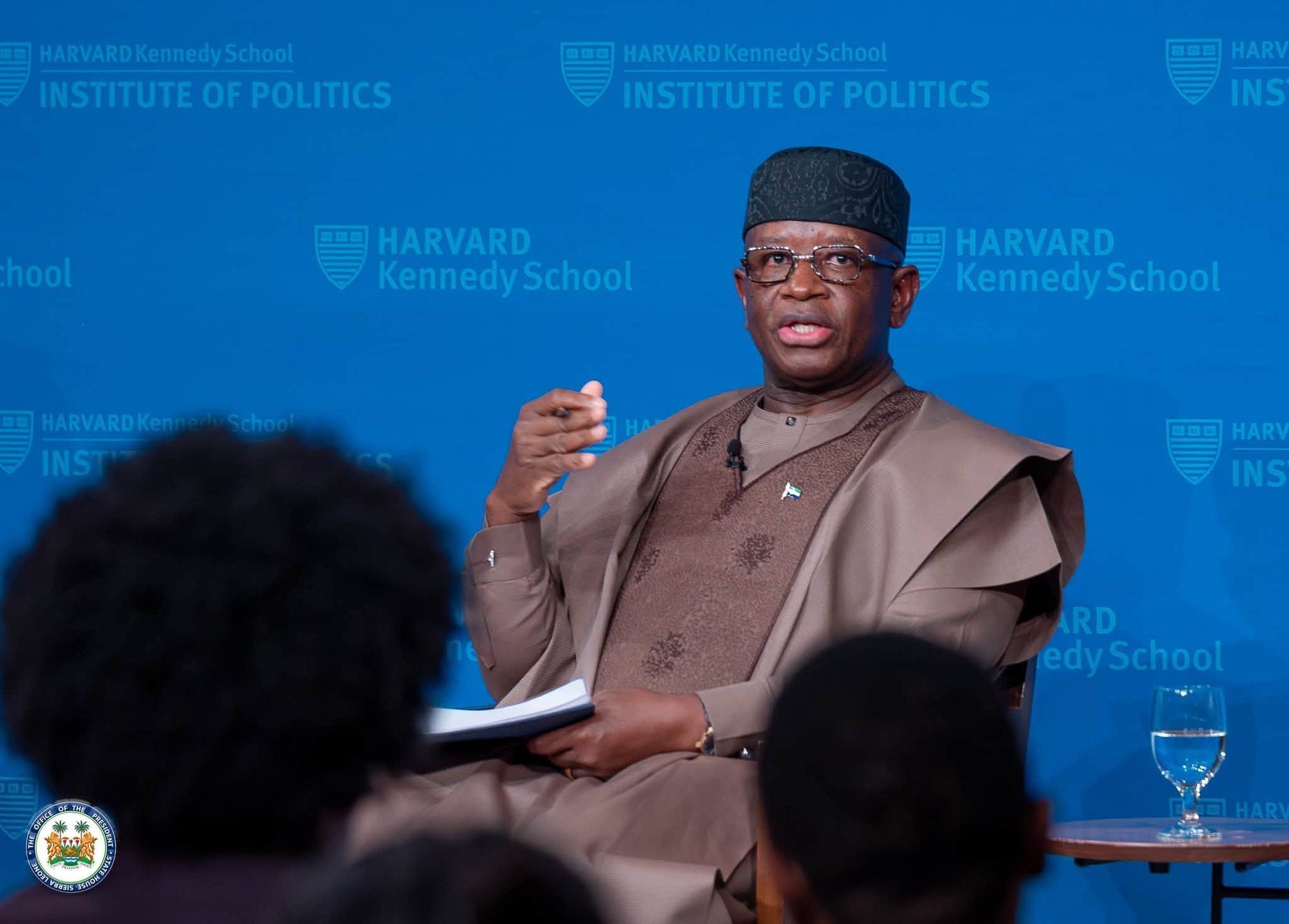
President Dr Julius Maada Bio has called on African nations to place their own interests at the centre of engagements with international partners, arguing that agreements should build skills, create jobs, strengthen local businesses, develop industries and preserve the continent’s ability to make independent decisions.

President Bio made the call during a keynote address at the John F. Kennedy Jr. Forum at Harvard Kennedy School on Tuesday, September 29, 2026, on the theme,     

Addressing faculty members, students, policymakers and other participants, the President said Africa is becoming increasingly important as competition among major powers intensifies, climate change affects livelihoods, artificial intelligence transforms economies and public trust in institutions comes under pressure.

He said the growing international attention being directed towards Africa should not be mistaken for influence, stressing that natural resources do not automatically translate into prosperity and a youthful population does not necessarily guarantee economic opportunity.

According to President Bio, Africa’s future will depend largely on the choices its leaders and citizens make about governance, economic development and engagement with the rest of the world.

“For too long, the world has asked: What should we do about Africa?” he said. “This evening, I want to ask a different question, beginning with us: What will Africans do with our growing power?”

Reflecting on Sierra Leone’s political history, President Bio recalled his decision as military Head of State in 1996 to proceed with elections despite the civil war and calls from some quarters for the process to be delayed until the conflict ended.

He said the elections did not end the war but established an important principle that Sierra Leoneans should have a voice in determining who governs them, even during periods of uncertainty.

“In 1996, I handed over power as a soldier. In 2028, God willing, I will hand it over again as a democrat,” President Bio stated.

He said leadership should be measured by what remains after a leader leaves office, including the strength of institutions, opportunities available to citizens and whether younger generations are better positioned to improve their lives.

The President pointed to Human Capital Development, Free Quality School Education and the Gender Equality and Women’s Empowerment Act as measures undertaken by his administration to expand opportunities for Sierra Leoneans.

Turning to Africa’s youthful population, President Bio cautioned that the continent's widely discussed demographic dividend could only materialize through sustained investment in education, practical skills and economies capable of creating opportunities.

He also highlighted artificial intelligence as an area in which African youths should be equipped not merely to consume technology but to develop and apply it to challenges within their societies while benefiting from the economic value it generates.

On democracy, President Bio said elections give Governments the authority to serve but public trust must continue to be earned after votes are counted.

He maintained that citizens need accessible justice, accountable institutions and fair opportunities to improve their lives, while political leaders have a responsibility to protect institutions, encourage dialogue and avoid treating political opponents as enemies when electoral outcomes are contested.

President Bio acknowledged that corruption, exclusion and unconstitutional changes of Government have damaged African societies.

Referring to the departure of Mali, Burkina Faso and Niger from the Economic Community of West African States, he said the development had exposed a serious loss of confidence within the regional bloc.

He expressed the view that the door should remain open for their return, while ECOWAS must demonstrate its relevance through what it delivers for citizens and remain consistent in defending constitutional order.

A central part of President Bio’s address focused on Africa’s engagement with established and emerging global powers.

Responding to the question of whether Africa should align itself with the East or West, President Bio declared: “Africa will be pro-Africa.”

He said African Governments should assess every proposed international partnership by asking four fundamental questions: whether it builds skills; creates jobs and strengthens local businesses; helps develop industries and leaves African countries better able to make their own decisions.

The President said Governments should be prepared to negotiate better terms when projects promise quick revenue but create few local jobs or when technology agreements leave African professionals unable to maintain the systems being introduced.

He also addressed the continent’s critical minerals, arguing that if African resources are to help power the next global economy, communities across the continent should benefit through jobs, knowledge transfer and economic prosperity.

Speaking directly about relations between Africa and the United States, President Bio said the relationship has been shaped not only by Governments but also by teachers, students, entrepreneurs, researchers and public servants.

He noted that restrictions on study and travel have narrowed opportunities for exchanges, including for Sierra Leoneans, while acknowledging the right of countries to determine their own policies.

President Bio said international partnerships should instead be judged by what they produce, including opportunities for students to learn across borders, businesses to trade and industries to create jobs and value within Africa.

He further called for deeper cooperation among African countries, noting that insecurity, climate shocks and trade challenges transcend national borders.

The President cited the African Continental Free Trade Area as an important opportunity to establish a market serving more than one billion people. He said its full potential would be realized when producers can move goods across borders without unnecessary delays and businesses established in cities such as Freetown can expand throughout the continent.

He also reiterated the need for stronger African representation in global institutions, including reform of the United Nations Security Council to better reflect current global realities.

Addressing students at Harvard, President Bio encouraged future policymakers, entrepreneurs, researchers and organizational leaders to take Africa seriously, study the continent’s challenges, engage African scholars and institutions and consider who ultimately benefits from the projects they undertake.

He urged young Africans to hold their leaders to high standards and contribute their skills and integrity towards building the continent they want to inherit.

President Bio also held discussions with student leaders at Harvard University’s Center for African Studies, where he shared his vision for engaging African students at leading universities and empowering them to become the next generation of leaders in governance and the private sector.

He thanked Zoe Marks, Oppenheimer Faculty Director and Chidi Blyden, Executive Director of the Center for African Studies, for facilitating the engagement.

Concluding his address, President Bio said Africa’s choices should ultimately be assessed by their impact on ordinary people, particularly whether children can receive an education, young people can build meaningful futures and citizens can disagree with Governments without fear.

“Africa’s future will be shaped by Africans,” President Bio said. “And the measure of our success will be found in the lives of our people.” https://thecalabashnewspaper.com/archives/65084

Government Gazettes New Districts, City Councils, Rural Councils, Chiefdoms and Villages
The Government of Sierra Leone has formally expanded the country’s administrative structure with the establishment of two new districts and a series of city councils, district councils, rural councils, chiefdoms and villages.

The changes are contained in an Extraordinary issue of The Sierra Leone Gazette, Volume CLXVII, No. 77, dated September 16, 2026 and published by the Government Printing Department under Government Notice Nos. 246–277.

At the centre of the restructuring are Bandajuma District and Kpanguima District, increasing Sierra Leone’s number of districts from 16 to 18. The Bandajuma District (Establishment) Order, 2026, is contained in Statutory Instrument No. 7, while Kpanguima District was established under Statutory Instrument No. 18. Pasted text The Gazette uses the spelling “Kpanguima,” although earlier government discussions had used variants including Kpanguma.

The two districts have also been provided with separate local Government structures. Bandajuma District Council is established under Statutory Instrument No. 14, while Kpanguima District Council is covered by Statutory Instrument No. 17.

The Western Area is also undergoing substantial administrative reorganization. The Gazette establishes Freetown City Council, Freetown West City Council, Mountain Rural Council, Waterloo Rural Council and York Rural Council. Freetown City Council falls under Statutory Instrument No. 13, while Freetown West City Council is established under Statutory Instrument No. 15.

Of particular significance is the restructuring of the area previously administered under the Western Area Rural District Council framework. The new arrangement establishes three rural councils: Mountain Rural Council, Waterloo Rural Council and York Rural Council.

Mountain Rural Council is established under Statutory Instrument No. 26, Waterloo Rural Council under Statutory Instrument No. 31 and York Rural Council under Statutory Instrument No. 33.

The restructuring extends to Lungi, which now has Lungi City Council, established under Statutory Instrument No. 19. The move gives formal legal effect to an earlier Government proposal to elevate Lungi's local administrative status.

Several chiefdoms have also been formally established. They include Barawa, Biriwa Limba, Biriwa, Bongre, Kamadugu, Lunia, Mabala Village Chiefdom, Magbaimba, Mapaki, Masabong, N’dohahun, Peje, Vanjelu and Yiraia Chiefdoms.

The Gazette further provides establishment orders for a number of villages, including Bankor Village, Black Johnson Village, During Village, Majei Village and Tree Planting Village. During and Majei are identified in the instruments as formerly During Town Village and Majei Town Village respectively.

The gazetting moves the administrative changes from earlier Government proposals into a formal statutory framework. The instruments legally establish the named localities and councils, although the creation of operational structures, staffing, financing and other administrative arrangements involves further implementation measures.

Under the Local Government Act 2022, the President may, on the required recommendations, declare an area a locality, assign it a name and establish a council for that locality through a statutory instrument.

The changes amount to a significant redrawing of Sierra Leone’s local Government structure, with the Western Area among the areas experiencing the most extensive reorganization. The new administrative framework introduces additional councils while giving Bandajuma and Kpanguima formal status as districts within the country's governance structure. https://thecalabashnewspaper.com/archives/65081


Flot Launches ‘Link & Win’ Campaign with Weekly Cash Prizes, Dubai Trip
 

Flot has launched a nationwide “Link & Win” campaign that will reward Sierra Leoneans who connect their Flot wallets to participating bank accounts and conduct transactions between the two platforms.

The campaign, which runs from October 1 to December 31, 2026, will see 40 customers win cash prizes ranging from SLE 200 to SLE 2,000 every Friday for 13 weeks. At the end of the promotion, one customer will win the grand prize of a trip for two to Dubai.

The initiative is being implemented in partnership with Zenith Bank Sierra Leone and Sky Bank Sierra Leone, while Ecobank Sierra Leone is expected to join in the coming weeks.

Under the campaign, customers who already have accounts with participating banks can link them directly to their Flot wallets. Those without accounts, as well as customers with dormant accounts, will be assisted by Flot and its banking partners to open or reactivate accounts before linking them to the platform.

David Kpakima, Chief Executive Officer of Open Banking Hub, the company behind Flot, said the campaign is intended to strengthen the connection between mobile wallets and conventional bank accounts while encouraging wider participation in formal financial services.

“For too long, the wallet and the bank account have lived separate lives, and Sierra Leoneans have paid for the distance between them,” David Kpakima said.

He added that Link & Win gives customers an opportunity to move money conveniently while qualifying for weekly rewards and the grand prize.

Ugochukwu Irechukwu, Managing Director and Chief Executive Officer of Zenith Bank Sierra Leone, said linking wallets and bank accounts could help customers gain greater access to formal financial services, including transaction records and other banking opportunities.

“When a customer links a wallet to a bank account, they are not just entering a draw. They are stepping fully into the formal financial system, with everything that membership brings: security, records, credit history and access,” he said.

Fasasi Charles Adeniye, Managing Director and Chief Executive Officer of Sky Bank Sierra Leone, said the partnership forms part of efforts to modernise banking and encourage customers to make greater use of their accounts.

“A dormant account helps nobody. An active, linked account builds a customer’s financial life and the nation’s economy at the same time,” Adeniye said.

The Link & Win campaign follows Flot’s recent rollout in Sierra Leone. In September, President Dr Julius Maada Bio received Flot Ultra Black Card No. 001 at State House, while First Lady Dr Fatima Maada Bio later received Card No. 002 during the platform’s public launch.

According to the company, tens of thousands of accounts have since been opened on the platform.

Flot provides Leone and US dollar wallets and allows customers to make payments over WhatsApp, purchase airtime, pay bills and transfer funds to other Flot users. Its card services include Virtual USD, Mint, Gold and Ultra Black cards.

The platform also operates Flot Travel, which enables customers to search for flights, compare airlines and fares, book tickets and make payments through the app. Flot said fares on some routes, including Freetown to China, can start from about US$1,600 compared with prices that have previously reached around US$2,800.

“These are the options travellers deserve, at prices few thought possible a year ago,” Kpakima said. “We built Flot Travel so that Sierra Leoneans book the way the world books: compare your airlines, choose your fare and pay in minutes, without leaving home.”

To participate in Link & Win, customers must download the Flot app or use an existing wallet, complete the required verification, and link their wallet to a Zenith Bank or Sky Bank account. Customers can then qualify for the weekly draw by transferring money from their wallet to their bank account or from their bank account to their wallet.

Winners will be announced every Friday through Flot’s official channels. The company said the draws will be conducted in accordance with the campaign’s published terms and conditions, with no separate entry fee apart from applicable standard transaction charges.

The campaign will continue nationwide until December 31, 2026, when the promotion culminates with the selection of the grand-prize winner for the trip for two to Dubai. https://thecalabashnewspaper.com/archives/65077


Africell Backs Drizilik’s ‘Audacity’ as Sierra Leonean Music Targets Wider Audiences
Africell Sierra Leone has entered into a major partnership with Sierra Leonean music star Drizilik to support the rollout of his new album, Audacity, bringing together music, technology, audience engagement and Sierra Leonean culture.

The partnership, announced on September 28, 2026, is designed to extend beyond a conventional artist endorsement by using Africell’s advertising and media platforms to connect Drizilik’s music with audiences in Sierra Leone and abroad.

As part of the campaign, billboards and other outdoor promotional materials have been deployed across Freetown, featuring codes directing members of the public to Drizilik’s official website. Through the platform, fans are given exclusive access to Audacity ahead of its global release on September 30.

The initiative highlights the growing potential for collaboration between Sierra Leone’s corporate and entertainment sectors, particularly as local artists seek new ways to distribute their work and reach audiences beyond the domestic market.

Speaking on the partnership, Chief Executive Officer of Africell Sierra Leone, Shadi Gerjawi, said the company recognizes the important contribution of arts and culture to Sierra Leone’s identity and remains interested in supporting those helping to develop the creative industry.

“Sierra Leone's arts and culture are a big part of what makes us who we are, and at Africell, we genuinely care about supporting the people who bring them to life,” Shadi Gerjawi said.

He described Drizilik as an artist who has developed a distinctive sound while maintaining strong links to the country, its culture and people.

“Drizilik has created a sound that is uniquely his own, while staying connected to the place and people that inspire him. We are proud to be part of this journey and to support him as he takes Audacity, a remarkable body of work, to an even wider audience,” Shadi Gerjawi added.

Drizilik has established himself as one of Sierra Leone’s prominent contemporary musicians, incorporating elements of the country’s language, culture and everyday experiences into his music.

The partnership comes as Sierra Leonean musicians increasingly explore opportunities to expand their audiences internationally, including among Sierra Leoneans in the diaspora.

Drizilik said culture has remained central to his music and his efforts to connect people through shared experiences.

“My music has always been about what brings us together as a community and culture is at the heart of that,” he said.

He noted that Africell’s involvement demonstrates how corporate partnerships can contribute to creating opportunities for young people and strengthening Sierra Leone’s entertainment and cultural sectors.

The collaboration is expected to continue beyond the September 30 release of Audacity, with further activities scheduled throughout October. These include an AfriTV live session and a private partner showcase aimed at providing audiences and stakeholders with additional opportunities to experience the album.

For Africell Sierra Leone, the collaboration forms part of its wider engagement with young people, entertainment and culture. The campaign combines outdoor advertising with digital access and planned live experiences, providing different channels through which audiences can engage with Drizilik and his latest work.

The Africell-Drizilik partnership also illustrates the growing role corporate institutions can play in providing platforms for Sierra Leonean creative talent, particularly as musicians seek greater visibility within regional and international markets.

With Audacity now released globally and additional activities planned for October, the partnership is expected to maintain momentum around the album while creating further opportunities to showcase Sierra Leonean music and culture to wider audiences. https://thecalabashnewspaper.com/archives/65074


Chief Justice Calls for Human-Centred AI Adoption in Sierra Leone’s Judiciary
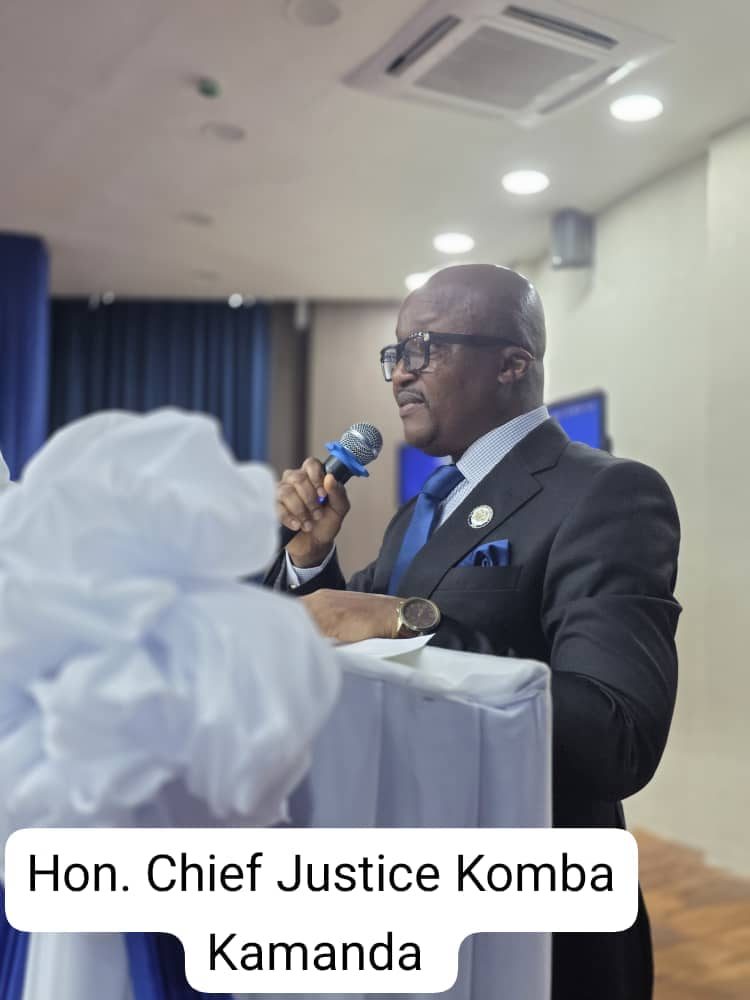
Sierra Leone’s Chief Justice, His Lordship Honourable Justice Komba Kamanda, has reaffirmed the Judiciary’s readiness to embrace technology, particularly Artificial Intelligence (AI), as a means of improving the administration of justice and expanding public access to information.

Chief Justice Komba Kamanda gave the assurance on Wednesday, October 1, 2026, while delivering the keynote address at an event marking the International Day for Universal Access to Information at the NaTCA Tower, Southridge, Freetown.

Speaking on the theme, “AI, Justice and the Rule of Law,” the Chief Justice said AI is no longer a distant technological concept confined to laboratories and technology companies, but is increasingly influencing the operations of Governments and public institutions.

“It is increasingly becoming part of how Governments communicate, how citizens access information, how institutions manage knowledge and how justice institutions can improve the delivery of justice,” Chief Justice Komba Kamanda said.

He noted that the Judiciary has a fundamental responsibility to ensure that justice is not only delivered but remains accessible, understandable and trusted by the people it serves.

According to him, AI tools are already providing opportunities for judiciaries around the world to improve access to judgments and other legal materials, strengthen legal research, facilitate public access to court information, enhance case management systems and make judicial services more accessible to citizens.

While reaffirming the Judiciary’s preparedness to embrace technological advancement, Chief Justice Komba Kamanda stressed that such transformation must be guided by constitutional and institutional responsibilities.

He called for a justice system that is technologically enabled while remaining open, accessible, transparent, human-centred and firmly anchored in the rule of law.

Earlier, the Chief Director and Professional Head of the Ministry of Communication, Technology and Innovation, Mohamed Moumini Jalloh, said AI is rapidly transforming the way Governments operate, institutions manage information and citizens access public services.

He said the question for Sierra Leone is no longer whether AI is coming, but how the country prepares to harness the technology responsibly and inclusively to deliver tangible benefits to its people.

Deputy Minister of Justice, Madam Saptieu E. Saccoh, also reaffirmed the Ministry’s commitment to collaborating with relevant institutions to promote the responsible adoption and use of AI.

UNESCO Director for Inclusion, Policies and Digital Transformation, Guilherme Canela, said UNESCO is focusing on supporting the training of justice-sector professionals in the application of AI tools in courts and tribunals.

He disclosed that UNESCO has developed guidelines for the use of AI in courts and tribunals, describing them as the first globally oriented ethical and operational framework of their kind.

The commemoration placed the growing relationship between technology, access to information and the administration of justice at the centre of discussions, as Sierra Leone considers how emerging technologies can be incorporated into public institutions while protecting transparency, accountability and the rule of law. https://thecalabashnewspaper.com/archives/65070