Friday, 22 May 2026


Health Minister Showcases Sierra Leone’s Progress on National Health Compact in Geneva
By Foday Moriba Conteh

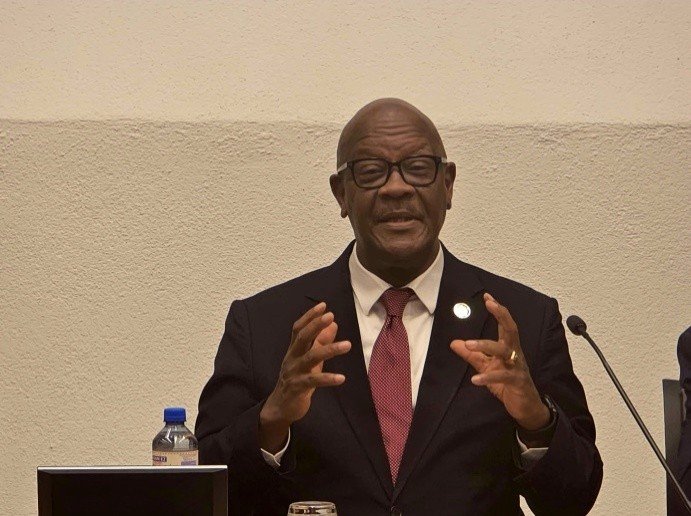
Sierra Leone’s Minister of Health, Dr. Austin Demby, has showcased the country’s early progress in implementing its National Health Compact during a high-level National Health Compacts Roundtable held in Geneva, Switzerland, reaffirming the Government’s commitment to strengthening healthcare systems through improved coordination, accountability and domestic resource mobilization.

The roundtable, hosted by Seed Global Health in collaboration with Sierra Leone and Uganda, brought together global health stakeholders, policymakers and development partners to discuss innovative strategies for advancing national health systems and strengthening partnerships in healthcare delivery.

Addressing delegates on Wednesday, 20th May 2026, Dr. Austin Demby underscored Sierra Leone’s determination to move beyond theoretical discussions, stating that the country is actively demonstrating what a functioning National Health Compact looks like in practice.

According to the Health Minister, Sierra Leone officially launched its National Health Compact in Tokyo in December 2025 under the framework of “One Plan, One Budget and One Reporting Framework.”  He explained that the initiative was jointly signed by major development partners and co-governed by the Ministries of Health and Finance, reflecting the Government’s determination to create a coordinated and transparent health delivery system.

Speaking on the operational structure of the Compact, Dr. Austin Demby highlighted four key pillars guiding its implementation: Alignment, Acceleration, Accompaniment and Accountability.

On Alignment, he stressed the importance of ensuring that national systems remain at the centre of healthcare implementation, emphasizing the need for stronger coordination between the Ministry of Health and the Ministry of Finance. He maintained that the approach seeks to prioritize national structures over fragmented donor-led systems, which often create inefficiencies in healthcare delivery.

Discussing Acceleration, the Health Minister pointed to the Government’s “300 Days of Activism for Triple Zeros” campaign, which he described as a presidential accountability initiative designed to drastically reduce maternal deaths, child mortality and the number of unvaccinated children across the country.

He disclosed that by Day 75 of implementation, Sierra Leone had recorded a remarkable 60 percent reduction in maternal deaths when compared to the 2025 baseline, a development he said demonstrates the effectiveness of targeted interventions supported by real-time monitoring systems.

While acknowledging progress, Dr. Austin Demby admitted that Accompaniment remains an area requiring further strengthening, noting that some development partners continue to operate parallel reporting systems despite signing onto the National Health Compact. He emphasized that genuine partnership should extend beyond formal commitments made during signing ceremonies and translate into practical cooperation aligned with national priorities.

On Accountability, the Health Minister highlighted several innovations already operational within Sierra Leone’s health sector, including live performance dashboards, district health heatmaps, weekly review systems and real-time monitoring mechanisms for the Triple Zeros initiative. He described those measures as clear evidence that Sierra Leone’s accountability framework in the health sector is functioning effectively.

Addressing the issue of financing, Dr. Austin Demby emphasized that Sierra Leone’s strategy is firmly rooted in domestic resource mobilization. He disclosed ongoing efforts by Government to attain the Abuja Declaration target of allocating 15 percent of the national budget to healthcare while exploring additional funding streams through taxes on tobacco, alcohol, sugar-sweetened beverages and unhealthy packaged foods.

He further revealed plans for the implementation of the Sierra Leone Social Health Insurance Scheme (SLeSHI), alongside ongoing discussions on debt swaps aimed at supporting long-term investments in the country’s healthcare system.

Concluding his presentation, Dr. Austin Demby positioned Sierra Leone as a potential reference country for nations seeking to establish similar health compacts, encouraging countries to draw lessons not only from Sierra Leone’s successes but also from the challenges encountered during implementation. https://thecalabashnewspaper.com/health-minister-showcases-sierra-leones-progress-on-national-health-compact-in-geneva/
By Amin Kef Sesay

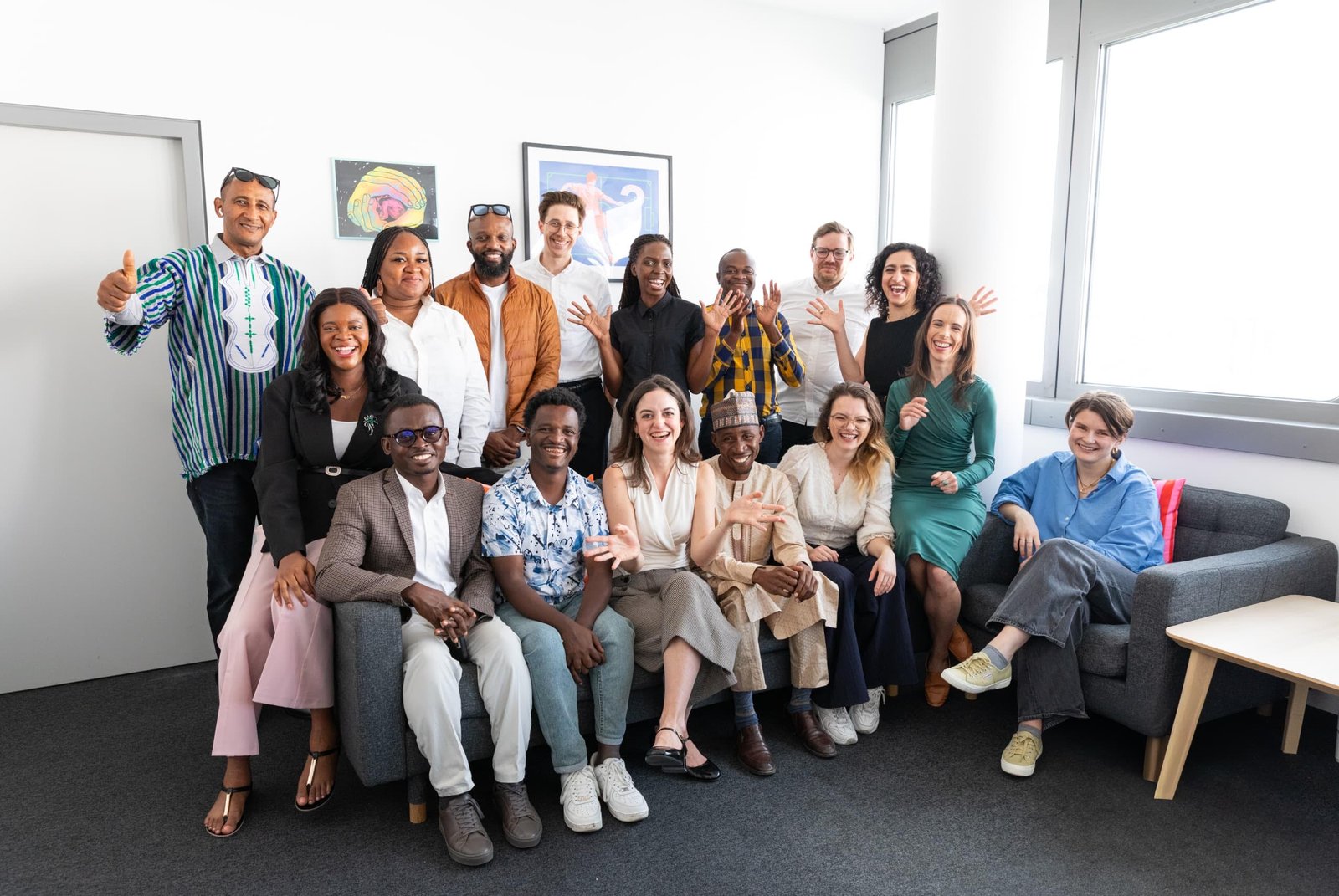
Under the framework of the Austria-Africa Media Fellowship Programme in Vienna, Austria, ten African journalists participating in the fellowship engaged with officials of Wiener Zeitung (WZ), one of Austria’s oldest and most respected media institutions, gaining deeper insight into the organization’s transformation, public-service journalism model, media innovation strategies and commitment to shaping the future of journalism in the digital era.

The engagement, held on Tuesday, 19 May 2026, formed part of a broader effort aimed at strengthening cross-cultural media exchange, professional collaboration and knowledge-sharing between African and Austrian journalists. The session also provided the visiting journalists with a unique opportunity to better understand Austria’s evolving media landscape, digital transformation strategies and the growing importance of innovation, transparency and media literacy in modern journalism.

The Austria-Africa Media Fellowship Programme brought together ten accomplished journalists from different African countries for professional exchanges, institutional engagements and policy discussions in Vienna. The participating journalists represented diverse media institutions across the African continent, including Favour Ulebor-Emmanuel of Vanguard Newspaper in Nigeria, Alhassan Bala, Founder and Editor of Alkalanci (The Arbiter) in Nigeria, Albert Oppong-Ansah, Editor and Desk Head for Environment, Science and Energy at the Ghana News Agency, Amin Kef Sesay, Managing Editor of The Calabash Newspaper in Sierra Leone, Miriam Angil of Swahilipot Hub Foundation in Kenya, Clement Manyathela, host of The Clement Manyathela Show on Radio 702 in South Africa, Erin Marisa Bates, Anchor and Presenter at Carte Blanche in South Africa, Eyasu Zekarias Tadesse, Reporter and Fact Checker with Capital Ethiopia/FM 97.7, Ernestina Serwaa Asante of GhanaWeb and Farai Shawn Matiashe, an international journalist from Zimbabwe.

During the engagement, officials of Wiener Zeitung delivered extensive presentations on the institution’s transformation into a public-service media organization and the innovative approaches it is adopting to remain relevant in a rapidly evolving digital environment. Officials explained that since July 1, 2023, Wiener Zeitung has operated as a publicly funded media institution supported through taxation while maintaining its editorial independence and commitment to quality journalism.

Founded in 1703, Wiener Zeitung remains one of the oldest newspapers in the world. Officials noted that although the institution historically operated as a traditional daily newspaper, it has now transitioned into an almost fully digital media platform in response to changing audience behavior and evolving media consumption patterns. Despite that transformation, the organization continues to publish a quarterly print magazine, reflecting what officials described as a hybrid model of journalism and information dissemination.

Officials further disclosed that Wiener Zeitung currently operates with a newsroom and strategy team comprising 26 professionals who continuously explore innovative storytelling methods and audience engagement strategies. According to the institution, innovation is viewed as an ongoing process rather than a fixed achievement, emphasizing that modern journalism requires constant experimentation, adaptation and creativity.

Particular emphasis was placed on the institution’s focus on younger audiences between the ages of 16 and 29, identified as Wiener Zeitung’s primary target group. Officials explained that the organization develops content and engagement strategies specifically designed to resonate with younger generations navigating increasingly complex digital information environments.

The visiting journalists also gained insight into Wiener Zeitung’s editorial philosophy, which officials described as audience-first and platform-driven journalism. Rather than focusing heavily on conventional breaking news coverage, the institution prioritizes information considered meaningful, useful and impactful to its target audience.

Officials highlighted investigative journalism, data analysis, transparency, reliability, editorial independence and quality reporting as central pillars guiding the institution’s newsroom operations. They also emphasized the importance of what they described as “slow journalism,” a model that prioritizes depth, context, analysis and meaningful storytelling over speed, sensationalism and superficial reporting.

Transparency, according to the officials, remains one of Wiener Zeitung’s strongest unique selling points. They explained that the institution openly communicates editorial processes, sources of information and decision-making procedures in order to strengthen audience trust and institutional credibility. Officials noted that in an era increasingly characterized by misinformation, disinformation and declining public trust in media institutions, transparency has become essential for sustaining journalistic legitimacy.

One of the major initiatives presented during the engagement was “Algokind,” a media literacy project aimed at educating young people about the influence of algorithms on digital platforms, social media feeds and news consumption patterns. Officials explained that the initiative primarily operates through platforms such as Instagram and TikTok, using accessible and engaging digital content to help audiences understand how algorithms shape information exposure, public perception and online behavior.

The project also encourages responsible and conscious media consumption among younger audiences. To maximize outreach and engagement, Wiener Zeitung adopts a multi-channel communication strategy incorporating podcasts, radio programming, influencers and community spaces.

The African journalists were additionally introduced to Wiener Zeitung’s broader institutional ecosystem, which includes several programmes and initiatives supporting journalism, digital innovation, professional development and public education. These initiatives include the Media Innovation Lab, the Centre for Media Knowledge, re:think Media, MediaHub Austria and the 360-degree Journalism Traineeship Programme.

Officials explained that through the re:think Media initiative, Wiener Zeitung seeks to create collaborative spaces where emerging journalists, media startups and established media institutions can interact and work together as equals. The programme particularly targets young media professionals, with officials revealing that more than 70 percent of participants are between the ages of 18 and 34, while over 60 percent are women and nearly half are students.

According to the officials, participation in the programme has grown significantly, with ticket sales reportedly increasing by 500 percent between 2025 and 2026. The initiative has attracted hundreds of participants and dozens of speakers, demonstrating growing interest in media innovation and collaboration within Austria’s journalism sector.

The Media Innovation Lab presentation focused extensively on the major challenges confronting journalism globally, particularly in the context of digital disruption. Officials identified audience fragmentation, platform dominance, shrinking revenues, declining trust and inadequate digital capacity as some of the most pressing obstacles facing media organizations today.

They explained that social media platforms and digital technologies continue to fragment audiences and reduce the reach and sustainability of traditional media institutions. Economic pressures, they noted, are increasingly threatening media diversity, newsroom sustainability and long-term journalistic viability.

To address those challenges, Wiener Zeitung has developed innovation-driven solutions centered on experimentation, collaboration and entrepreneurship. Officials highlighted fellowship and incubator programmes designed to support media innovators in developing sustainable ideas and business models.

The fellowship programme reportedly runs for nine months and provides funding support of up to €40,000 alongside coaching, workshops, mentorship and practical support aimed at bringing innovative media ideas to market readiness. The incubator programme, which spans three months, enables participants to validate concepts, prototype solutions and embrace trial-and-error approaches to innovation development.

An alumni network has also been established to promote continuous collaboration, peer learning, networking and strategic partnerships among participants.

Looking ahead, Wiener Zeitung officials outlined long-term goals focused on accelerating digital transformation, developing new business models, promoting modern and diverse journalism and strengthening cooperation among media practitioners. They stressed that innovation and collaboration will remain critical to ensuring the sustainability, resilience and relevance of journalism in rapidly changing global media environments.

The participating African journalists also received presentations on the Centre for Media Knowledge and Kontext Club initiatives, both of which provide concept development, design support, workshops, studies, research opportunities and professional networking spaces for media practitioners.

Additionally, officials briefed the journalists on the 360-degree Journalism Traineeship Programme, an initiative created to address declining numbers of journalists and the underrepresentation of young people within Austria’s media industry. The programme offers participants placements across multiple organizations over a 12-month period, combined with workshops, mentorship opportunities, professional exposure, fair compensation and extensive networking opportunities.

The engagement ultimately provided the African journalists with valuable insight into Austria’s evolving media ecosystem and demonstrated how innovation, transparency, media literacy and audience-centered reporting continue to shape the future of journalism in an increasingly digital and interconnected world. https://thecalabashnewspaper.com/wiener-zeitung-showcases-innovation-driven-journalism-model-to-african-media-fellows-in-austria-2/


State Secretary Sepp Schellhorn Hosts African Journalists, Highlights Austria’s Neutrality and Global Cooperation
By Amin Kef Sesay

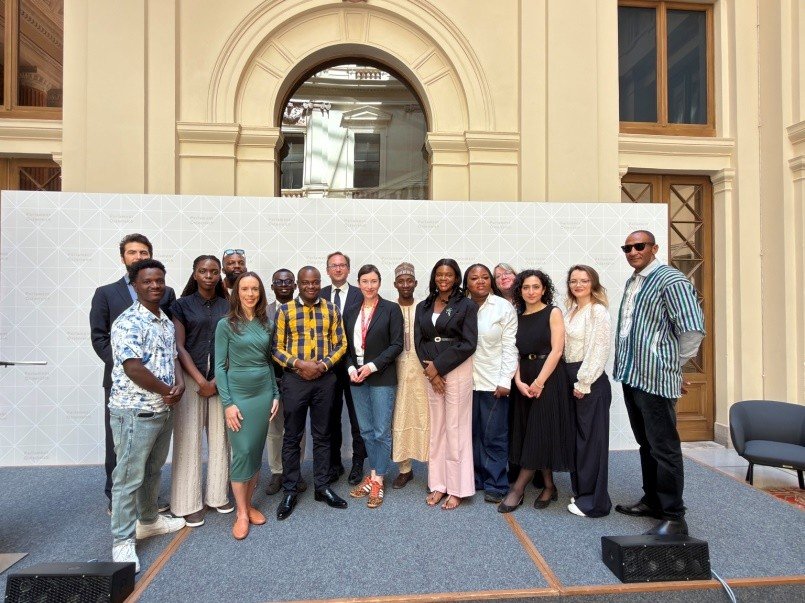
Ten journalists from different African countries participating in the Austria-Africa Media Fellowship Programme 2026 in Vienna, Austria, on Tuesday, 19 May 2026, engaged Austria’s State Secretary at the Federal Ministry for European and International Affairs, Sepp Schellhorn, in an extensive and insightful discussion centered on democracy, Austria–Africa relations, media literacy, cultural diplomacy, tourism, investment opportunities and the growing global threat posed by misinformation and fake news.

The high-level engagement formed part of activities under the Austria-Africa Media Fellowship Programme, which has brought together ten accomplished journalists from across Africa for professional exchanges and policy engagements in Vienna. The session provided participants with a rare opportunity to directly interact with a senior Austrian Government official and gain deeper insight into Austria’s foreign policy priorities, international partnerships, democratic values and engagement strategy with African nations.

The participating journalists represented a broad spectrum of African media institutions and countries, including Favour Ulebor-Emmanuel of Vanguard Newspaper in Nigeria, Alhassan Bala, Founder and Editor of Alkalanci (The Arbiter) in Nigeria, Albert Oppong-Ansah, Editor and Desk Head for Environment, Science and Energy at the Ghana News Agency, Amin Kef Sesay, Managing Editor of The Calabash Newspaper in Sierra Leone, Miriam Angil of Swahilipot Hub Foundation in Kenya, Clement Manyathela, host of The Clement Manyathela Show on Radio 702 in South Africa, Erin Marisa Bates, Anchor and Presenter at Carte Blanche in South Africa, Eyasu Zekarias Tadesse, Reporter and Fact Checker with Capital Ethiopia/FM 97.7, Ernestina Serwaa Asante of GhanaWeb and Farai Shawn Matiashe, an international journalist from Zimbabwe.

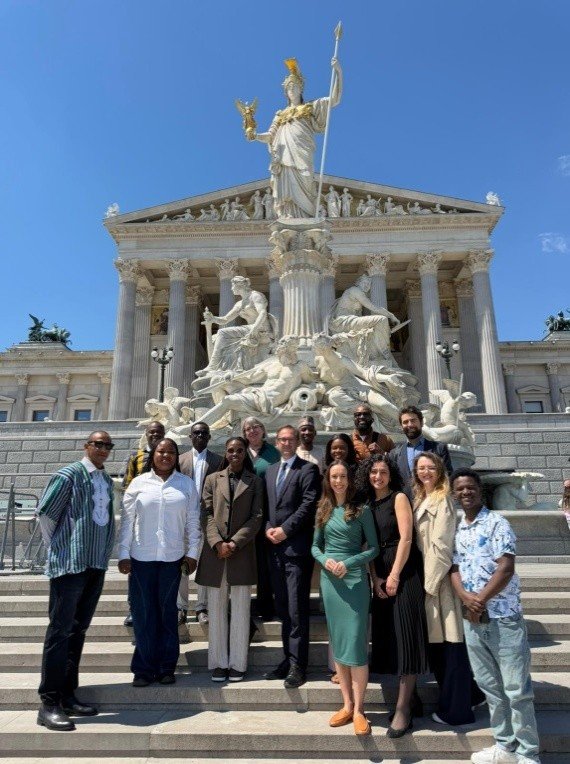
Welcoming the journalists to the Foreign Ministry, Sepp Schellhorn expressed delight in meeting the delegation and acknowledged the intensive schedule already undertaken by the fellows, which included engagements at the Austrian Parliament and the United Nations headquarters in Vienna.

Introducing himself, Sepp Schellhorn disclosed that he oversees several portfolios, including deregulation, simplification of administrative systems, European affairs, arts, culture and aspects of Austria’s foreign engagement. He stressed that arts and culture remain close to his heart, describing cultural diplomacy as one of the most effective and peaceful mechanisms for building bridges among nations and peoples.

According to Sepp Schellhorn, Austria strongly believes in the power of culture as a diplomatic instrument capable of fostering mutual understanding, strengthening dialogue and reducing misunderstandings among nations.

“We believe arts and culture are among the easiest ways of building bridges between nations and people,” Sepp Schellhorn said, noting that Austria continues to prioritize cultural engagement as part of its broader foreign policy approach toward Africa and other regions.

He revealed that Austria had opened a cultural forum in Accra, Ghana, in February, underscoring the country’s growing commitment to engagement with Africa through culture and creative exchanges. He further disclosed that Austria’s Africa strategy is built around four key pillars: education, business and economic cooperation, culture and migration.

Speaking during the exchange, Sepp Schellhorn explained that Austria sees education as a critical area of partnership with Africa, citing scholarship opportunities and exchange programmes as pathways for strengthening people-to-people relations and building long-term cooperation. He also highlighted Austria’s expertise in areas such as hydro-energy transformation, business innovation and institutional cooperation.

The State Secretary emphasized that Austria, despite being a relatively small European nation, remains committed to fostering partnerships with African countries through diplomacy, cultural engagement and multilateral cooperation. He noted that Austria’s status as a neutral country places it in a strategic position to facilitate dialogue and cooperation at the global level.

Responding to questions from journalists regarding Austria’s international standing and partnerships with Africa, Sepp Schellhorn said Austria’s neutrality remains central to its foreign policy, particularly as the country seeks a non-permanent seat on the United Nations Security Council for the 2027–2028 term.

He explained that smaller and neutral countries such as Austria play an essential role in promoting inclusive global dialogue and ensuring that the voices of less powerful states are represented in international decision-making processes.

As discussions progressed, journalists raised critical questions surrounding tourism, investment, misinformation, democracy, governance and cultural preservation.

Amin Kef Sesay, Managing Editor of The Calabash Newspaper in Sierra Leone, used the opportunity to inquire about Austria’s diplomatic and development cooperation with African countries, particularly Sierra Leone.

Amin Kef Sesay sought clarity on how Austria’s foreign policy and international cooperation framework could create meaningful opportunities for African countries in areas such as education, trade, youth empowerment, governance, peacebuilding, institutional development and sustainable economic growth.

Among the questions posed by Amin Kef Sesay were how Austria intends to strengthen diplomatic and development cooperation with African nations, the specific initiatives available to support education and climate resilience and how countries like Sierra Leone can benefit from Austrian scholarships, investments, technical support and international partnerships.

Responding to concerns over misinformation and digital manipulation, Sepp Schellhorn acknowledged that fake news, misinformation and disinformation remain growing global challenges affecting democracies across the world, including Austria.

He maintained that misinformation does not only threaten political systems in Europe but increasingly influences elections and public opinion globally, making the protection of independent journalism more important than ever.

According to Sepp Schellhorn, combating misinformation requires a collective effort involving Governments, media institutions and society as a whole, while emphasizing the importance of protecting free and responsible journalism.

“This is not just a problem between Austria and African countries; it is a global issue,” he remarked, warning that digital platforms and social media have significantly increased the spread of false narratives and manipulative information.

The discussion also examined tourism and cultural preservation, with journalists seeking lessons from Austria’s globally admired tourism industry and heritage conservation systems.

Sepp Schellhorn explained that Austria’s tourism success has been built over decades through deliberate investment in preserving cultural heritage, historical landmarks, museums and public infrastructure. He emphasized that Vienna’s attractiveness as a tourism destination lies not only in its architecture and history but also in the country’s commitment to maintaining heritage sites for future generations.

He encouraged African countries to identify and strengthen their unique tourism identities while protecting cultural and historical assets that can attract international visitors.

The session climaxed with an engaging question-and-answer segment in which journalists from Ghana, South Africa, Kenya, Nigeria, Ethiopia, Zimbabwe and Sierra Leone explored issues relating to investment risks, democratic governance, corruption, migration, tourism recovery after COVID-19 and opportunities for stronger Austria–Africa cooperation.

At the close of the meeting, participants expressed appreciation for the frank and interactive engagement, describing the dialogue as insightful and beneficial to understanding Austria’s governance model, foreign relations priorities and growing partnership ambitions with Africa.

For many of the African journalists, the engagement represented not only a diplomatic exchange but also an opportunity to reflect on how strengthened Austria–Africa relations could contribute to sustainable development, democratic governance, media advancement and stronger people-to-people cooperation across continents. https://thecalabashnewspaper.com/state-secretary-sepp-schellhorn-hosts-african-journalists-highlights-austrias-neutrality-and-global-cooperation-2/


Austria Parliament Engages African Journalists on Democracy, Disinformation & Stronger Africa Relations During Media Fellowship in Vienna
By Amin Kef Sesay

Ten journalists from different African countries participating in the Austria-Africa Media Fellowship Programme in Vienna, Austria, on Tuesday, 19 May 2026, engaged senior Members of the Austrian Parliament in an insightful and wide-ranging discussion on democracy, media literacy, misinformation, Austria–Africa relations and the growing threat of foreign disinformation campaigns on democratic institutions and societies.

The engagement, held as part of the Austria-Africa Media Fellowship Programme, brought together journalists from Sierra Leone, Nigeria, Ghana, South Africa, Kenya, Ethiopia and Zimbabwe with Austrian lawmakers for an exchange of ideas on governance, digital security, media responsibility and the future of international partnerships between Africa and Europe.

The meeting featured a Member of the Austrian National Council and Vice-Chair of the Foreign Affairs Committee, Andreas Minnich, alongside a Member of the Austrian National Council, Henrike Brandstötter, who both shared perspectives on Austria’s democratic system, geopolitical realities and the country’s growing concern over the spread of fake news and digital manipulation.

The African journalists participating in the fellowship included Favour Ulebor-Emmanuel of Vanguard Newspaper, Nigeria; Alhassan Bala, Founder and Editor of Alkalanci (The Arbiter), Nigeria; Albert Oppong-Ansah, Editor and Desk Head for Environment, Science and Energy at the Ghana News Agency; Amin Kef Sesay, Managing Editor of The Calabash Newspaper, Sierra Leone; Miriam Angil, Head of Communications at Swahilipot Hub Foundation, Kenya; Clement Manyathela, Host of The Clement Manyathela Show on Radio 702, South Africa; Erin Marisa Bates, Anchor and Presenter at Carte Blanche, South Africa; Eyasu Zekarias Tadesse, Reporter and Fact Checker at Capital Ethiopia/FM 97.7, Ethiopia; Ernestina Asante, Multimedia Journalist at GhanaWeb; and Farai Shawn Matiashe, International Journalist from Zimbabwe.

The engagement provided participants with a firsthand understanding of Austria’s parliamentary system, political dynamics and democratic governance, while also allowing room for meaningful dialogue on global issues affecting both continents.

Speaking during the session, Henrike Brandstötter gave a detailed overview of Austria’s current political structure, explaining that the country operates under a five-year parliamentary term and is presently governed through a three-party coalition arrangement.

According to Henrike Brandstötter, Austria’s National Council consists of 183 members, while the Federal Council represents the country’s federal system and regional interests.

She explained that Austria’s political environment, like many democracies around the world, is increasingly shaped by economic pressure, geopolitical instability and political polarization.

Henrike Brandstötter noted that the Russia–Ukraine war, instability in the Middle East, inflation and economic challenges continue to influence policymaking and political discourse in Austria and across Europe.

She further highlighted concerns over the growing influence of far-right political movements, warning that democratic institutions must continue to evolve to remain resilient in increasingly polarized environments.

According to Henrike Brandstötter, Austria’s coalition Government represents a necessary democratic arrangement aimed at maintaining stability despite ideological differences among governing parties.

She acknowledged that governance in such circumstances can be challenging but stressed the importance of dialogue, compromise and shared responsibility in protecting democratic systems.

Turning to Austria’s engagement with Africa, Henrike Brandstötter disclosed that Austria is repositioning its approach toward African partnerships through a renewed Africa Strategy focused more on trade, investment, innovation and equal cooperation rather than limiting relations to development assistance and humanitarian support.

She emphasized that Austria increasingly views Africa as a continent of opportunity and long-term partnership.

“The future is in Africa,” Henrike Brandstötter stated, stressing that Europe must rethink its approach and begin engaging African countries more as strategic partners capable of driving global economic growth and innovation.

She maintained that Austria seeks stronger cooperation with African countries through parliamentary exchanges, development programmes, diplomatic engagement and mutually beneficial economic partnerships.

A major focus of the discussions centered on misinformation, disinformation and foreign propaganda, particularly the impact of Russian misinformation campaigns in Europe and Africa.

Andreas Minnich and Henrike Brandstötter both acknowledged that disinformation has emerged as a major threat to democracy, national security and public trust across Europe.

According to Andreas Minnich, misinformation campaigns often exploit social tensions, target vulnerable populations and seek to weaken confidence in democratic institutions and traditional journalism.

He stressed that misinformation, particularly online disinformation, spreads rapidly and cheaply, making it increasingly difficult for Governments, institutions and journalists to respond effectively.

The Austrian lawmakers noted that fake news and manipulated content continue to shape political narratives, influence public opinion and deepen societal divisions, especially through digital platforms and social media.

They explained that Austria is increasingly treating misinformation not only as a media challenge but also as a national security issue requiring coordinated responses.

The African journalists also shared experiences from their respective countries, providing practical examples of how misinformation and propaganda have influenced political discourse, elections and public perception across the continent.

Journalists from Nigeria, South Africa and Ghana described how social media manipulation, false narratives, fake job opportunities and foreign propaganda increasingly target young people and communities with low media literacy.

Some participants explained that misinformation spreads rapidly through WhatsApp, Facebook, radio stations, influencers and online platforms where fact-checking mechanisms are often weak or nonexistent.

They observed that misleading narratives frequently gain traction during elections, protests and periods of political uncertainty, increasing the risk of instability and mistrust among citizens.

Amin Kef Sesay, Managing Editor of The Calabash Newspaper in Sierra Leone, raised questions regarding Austria’s parliamentary cooperation with African countries, particularly Sierra Leone.

He sought to understand how Austria intends to deepen partnerships with African countries in areas such as democratic governance, education, youth empowerment, media development, investment and diplomatic cooperation.

Amin Kef Sesay also inquired about opportunities for parliamentary exchanges, scholarships and institutional partnerships that could directly benefit Sierra Leone and other African countries.

In response, the Austrian parliamentarians reaffirmed Austria’s commitment to strengthening relations with African countries through dialogue, diplomacy and mutually beneficial engagement.

Henrike Brandstötter emphasized the importance of strengthening media literacy, especially among young people and citizens in rural communities, as one of the most effective ways to combat misinformation.

She explained that Austria is increasingly introducing educational programmes aimed at helping young people identify fake news, verify information and better understand responsible digital behaviour.

According to her, schools are gradually incorporating media literacy and digital awareness programmes to equip students with skills to navigate online content responsibly.

She further revealed that discussions are ongoing in Austria about strengthening safeguards for children and young people against harmful online content and excessive social media influence.

The parliamentarians also underscored the importance of trusted journalism, ethical reporting and professional fact-checking in defending democracy against misinformation.

They encouraged journalists to prioritize accuracy, verification and balanced reporting in order to maintain public confidence in traditional media.

The engagement climaxed with an interactive question-and-answer session where participants exchanged experiences, discussed practical strategies to counter misinformation and explored opportunities for stronger Austria–Africa cooperation.

The discussions highlighted the urgent need for Governments, journalists, educators and Civil Society Organizations to work collaboratively in promoting media literacy, protecting democratic values and combating the increasing spread of false information.

For the participating African journalists, the meeting offered valuable insight into Austria’s parliamentary system, democratic processes and policy approaches to addressing global challenges, while also strengthening dialogue on future partnerships between Africa and Europe based on trust, cooperation and shared interests. https://thecalabashnewspaper.com/austria-parliament-engages-african-journalists-on-democracy-disinformation-stronger-africa-relations-during-media-fellowship-in-vienna-2/
Thursday, 21 May 2026


PayPal Brings PayPal USD to Users Across 70 Markets Worldwide and Expands Access in Africa
 

Now accessible to millions of PayPal consumers and merchants, PayPal USD helps provide stable purchasing power and enable lower-cost global commerce.

 SAN JOSE, Calif. – May 20, 2026 - PayPal today announced it is making PayPal USD (PYUSD) available in 70 markets worldwide in the PayPal account. This dollar-backed stablecoin enables users to send funds globally, with faster settlement and lower cost than traditional payment methods.

As global commerce becomes increasingly digital, individuals and businesses are looking for faster and more seamless ways to transact across borders. Stablecoins like PYUSD help power an inclusive, fast, lower-cost, global commerce system.

"Consumers and businesses around the world are looking for faster, more seamless ways to transact globally and the current system still charges too much, takes too long, and settles on timelines that were designed for a different era," said May Zabaneh, Senior Vice President and General Manager of Crypto, PayPal. "We are working to change that. Enabling PYUSD in users' accounts across 70 markets gives people faster access to their funds, lower-cost ways to send money across borders, and a more direct path to participating in the global economy, and that is what drives commerce forward for everyone."

“Bringing PYUSD to Africa is about delivering tangible value to the people and businesses driving growth in these dynamic markets,” said Otto Williams, Senior Vice President and General Manager of the Middle East and Africa, PayPal. “Consumers gain a flexible, stable way to move funds faster, while businesses can streamline cross-border payments, improve settlement times, and unlock new opportunities for growth. By increasing access to a regulated, USD-backed digital currency, we’re breaking down barriers and helping reduce friction in global commerce across the region.”

Users in newly supported markets can buy, hold, send, and receive PYUSD directly from their PayPal account.¹ Additionally, eligible users can earn rewards on their PYUSD holdings,² can i transfer funds to friends and family, whether on PayPal or to third-party digital wallets, and convert PYUSD to local currency when withdrawing funds³ for everyday spending.

Businesses that accept PYUSD can use proceeds in minutes rather than days or weeks, improving liquidity and reducing reliance on traditional settlement cycles. Faster access to funds can help businesses manage working capital, support cross-border operations, and participate in global commerce.

Following the launch of PYUSD in the United States in 2023, this expansion is another critical step in creating the liquidity, utility, and ubiquity of PYUSD necessary to create a more inclusive, global commerce ecosystem. By making it available in more places through PayPal, PYUSD helps consumers send funds internationally at a lower cost, while enabling businesses to settle faster, reduce foreign payment fees, and access proceeds more quickly.

PYUSD is now broadly available across multiple global regions, including Africa, Asia-Pacific, Europe, Latin America, The Middle East, and North America.

For more information about PYUSD, please visit www.paypal.com/pyusd.

- User experience may vary based on local regulations and PayPal experience.


- Rewards are not available to Singapore or United Kingdom-based users. Rewards rate will be determined at all times in PayPal’s sole discretion, is not guaranteed, and is subject to change. Terms Apply.


- Terms and conditions apply.

About PayPal USD (PYUSD)

PayPal USD is issued by Paxos Trust Company, N.A., a fully-chartered trust company regulated by the Office of the Comptroller of the Currency (OCC). Reserves for PayPal USD are fully backed by U.S. dollar deposits, U.S. Treasuries and similar cash equivalents, and PayPal USD can be bought or sold through PayPal and Venmo at a rate of $1.00 per PayPal USD. PayPal, Inc. (NMLS ID #: 910457) is licensed to engage in Virtual Currency Business Activity by the New York State Department of Financial Services.

About PayPal

PayPal has been revolutionizing commerce globally for more than 25 years. Creating innovative experiences that make moving money, selling, and shopping simple, personalized, and secure, PayPal empowers consumers and businesses in approximately 200 markets to join and thrive in the global economy. For more information, visit https://www.paypal.com, https://about.pypl.com/ and https://investor.pypl.com/.

Media Contact: MediaRelations@paypal.com https://thecalabashnewspaper.com/paypal-brings-paypal-usd-to-users-across-70-markets-worldwide-and-expands-access-in-africa/

Wednesday, 20 May 2026


Wiener Zeitung Showcases Innovation-Driven Journalism Model to African Media Fellows in Austria
By Amin Kef Sesay

Under the framework of the Austria-Africa Media Fellowship Programme in Vienna, Austria, ten African journalists participating in the fellowship engaged with officials of Wiener Zeitung (WZ), one of Austria’s oldest and most respected media institutions, gaining deeper insight into the organization’s transformation, public-service journalism model, media innovation strategies, and commitment to shaping the future of journalism in the digital era.

The engagement, held on Tuesday, 19 May 2026, formed part of a broader effort aimed at strengthening cross-cultural media exchange, professional collaboration, and knowledge-sharing between African and Austrian journalists. The session also provided the visiting journalists with a unique opportunity to better understand Austria’s evolving media landscape, digital transformation strategies, and the growing importance of innovation, transparency, and media literacy in modern journalism.

The Austria-Africa Media Fellowship Programme has brought together ten accomplished journalists from different African countries for professional exchanges, institutional engagements, and policy discussions in Vienna. The participating journalists represented diverse media institutions across the African continent, including Favour Ulebor-Emmanuel of Vanguard Newspaper in Nigeria, Alhassan Bala, Founder and Editor of Alkalanci (The Arbiter) in Nigeria, Albert Oppong-Ansah, Editor and Desk Head for Environment, Science and Energy at the Ghana News Agency, Amin Kef Sesay, Managing Editor of The Calabash Newspaper in Sierra Leone, Miriam Angil of Swahilipot Hub Foundation in Kenya, Clement Manyathela, host of The Clement Manyathela Show on Radio 702 in South Africa, Erin Marisa Bates, Anchor and Presenter at Carte Blanche in South Africa, Eyasu Zekarias Tadesse, Reporter and Fact Checker with Capital Ethiopia/FM 97.7, Ernestina Serwaa Asante of GhanaWeb, and Farai Shawn Matiashe, an international journalist from Zimbabwe.

During the engagement, officials of Wiener Zeitung delivered extensive presentations on the institution’s transformation into a public-service media organization and the innovative approaches it is adopting to remain relevant in a rapidly evolving digital environment. Officials explained that since July 1, 2023, Wiener Zeitung has operated as a publicly funded media institution supported through taxation while maintaining its editorial independence and commitment to quality journalism.

Founded in 1703, Wiener Zeitung remains one of the oldest newspapers in the world. Officials noted that although the institution historically operated as a traditional daily newspaper, it has now transitioned into an almost fully digital media platform in response to changing audience behavior and evolving media consumption patterns. Despite this transformation, the organization continues to publish a quarterly print magazine, reflecting what officials described as a hybrid model of journalism and information dissemination.

Officials further disclosed that Wiener Zeitung currently operates with a newsroom and strategy team comprising 26 professionals who continuously explore innovative storytelling methods and audience engagement strategies. According to the institution, innovation is viewed as an ongoing process rather than a fixed achievement, emphasizing that modern journalism requires constant experimentation, adaptation, and creativity.

Particular emphasis was placed on the institution’s focus on younger audiences between the ages of 16 and 29, identified as Wiener Zeitung’s primary target group. Officials explained that the organization develops content and engagement strategies specifically designed to resonate with younger generations navigating increasingly complex digital information environments.

The visiting journalists also gained insight into Wiener Zeitung’s editorial philosophy, which officials described as audience-first and platform-driven journalism. Rather than focusing heavily on conventional breaking news coverage, the institution prioritizes information considered meaningful, useful, and impactful to its target audience.

Officials highlighted investigative journalism, data analysis, transparency, reliability, editorial independence, and quality reporting as central pillars guiding the institution’s newsroom operations. They also emphasized the importance of what they described as “slow journalism,” a model that prioritizes depth, context, analysis, and meaningful storytelling over speed, sensationalism, and superficial reporting.

Transparency, according to the officials, remains one of Wiener Zeitung’s strongest unique selling points. They explained that the institution openly communicates editorial processes, sources of information, and decision-making procedures in order to strengthen audience trust and institutional credibility. Officials noted that in an era increasingly characterized by misinformation, disinformation, and declining public trust in media institutions, transparency has become essential for sustaining journalistic legitimacy.

One of the major initiatives presented during the engagement was “Algokind,” a media literacy project aimed at educating young people about the influence of algorithms on digital platforms, social media feeds, and news consumption patterns. Officials explained that the initiative primarily operates through platforms such as Instagram and TikTok, using accessible and engaging digital content to help audiences understand how algorithms shape information exposure, public perception, and online behavior.

The project also encourages responsible and conscious media consumption among younger audiences. To maximize outreach and engagement, Wiener Zeitung adopts a multi-channel communication strategy incorporating podcasts, radio programming, influencers, and community spaces.

The African journalists were additionally introduced to Wiener Zeitung’s broader institutional ecosystem, which includes several programmes and initiatives supporting journalism, digital innovation, professional development, and public education. These initiatives include the Media Innovation Lab, the Centre for Media Knowledge, re:think Media, MediaHub Austria, and the 360-degree Journalism Traineeship Programme.

Officials explained that through the re:think Media initiative, Wiener Zeitung seeks to create collaborative spaces where emerging journalists, media startups, and established media institutions can interact and work together as equals. The programme particularly targets young media professionals, with officials revealing that more than 70 percent of participants are between the ages of 18 and 34, while over 60 percent are women and nearly half are students.

According to the officials, participation in the programme has grown significantly, with ticket sales reportedly increasing by 500 percent between 2025 and 2026. The initiative has attracted hundreds of participants and dozens of speakers, demonstrating growing interest in media innovation and collaboration within Austria’s journalism sector.

The Media Innovation Lab presentation focused extensively on the major challenges confronting journalism globally, particularly in the context of digital disruption. Officials identified audience fragmentation, platform dominance, shrinking revenues, declining trust, and inadequate digital capacity as some of the most pressing obstacles facing media organizations today.

They explained that social media platforms and digital technologies continue to fragment audiences and reduce the reach and sustainability of traditional media institutions. Economic pressures, they noted, are increasingly threatening media diversity, newsroom sustainability, and long-term journalistic viability.

To address these challenges, Wiener Zeitung has developed innovation-driven solutions centered on experimentation, collaboration, and entrepreneurship. Officials highlighted fellowship and incubator programmes designed to support media innovators in developing sustainable ideas and business models.

The fellowship programme reportedly runs for nine months and provides funding support of up to €40,000 alongside coaching, workshops, mentorship, and practical support aimed at bringing innovative media ideas to market readiness. The incubator programme, which spans three months, enables participants to validate concepts, prototype solutions, and embrace trial-and-error approaches to innovation development.

An alumni network has also been established to promote continuous collaboration, peer learning, networking, and strategic partnerships among participants.

Looking ahead, Wiener Zeitung officials outlined long-term goals focused on accelerating digital transformation, developing new business models, promoting modern and diverse journalism, and strengthening cooperation among media practitioners. They stressed that innovation and collaboration will remain critical to ensuring the sustainability, resilience, and relevance of journalism in rapidly changing global media environments.

The participating African journalists also received presentations on the Centre for Media Knowledge and Kontext Club initiatives, both of which provide concept development, design support, workshops, studies, research opportunities, and professional networking spaces for media practitioners.

Additionally, officials briefed the journalists on the 360-degree Journalism Traineeship Programme, an initiative created to address declining numbers of journalists and the underrepresentation of young people within Austria’s media industry. The programme offers participants placements across multiple organizations over a 12-month period, combined with workshops, mentorship opportunities, professional exposure, fair compensation, and extensive networking opportunities.

The engagement ultimately provided the African journalists with valuable insight into Austria’s evolving media ecosystem and demonstrated how innovation, transparency, media literacy, and audience-centered reporting continue to shape the future of journalism in an increasingly digital and interconnected world. https://thecalabashnewspaper.com/wiener-zeitung-showcases-innovation-driven-journalism-model-to-african-media-fellows-in-austria/


SLCAA DG Endorses Aviation Safety Policy to Strengthen Sierra Leone’s Air Transport Sector
By Amin Kef (Ranger)

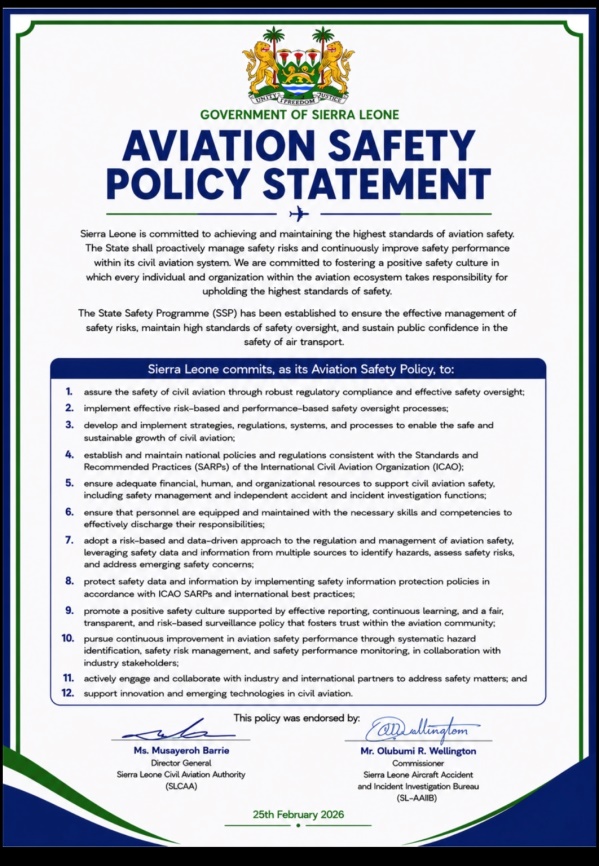
The Government of Sierra Leone has officially unveiled a comprehensive Aviation Safety Policy Statement aimed at strengthening safety oversight, enhancing regulatory compliance and sustaining public confidence in the country’s air transport system.

Approved by the Minister of Transport and Aviation,  Hon. Alhaji Fanday Turay Esq., on 25th February 2026, the policy underscores Sierra Leone’s commitment to achieving and maintaining the highest standards of aviation safety through proactive risk management and continuous performance improvement.

According to the policy statement, the Government is committed to fostering a positive safety culture within the aviation ecosystem, where every individual and institution assumes responsibility for upholding safety standards. Authorities emphasized that the State Safety Programme (SSP) has been established to ensure effective management of aviation safety risks, maintain robust oversight mechanisms and strengthen public trust in air transportation.

The Aviation Safety Policy outlines a broad framework through which Sierra Leone seeks to modernize and improve aviation governance. Among the key commitments highlighted are robust regulatory compliance, implementation of risk-based and performance-based safety oversight systems and the development of strategies and regulations to support the sustainable growth of civil aviation.

The policy further aligns Sierra Leone’s aviation system with the Standards and Recommended Practices (SARPs) of the International Civil Aviation Organization (ICAO), reflecting the country’s determination to comply with global aviation safety benchmarks.

In a move aimed at strengthening institutional capacity, the Government also pledged to ensure adequate financial, human and organizational resources for aviation safety, including support for safety management systems and independent accident and incident investigation mechanisms.

Authorities additionally stressed the importance of equipping aviation personnel with the necessary skills and competencies to effectively discharge their responsibilities, while promoting a data-driven approach to safety regulation and management.

The policy statement noted that Sierra Leone will place emphasis on the protection of aviation safety data and information in accordance with international best practices, while encouraging effective reporting systems, continuous learning, transparency and risk-based surveillance to foster trust among stakeholders in the aviation sector.

Another major component of the policy is the Government’s commitment to continuous improvement in aviation safety performance through systematic hazard identification, risk management and close collaboration with local and international aviation stakeholders.

The policy also encourages innovation and the adoption of emerging technologies in civil aviation, signaling Sierra Leone’s ambition to build a resilient and future-ready aviation sector.

The Aviation Safety Policy was endorsed by the Director General of the Sierra Leone Civil Aviation Authority (SLCAA), Ms. Musayeroh Barrie and the Commissioner of the Sierra Leone Aircraft Accident and Incident Investigation Bureau (SL-AAIIB), Olubumi R. Wellington, reinforcing institutional support for the implementation of the initiative.

The introduction of the policy is expected to boost confidence in Sierra Leone’s aviation industry while strengthening safety standards in line with international requirements. https://thecalabashnewspaper.com/slcaa-dg-endorses-aviation-safety-policy-to-strengthen-sierra-leones-air-transport-sector/