By Amin Kef (Ranger)
The National Civil Registration Authority (NCRA), in partnership with the High Commission of Canada, on Thursday 20 November 2025 held a high-level fraud awareness and document security training for frontline and technical NCRA staff in Freetown; marking a significant step in Sierra Leone’s fight against identity manipulation.
The initiative comes at a time when global threats to identity integrity are escalating and Sierra Leone continues to expand its digital ID ecosystem to enhance national security, service delivery and public trust.
Speaking shortly after the session, the Director General of NCRA, Mohamed Mubashir Massaquoi, reaffirmed the Authority’s strong commitment to enhancing document authentication processes, strengthening staff capacity and deepening collaboration with national and international partners.
“With partners like the High Commission of Canada, we are laying a firm foundation for a secure and credible national identity system,” Mohamed Mubashir Massaquoi said. “This is about national security, economic stability and protecting every Sierra Leonean.”
Mohamed Mubashir Massaquoi has been leading an aggressive nationwide campaign to combat identity fraud, declaring it “a fight that we must win.”
The day’s training was delivered by Jennifer O’Connell, a seasoned expert of the Canada Border Services Agency (CBSA), who has spent over two decades working in border protection, immigration enforcement and anti-fraud operations. Her mission is to equip NCRA officers with modern tools to detect fraudulent attempts before they penetrate national systems.
Ms. Jennifer O’Connell detailed common methods used in identity manipulation, including counterfeit birth certificates, altered death records and other fraudulent documents frequently exploited for human trafficking, illegal migration and financial or cross-border crime.
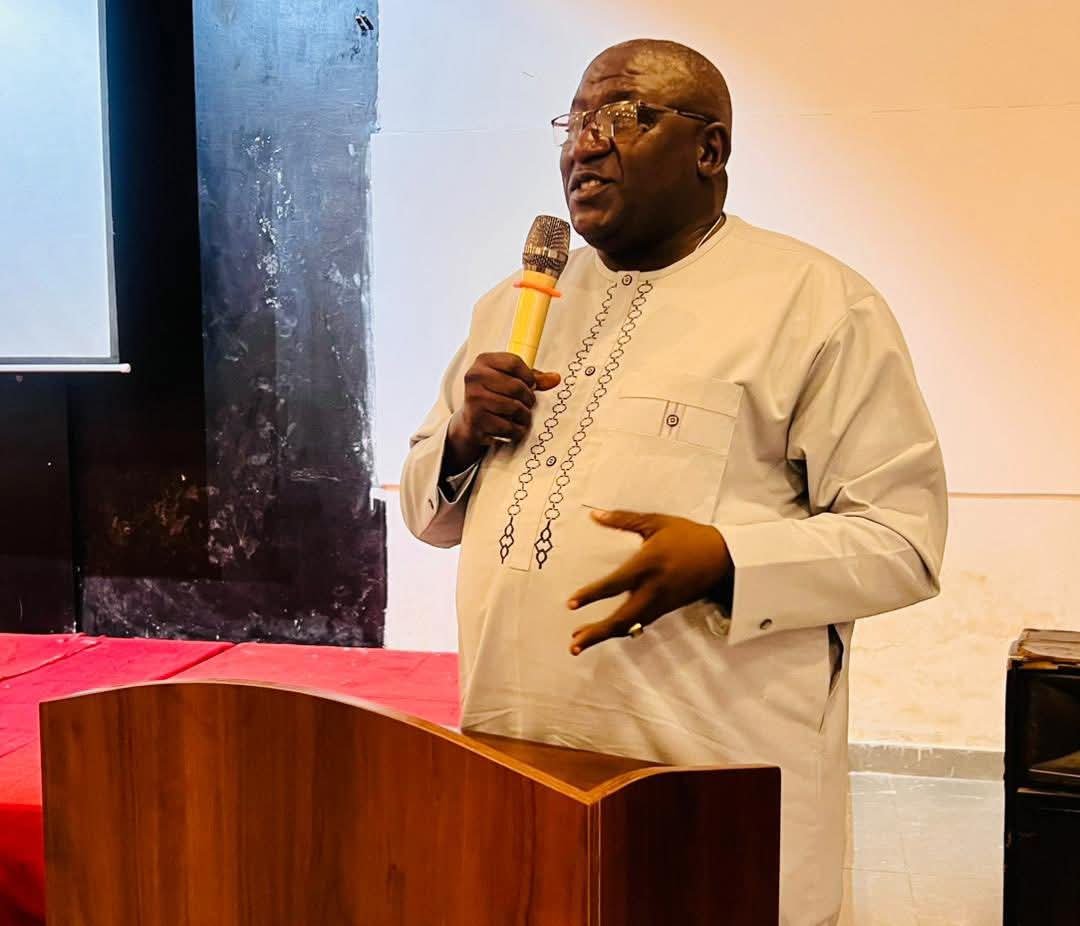
Addressing the gathering, Alfred B. Sesay, Director of Human Resources Management at the NCRA, stressed the urgency of the fight.
“Identity fraud is a national security threat and we are confronting it head-on,” he said. He underscored that foundational identity records; births, deaths, marriages, national ID cards and the National Identification Number (NIN) form the backbone of all other services, including passports, banking and social protection.
Alfred Sesay further disclosed ongoing engagements with the Immigration Department to ensure that the NIN becomes a mandatory requirement for all passport applications. This, he said, would eliminate the loopholes that previously enabled individuals to secure passports without verifiable identity information in the national database.
“It is unacceptable for anyone to carry a newly issued passport that our system cannot validate,” he emphasized. “A passport must be anchored on a verified national identity. That era of shortcuts is ending.”
He also encouraged staff to embrace their role as gatekeepers of national identity. “Our frontline staff are custodians of citizens’ information. Clean, accurate data strengthens the entire system. This training equips us to detect fraud and protect the national identity ecosystem.”
Senior staff, including Mohamed S. Konuwa, Abubakarr Javombo and Sahr Foday, echoed the need for stronger collaboration with immigration authorities, medical regulators and security agencies to ensure consistent verification of foundational documents.
Participants reflected on several fraud risks encountered in Sierra Leone, such as attempts to acquire passports without national IDs, manipulation of birth or death certificates for inheritance disputes, falsified medical documents, insider threats within institutions and forged papers used to move children across borders. One NCRA officer remarked, “When someone presents a passport that has no corresponding national identity record, that is not simply a mistake; it is a red flag. Our duty is to say no and protect the system.”
The training followed a recent engagement with Canada’s Consular Office, led by the Honorary Consul for Canada in Sierra Leone, Kofie Macauley, who announced that Sierra Leoneans seeking Canadian services will no longer need to travel to Guinea or Ghana for biometric fingerprinting; thanks to upgraded capabilities now available in Freetown.
Commending the proactive stance of Sierra Leone, Ms. Jennifer O’Connell described the civil registry as “the heartbeat of national identity.”
“Your officers are the first line of defence,” she said, warning that once fraudulent foundational documents enter the system, every other national document becomes compromised. She cited global cases where poorly verified certificates enabled human trafficking, welfare fraud, illegal migration and transnational crime.
The training ended with renewed motivation among participants, who described the session as timely, practical and crucial in strengthening national security and restoring public confidence in Sierra Leone’s identity ecosystem. https://thecalabashnewspaper.com/ncra-intensifies-crackdown-on-identity-fraud-with-canadian-led-document-security-training/

No comments:
Post a Comment