By Amin Kef (Ranger)
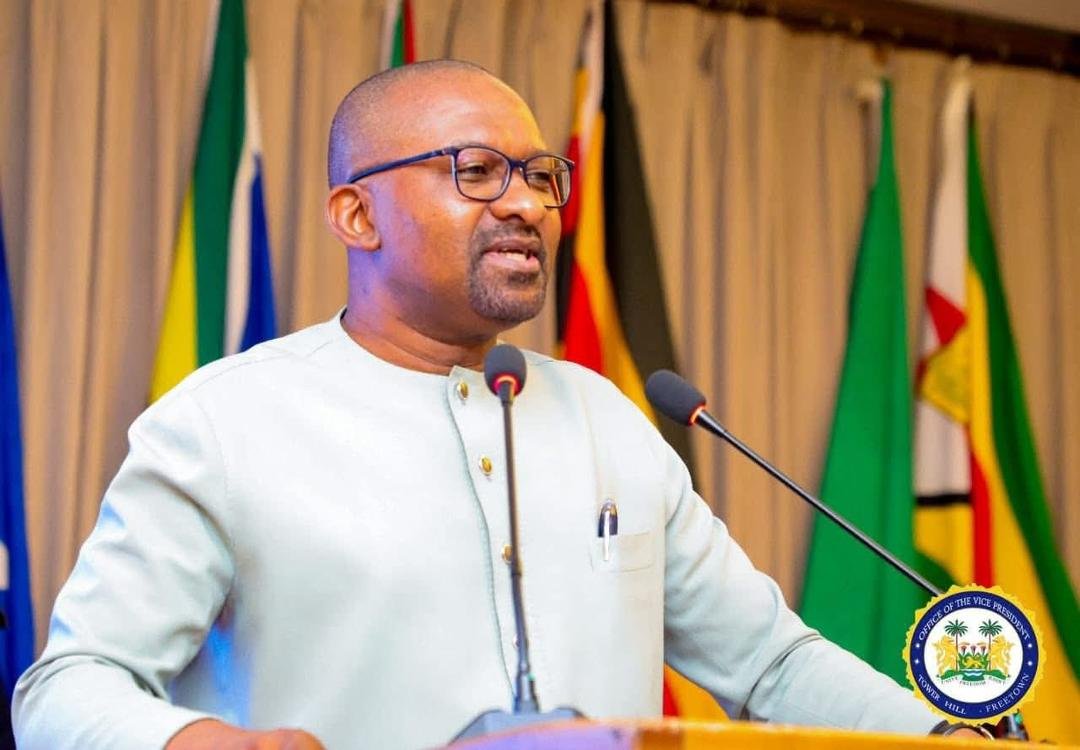
Vice President of the Republic of Sierra Leone, Dr. Mohamed Juldeh Jalloh, has called on African Governments to intensify investments in skills development and human capital as a strategic pathway to strengthening labour markets and fostering sustainable economic growth across the continent.
Dr. Mohamed Juldeh Jalloh made the call while delivering opening remarks at the 52nd Governing Council Meeting of the African Regional Labour Administration Centre (ARLAC), held in Freetown on Thursday, March 12, 2026. The high-level meeting brought together Labour and Employment Ministers, policymakers and labour administration experts from across Africa to deliberate on the future of work and strategies for strengthening labour institutions across the region.
Addressing the gathering, Dr. Mohamed Juldeh Jalloh emphasized that African countries must adapt to a rapidly evolving global economic environment marked by technological advancement, shifting labour dynamics and persistent economic uncertainties. Dr. Mohamed Juldeh Jalloh noted that these developments require Governments across the continent to rethink traditional employment strategies and focus on building more resilient and responsive labour systems capable of supporting sustainable development.
According to Dr. Mohamed Juldeh Jalloh, African economies are currently facing significant economic headwinds that demand proactive and forward-looking policy responses. Dr. Mohamed Juldeh Jalloh stressed that one of the most effective ways to address those challenges is through deliberate investments in education, vocational training and workforce development.
“As the continent continues to face economic headwinds, Governments must focus on building resilient labour markets through strategic investments in skills development, improved competitiveness and the expansion of productive sectors,” Dr. Mohamed Juldeh Jalloh stated.
Dr. Mohamed Juldeh Jalloh further underscored that human capital development must remain at the center of Africa’s economic transformation agenda. He explained that equipping citizens with relevant knowledge and modern skills is essential for enabling Africa’s growing youth population to actively contribute to innovation, productivity and inclusive economic growth.
“These investments, with human capital development as their foundation, are critical to ensuring that our people, especially the youth, can drive sustainable and inclusive economic growth across the continent,” Dr. Mohamed Juldeh Jalloh added.
Dr. Mohamed Juldeh Jalloh also called on African leaders to ensure that the rapidly expanding digital platform economy promotes fairness, dignity and adequate protection for workers across the continent. According to the Vice President, while digital platforms are creating new opportunities for entrepreneurship and employment, Governments must ensure that innovation does not come at the expense of workers’ rights and social protection.
Dr. Mohamed Juldeh Jalloh emphasized that African countries must continue building resilient labour markets through policies that strengthen competitiveness and expand productive sectors. He reiterated that human capital development remains the foundation for enabling young people to drive sustainable economic growth and innovation across the continent.
Dr. Mohamed Juldeh Jalloh also highlighted the importance of collaboration among African countries in addressing common labour market challenges. He noted that regional cooperation and knowledge sharing would help countries design more effective policies to manage workforce transitions, respond to technological change and improve labour administration systems.
The Vice President further stated that hosting international gatherings in Sierra Leone provides an important opportunity for delegates to experience the country firsthand and better understand its development progress. Dr. Mohamed Juldeh Jalloh added that such engagements allow visiting officials to become ambassadors who share Sierra Leone’s story and opportunities across the continent.
Reflecting on Sierra Leone’s progress in labour sector dialogue, Dr. Mohamed Juldeh Jalloh recalled the country’s first National Labour Conference held in 2025 under the theme: “Shaping the Future of Work: Innovation, Digital Transformation, and Just Transition.” The conference brought together Government officials, employers and workers to explore strategies for employment creation, workforce readiness and resilience in the digital era.
Dr. Mohamed Juldeh Jalloh also observed that the focus of the current ARLAC High-Level Symposium on “Advancing Decent Work in the Platform Economy” is timely, as digital platforms continue to reshape employment patterns across Africa, creating new opportunities for entrepreneurship while also raising concerns about fairness, security and sustainability.
Dr. Mohamed Juldeh Jalloh reaffirmed Sierra Leone’s commitment to ensuring that innovation and digital transformation go hand in hand with the protection of workers’ rights and the promotion of decent work across all sectors of the economy. He also praised the African Regional Labour Administration Centre (ARLAC) for its longstanding role in strengthening labour governance and fostering cooperation among African countries.
Chairperson of the ARLAC Governing Council and South Africa’s Minister for Employment and Labour, Nomakhosazana Meth, commended Sierra Leone for successfully hosting the meeting and praised the warm hospitality extended to delegates.
However, Nomakhosazana Meth cautioned that the organisation is currently facing serious financial challenges, revealing that only four of ARLAC’s eighteen member states have paid their membership contributions for 2026.
“The vision of a self-reliant ARLAC can only be secured through concrete action and the prompt settlement of obligations,” Nomakhosazana Meth said, noting that unpaid contributions from several member states have exceeded one million United States dollars.
Despite the financial challenges, Nomakhosazana Meth explained that ARLAC continues to strengthen its institutional framework through governance reforms and new partnerships aimed at expanding its training and capacity-building programmes across Africa.
Meanwhile, Assistant Director-General and Regional Director for Africa at the International Labour Organization, Fanfan Rwanyindo Kayirangwa, stressed that effective labour administration systems are essential for economic growth and social stability across the continent.
Fanfan Rwanyindo Kayirangwa acknowledged that digital platforms are creating employment opportunities for many young people and women but warned that the absence of clear regulatory frameworks could expose workers to exploitation.
“Flexibility without protection is not decent work,” Fanfan Rwanyindo Kayirangwa stated, noting that many platform workers face unstable incomes, unclear employment status and limited access to social protection.
He further disclosed that the upcoming International Labour Conference scheduled for June 2026 will consider proposed global labour standards for the platform economy and encouraged African countries to develop a unified position on the issue.
Discussions during the ARLAC meeting explored how Governments can develop policies that support innovation while protecting workers’ rights, strengthening labour institutions and expanding social protection systems across the continent.
For Sierra Leone, hosting the meeting represents a significant moment of regional leadership, bringing together some of Africa’s most influential labour policymakers in a city whose history is closely associated with the ideals of freedom, dignity and human development. https://thecalabashnewspaper.com/vice-president-calls-for-greater-investment-in-skills-and-human-capital-at-arlac-governing-council-meeting/

No comments:
Post a Comment