Wednesday, 25 February 2026


SLCAA’s PAYE Challenges Rooted in Systemic Funding Gaps Rather Than Intentional Non-Compliance, Independent Investigation Reveals
By Amin Kef (Ranger)

An independent investigation conducted by this medium has examined recent audit findings concerning the Sierra Leone Civil Aviation Authority (SLCAA) and its Pay-As-You-Earn (PAYE) tax obligations to the National Revenue Authority (NRA). While the audit highlighted discrepancies in the computation and documentation of PAYE payments, our findings show that the situation is largely connected to legacy liabilities and long-standing financial constraints rather than deliberate wrongdoing.

According to documents reviewed, the SLCAA recorded its PAYE liability for the 2023 financial year at NLe 5,263,731.41. However, auditors recalculated the correct amount to be NLe 5,567,935.03, creating a difference of NLe 304,203.62. The audit also identified an outstanding PAYE-related balance of NLe 2,520,146.55. In addition, auditors stated that at the time of their review, there was no supporting documentation available to confirm that the full recalculated amount had been remitted to the NRA.

PAYE is tax deducted directly from employees’ salaries and must be paid to the NRA as required by law. Any difference in figures or delay in documentation naturally attracts attention. However, this investigation found that the SLCAA has been operating under significant financial pressure due to the structure of the Treasury Single Account (TSA) system.

Under this system, all revenue generated by the SLCAA is collected by the NRA and paid into the Government’s central account. From there, 80 percent of the funds are supposed to be transferred back to the Authority to support its operations. Financial records and sources close to the matter indicate that those transfers have not always been made consistently or on time. It is understood that more than NLe 20 billion in operational funds due to the SLCAA remain un-transferred.

This situation has reportedly created cash flow challenges for the Authority, affecting the timing of some payments, including statutory obligations. Despite those challenges, there is no evidence to suggest that the SLCAA failed to deduct PAYE from employees’ salaries. The issue appears to center on reconciliation, documentation and the timing of remittances.

Our investigation also shows that some of the liabilities mentioned in the audit date back to previous financial periods. Internal handover notes indicate that certain tax exposures were inherited from earlier administrations and have been carried forward over time. This suggests that the discrepancies are part of a broader historical issue rather than a new development.

Sources within the finance department confirmed that a reconciliation exercise has already been completed to address the 2023 variance. The Authority is expected to update its records to reflect the audited figure of NLe 5,567,935.03. Efforts are also underway to compile and submit supporting documentation to the relevant authorities.

The outstanding balance of NLe 2,520,146.55 has been included in a wider reconciliation plan. Financial experts say that possible solutions may involve direct payments or legally approved arrangements to offset tax liabilities against funds owed to the Authority.

It is important to note that the SLCAA plays a critical role in regulating aviation safety and ensuring compliance with international standards. The Authority requires stable funding to conduct inspections, training and oversight activities that protect passengers and maintain Sierra Leone’s aviation credibility. Despite the financial constraints identified, there is no indication that safety standards have been compromised.

This investigation highlights the need for stronger coordination between institutions responsible for revenue collection and those that depend on timely fund transfers. It also underscores the importance of proper documentation and regular reconciliation in public financial management.

Overall, the findings suggest that the challenges facing the SLCAA are rooted in systemic funding issues and historical liabilities rather than intentional non-compliance. With reconciliation efforts ongoing and corrective steps being taken, the Authority appears committed to resolving the discrepancies and strengthening its financial processes moving forward. https://thecalabashnewspaper.com/slcaas-paye-challenges-rooted-in-systemic-funding-gaps-rather-than-intentional-non-compliance-independent-investigation-reveals/

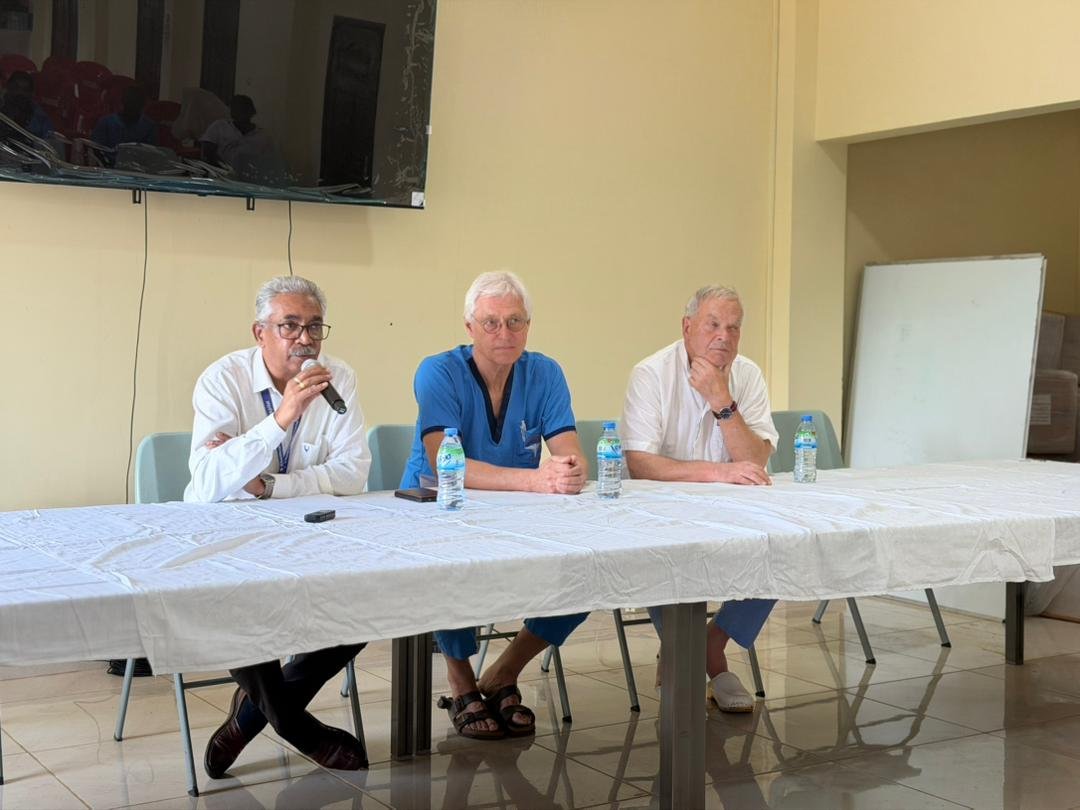
Choithram Memorial Hospital, INTERPLAST Germany Conclude Fourth Free Reconstructive Surgery Camp
By Alvin Lansana Kargbo

Choithram Memorial Hospital (CMH), in collaboration with INTERPLAST Germany, has concluded its fourth Interplast Camp, a humanitarian medical outreach providing free consultations, treatment and specialized reconstructive surgeries for patients across Sierra Leone.

The two-week program, held from February 10 to 24, 2026, at Choithram Memorial Hospital in Freetown, delivered plastic and reconstructive surgical services for conditions including cleft lip and cleft palate, post-burn contractures, congenital and acquired deformities of the hand, foot and wrist, and tumors affecting the extremities.

The initiative was facilitated by Sierra Leone’s Ambassador to Germany, Dr. M’Baimba Lamin Baryoh and brought together a team of German specialists under the auspices of INTERPLAST, an international organization recognized for providing reconstructive surgical care in low-resource settings worldwide.

The visiting medical team comprised Dr. Lutz Friedbert Wolfgang Gruhl (Plastic Surgeon), Dr. Bernd Markus Heidemann (Hand and Trauma Surgeon), Dr. Olaf Günther Weigt (Anesthetist), Dr. Andreas Weckesser (Hand and Trauma Surgeon), Dr. Friedrich Johannes Goswin Matthaei (Hand and Plastic Surgeon) and Nikolaus Brunner (Anaesthetic Nurse).

According to the hospital, 44 patients successfully underwent surgical procedures during the 2026 outreach.

Speaking in an interview, the Medical Superintendent of Choithram Memorial Hospital, Dr. Gowrinath M. George, said the German team has visited Sierra Leone annually for the past four years to perform complex reconstructive procedures that are often unavailable or unaffordable for many patients. He said the initiative has significantly improved the quality of life of beneficiaries by restoring function and reducing disability.

Dr. Gowrinath M. George explained that access to the program is open to the public through media announcements and public outreach. Prospective patients register for screening by hospital clinicians, after which eligible cases are scheduled for surgery. The Medical Superintendent reported that approximately 200 patients have benefited since the program’s inception, with patients ranging from infants with congenital anomalies to adults aged up to 60–65 years. He added that the hospital provides surgeries, postoperative treatment and discharge medications free of charge, while follow-up dressings and care are also offered at no cost. Local clinicians continue managing patients after the visiting team departs.

Dr. Bernd Markus Heidemann, a hand and trauma surgeon with INTERPLAST Germany, said the free surgical camp marked its fourth consecutive year in Freetown, following an initiative by Sierra Leone’s Ambassador to Germany, Dr. M’Baimba Lamin Baryoh who helped link the hospital with INTERPLAST about four years ago. He said more than 200 patients have been operated on over the period, with 44 surgeries conducted this year, all provided free of charge and reported as successful.

According to him, plastic surgery involves reshaping and reconstructing tissues using available resources, highlighting its importance in managing complex burn injuries. He stressed the intricate anatomy of the hand and the technical challenges of operating within a limited anatomical space.

He said many of the patients treated were children with burn injuries from open fires, hot water or oil, who develop severe contractures during healing, sometimes resulting in claw-like deformities without early splinting. The team’s work focuses on straightening fingers, restoring alignment, and recovering function, which he described as critical for children’s education, future employment and overall quality of life.

Dr. Bernd Markus Heidemann also underscored the importance of pediatric anesthesia in cleft lip and palate surgeries for very young infants, sometimes weighing as little as 3–4 kilograms, noting that the expertise of Dr. Olaf Günther Weigt makes such procedures safe and feasible. He added that cleft conditions often require multiple operations to restore appearance, feeding and speech, and acknowledged the social and emotional burden those conditions place on families, making reconstructive outcomes particularly significant. He further expressed appreciation to local partners involved in organizing and screening patients and reaffirmed the team’s commitment to delivering high-quality, no-cost reconstructive care.

At the closing conference of the Interplast Camp, Dr. Gowrinath M. George announced additional upcoming medical outreach initiatives targeting underserved populations. A Colon Cancer Screening Camp is scheduled to begin on March 12, 2026, led by specialists from the United Kingdom, with a target of about 15 cases and a focus on training and capacity-building for local endoscopy and colonoscopy teams. A second cycle of a free Cataract Surgery Camp will commence on March 21, 2026, with an emphasis on training doctors and nurses, building on previous programs that trained ophthalmologists and nursing staff with support from the Ministry of Health.

Dr. Gowrinath M. George said the initiatives form part of the hospital’s broader strategy to expand access to specialized healthcare services while strengthening local clinical capacity in Sierra Leone. https://thecalabashnewspaper.com/choithram-memorial-hospital-interplast-germany-conclude-fourth-free-reconstructive-surgery-camp/


Orange Mobile Finance Drives Innovation in Sierra Leone’s FinTech Sector
By Ibrahim Sesay

Orange Mobile Finance Sierra Leone, widely known as Orange Money, is positioning itself at the forefront of the country’s rapidly evolving financial technology landscape, combining secure digital infrastructure with deep local market knowledge to expand access to financial services across the nation.

In an exclusive engagement, Chief Executive Officer, David Mansaray, described the FinTech industry as one of the most transformative and fast-evolving sectors globally, noting that in emerging markets such as Sierra Leone, it remains foundational to economic participation.

“The FinTech industry remains one of the most transformative, fast-evolving sectors globally and, in many respects, is still in its early innings, particularly in emerging markets,”David Mansaray stated.

According to him, financial technology in Sierra Leone goes beyond convenience. It plays a critical role in expanding financial inclusion, formalizing large portions of the informal economy, improving efficiency in payments and savings, and enabling access to credit, insurance and Government services at scale.

He explained that the sector is being shaped by a convergence of powerful forces, including widespread mobile phone penetration, improving digital infrastructure, pragmatic regulatory reforms and a growing youthful population whose expectations are driven by speed, convenience and personalized services.

These dynamics, David Mansaray noted, are pushing FinTech beyond basic money transfers into integrated financial ecosystems that combine commerce, identity management, data analytics and public services.

He further highlighted the growing role of artificial intelligence, describing it as a present reality rather than a future concept. AI, he said, is already transforming fraud detection, credit scoring, customer engagement, operational efficiency and risk management. In markets where traditional financial data is limited, AI-powered alternative data models offer an opportunity to design more inclusive and intelligent financial solutions.

Looking ahead, David Mansaray expressed confidence that the distinction between FinTech companies and traditional financial institutions will continue to narrow as technology-driven models increasingly shape how financial services are designed, distributed and consumed.

Orange Money currently offers a broad suite of digital financial services, including person-to-person transfers, merchant and bill payments, international remittances, savings products and digital credit solutions. Its services cater to individuals, small and medium-sized enterprises, corporations, non-governmental organisations and government institutions through a nationwide agent network supported by a skilled workforce.

With over two decades of senior leadership experience spanning banking, finance and digital financial services, Mansaray has steered the company toward strengthening its reputation for trust, innovation, scale and governance. Backed by the global expertise of the Orange Group, the company blends international standards with local market understanding.

He emphasized that regulatory compliance, service reliability, customer experience, a robust distribution network and continuous innovation remain central to Orange Money’s operations. Supportive initiatives such as tiered know-your-customer requirements, regulatory sandboxes and agency banking frameworks have expanded responsible access to financial services while strengthening consumer protection.

Among its flagship innovations is Orange Money Lajor, a digital credit product that has expanded access to finance in a market where formal credit remains limited. Since its launch, the product has reached over 300,000 customers. Building on this momentum, the company introduced Kwik Moni Loan, a digital credit facility designed to provide short-term working capital to its agent network, enhancing liquidity management, business growth and service reliability across the country. Following a successful pilot phase, the product is expected to be gradually extended to customers using data-driven risk assessment models.

The company’s Overseas Money platform has also made a significant socioeconomic impact by enabling fast and affordable international remittances that support household income, education, healthcare and small businesses. Upcoming partnerships, including Mastercard integration and Roaming Money services, are expected to enhance interoperability, payment acceptance and access to global digital commerce.

Financial inclusion remains central to Orange Money’s mission, particularly in rural communities. David Mansaray disclosed that 57 percent of the company’s customer base resides in rural areas, making it one of the largest providers of financial services to previously underserved populations.

Through its digital platforms, Orange Money has facilitated large-scale disbursements for government institutions, development partners and private sector organisations. In 2025 alone, the company disbursed more than USD 117 million to rural communities in programmes supported by institutions such as the World Bank and the World Health Organisation, benefiting over 112,000 individuals.

The company has also supported digital loan disbursement and repayment for microfinance institutions, digitised village savings groups and empowered youth and women as Orange Money agents, embedding financial services directly within local communities.

By reducing reliance on cash, improving payment efficiency and strengthening value chains across agriculture, fast-moving consumer goods and small enterprises, these initiatives have stimulated local economic activity and strengthened financial resilience at the grassroots level.

Beyond its core financial services, Orange Money’s corporate social responsibility agenda aligns with national development priorities. Through the Orange Sierra Leone Foundation and other Orange Group initiatives, the company supports education, digital inclusion, entrepreneurship, environmental sustainability and community well-being.

Its Orange Digital Centre and Women Digital Centres provide training in digital literacy, entrepreneurship and emerging technologies, enhancing employability and innovation among young people and women. The Orange Social Venture Prize further promotes social innovation by supporting entrepreneurs using technology to address challenges in health, education, agriculture and environmental sustainability.

Environmental responsibility also features prominently in the company’s strategy, with investments in solar-powered infrastructure, energy-efficient networks, responsible e-waste management and reforestation initiatives, alongside targeted health, education, food security and water access programmes.

As it looks to the future, Orange Money has identified “innovation” as its guiding theme for the year ahead. David Mansaray underscored that advances in artificial intelligence, machine learning and digital platforms will continue to reshape financial service delivery, and the company intends to remain at the forefront of this transformation.

By expanding digital credit and merchant solutions, deepening rural financial inclusion and enhancing customer and agent experiences through data-driven insights, Orange Money aims to build a resilient and future-ready financial ecosystem.

“Through technology-led innovation, underpinned by strong governance and compliance, we are building a resilient, future-ready financial ecosystem that drives sustainable growth and long-term value creation,” David Mansaray concluded. https://thecalabashnewspaper.com/orange-mobile-finance-drives-innovation-in-sierra-leones-fintech-sector/

Monday, 23 February 2026


Orange Foundation, NaYCom Certify 70 Young Women to Boost Sierra Leone’s Digital Economy
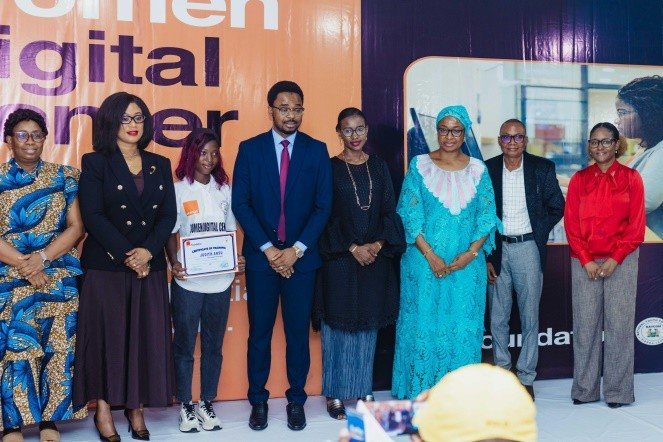
Orange Foundation Sierra Leone, in partnership with the National Youth Commission (NaYCom), has certified 70 young women as digital professionals under the Women’s Digital Centre programme, marking another milestone in efforts to bridge the gender digital divide and strengthen Sierra Leone’s growing digital economy.

The graduation ceremony, held on Friday, 13 February 2026, at the Orange Digital Centre in Freetown, attracted senior Government officials, corporate executives, development partners and proud family members who gathered to celebrate the fifth cohort of the six-month training initiative.

Speaking at the event, Director of the Orange Foundation, Annie Wonnie Katta, disclosed that since the programme’s launch in 2021, more than 700 women have been trained across Freetown, Bo and Kenema. She noted that over 600 graduates are already transitioning into the workforce, equipped with practical digital and entrepreneurial skills.

According to her, participants underwent intensive training in computer applications, internet fundamentals, digital marketing, entrepreneurship, business management and online brand development. She further explained that recent advanced cohorts have expanded into specialized areas such as web development, 3D design, artificial intelligence and cybersecurity.

Chief Executive Officer of Orange Sierra Leone, Aïcha Touré, emphasized the urgency of expanding digital inclusion, pointing out that only 5.7 percent of women in Sierra Leone are online compared to 11.4 percent of men. She described the graduating class as clear evidence that deliberate investment in women’s digital capacity can drive inclusive economic growth and reposition women as creators and innovators in the technology space.

Minister of Youth,  Ibrahim Sannoh, reaffirmed Government’s commitment to youth empowerment and digital transformation. He announced plans to pursue formal accreditation of the programme through the National Council for Technical, Vocational and Academic Awards, a move aimed at strengthening the credibility and national recognition of the certification. The Minister also encouraged the graduates to establish digital enterprises, promising ministerial recognition for outstanding early-stage innovators.

Commissioner of the National Youth Commission, Joseph Maada Lahai, stated that the initiative aligns with the objectives of the country’s Mid-Term National Development Plan, which prioritizes technology, innovation and human capital development. He pledged continued institutional support through mentorship programmes, internship opportunities, market access and financing pathways for beneficiaries.

Education sector representatives also highlighted ongoing reforms, including the establishment of technical universities offering Bachelor of Science degrees in technical disciplines, the development of a national cybersecurity curriculum and the introduction of Sierra Leone’s first micro-credential framework to formally recognize short-course certifications.

Graduates and alumni shared testimonials of personal transformation, citing improved employability, increased income opportunities and enhanced community impact as key outcomes of the programme.

Delivering remarks on behalf of the cohort, student representative, Judith Ansu, described the Digital Centre as “a gateway for ambition, confidence and leadership,” underscoring its role in advancing gender equality and national development.

With collaboration between Orange Foundation and Government partners continuing to deepen, stakeholders say the Women’s Digital Centre initiative is emerging as a scalable model for closing the gender digital gap and building a more inclusive, innovation-driven future for Sierra Leone.

  https://thecalabashnewspaper.com/orange-foundation-naycom-certify-70-young-women-to-boost-sierra-leones-digital-economy/


Vice President Reconnects with UN Women Regional Director, Reaffirms Commitment to Gender Equality
By Amin Kef (Ranger)

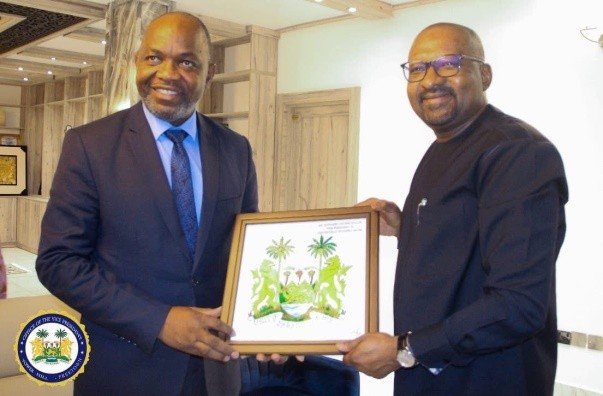
Vice President of Sierra Leone, Dr. Mohamed Juldeh Jalloh, on Tuesday, 17 February 2026, met with the Regional Director of UN Women for West and Central Africa, Dr. Maxime Houinato, during the latter’s first official visit to the country in his current capacity.

The meeting provided an opportunity for both leaders to reconnect and reflect on their longstanding professional relationship, which dates back to their time serving together with the United Nations in Mali. Their engagement also focused on assessing regional progress and examining the socio-political challenges shaping West and Central Africa today.

Speaking after the meeting, Vice President Dr. Mohamed Juldeh Jalloh described the engagement as a meaningful exchange of ideas and experiences. He noted that it was particularly encouraging to hear Dr. Maxime Houinato recognize Sierra Leone as a model in advancing women’s empowerment and gender equality within the region.

Central to their discussions was the implementation and impact of Sierra Leone’s Gender Equality and Women’s Empowerment (GEWE) Act. The landmark legislation mandates a minimum 30 percent quota for women in elective and appointive positions, a significant step toward addressing gender disparities in leadership and decision-making.

The Vice President highlighted the importance of ensuring that the provisions of the GEWE Act translate into tangible improvements in the lives of women and girls across the country. He referenced the upcoming national women’s dialogue series being organized by his Office in collaboration with the Ministry of Gender and Children’s Affairs.

The dialogue is expected to assess the implementation of the GEWE Act and collaboratively identify concrete actions to strengthen its impact. According to the Vice President, the initiative will produce a practical roadmap aimed at ensuring that the lived experiences of women align with the aspirations and objectives of the legislation.

Dr. Maxime Houinato arrived in Sierra Leone on 16 February for a five-day official mission scheduled to run until 21 February 2026. The visit was aimed at strengthening high-level partnerships between UN Women, the Government of Sierra Leone and development partners to accelerate progress on gender equality and women’s empowerment.

During his stay, the UN Women Regional Director met with His Excellency President Julius Maada Bio, selected Cabinet Ministers, members of the Diplomatic Corps and key stakeholders in the women’s rights movement. He also engaged with Civil Society Organizations, women leaders and youth activists to gain firsthand insight into their experiences, challenges and aspirations.

The visit culminated in a series of discussions with policymakers and development partners in Freetown and across the districts, bringing together actors from multiple sectors to explore practical solutions for gender-responsive development.

“This mission reaffirms UN Women’s commitment to ensuring that all women and girls in Sierra Leone can live free from violence, lead in public life and thrive economically,” Dr. Maxime Houinato stated during his visit.

Dr. Maxime Houinato previously visited Sierra Leone about a decade ago in a different capacity before his appointment as Regional Director. His mission signaled renewed efforts to fast-track partnerships, consolidate gains made under the GEWE Act and further advance gender equality initiatives in Sierra Leone. https://thecalabashnewspaper.com/vice-president-reconnects-with-un-women-regional-director-reaffirms-commitment-to-gender-equality/


Vice President Observes First Ramadan Jummah in Pujehun, Engages SLPP Grassroots on Decentralization Agenda
By Amin Kef (Ranger)

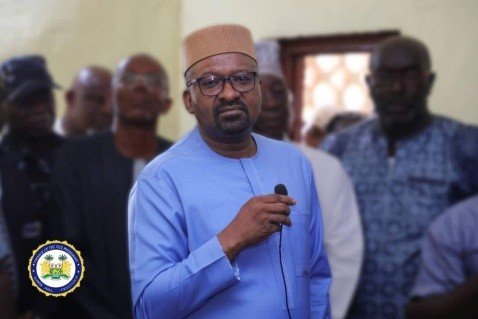
Vice President, Dr. Mohamed Juldeh Jalloh, joined Muslim worshippers at the Pujehun Central Mosque for the first Jummah prayer of the Holy Month of Ramadan on Friday, February 20, 2026, marking the beginning of the sacred fasting period with prayers for peace, unity and national progress.

His visit to the district coincided with the symbolic first Friday of Ramadan, a moment regarded by many Muslims as spiritually significant in setting the tone for the month of fasting, reflection and charity. On arrival in Pujehun, the Vice President was received with a Quarter Guard mounted by the 14 Infantry Battalion before proceeding to the mosque, where he was welcomed by religious leaders, elders and local authorities.

Inside the mosque,  Dr. Mohamed Juldeh Jalloh joined hundreds of worshippers ahead of the Khutbah. The Imam’s sermon focused on patience, discipline, compassion and unity, urging the faithful to use Ramadan as a period of self-examination and service to humanity. The congregation observed the prayer in a solemn and reflective atmosphere, underscoring the spiritual importance attached to the first Jummah of the holy month.

Following the prayer, the Vice President briefly addressed the congregation, calling on citizens across Sierra Leone to uphold peace and demonstrate kindness throughout the fasting period. He encouraged Muslims to extend support to the less privileged and to strengthen bonds within their families and communities. He also appealed for continued prayers for the nation and for divine guidance for leaders entrusted with advancing Sierra Leone’s development agenda, stressing that unity and collective responsibility remain essential for sustained stability and progress.

Ramadan, one of the Five Pillars of Islam, is observed by Muslims worldwide through daily fasting from dawn to sunset, increased devotion, charity and acts of goodwill. The first Friday prayer of the month traditionally draws large participation and heightened spiritual reflection.

In another development, Vice President Dr. Mohamed Juldeh Jalloh addressed grassroots supporters of the Sierra Leone People’s Party (SLPP) in Pujehun District following a successful engagement with the Council of Paramount Chiefs, as part of his mandate under Sierra Leone’s Local Government framework and his role as Chairman of the Inter-Ministerial Committee on Decentralization.

Speaking to a large gathering, he thanked residents for their turnout and explained that his visit was aimed at consulting key stakeholders ahead of a broader official engagement with the District Council and the Council of Paramount Chiefs expected before June. He noted that discussions would centre on decentralization efforts and a national development project supported by the World Bank under the leadership of President Julius Maada Bio.

The Vice President expressed appreciation for the district’s continued support for President Bio and the party, particularly during the recent lower-level elections, emphasizing that the contest was now over. He urged supporters to maintain unity and pursue political engagement in a lawful and peaceful manner, reminding them that national development must remain the shared priority.

Highlighting Government achievements, Dr.Mohamed Juldeh Jalloh pointed to the completion of the Bo–Pujehun road network, describing it as a transformative intervention that has improved transportation, enhanced trade and boosted economic activity within the district and beyond. https://thecalabashnewspaper.com/vice-president-observes-first-ramadan-jummah-in-pujehun-engages-slpp-grassroots-on-decentralization-agenda/


Orange Money Rewards Final ‘Sober Kaiba’ Winners, Launches Nationwide Ramadan Promotion
Orange Money has rewarded the final batch of winners under its nationwide “Sober Kaiba” promotional campaign and simultaneously launched a new Ramadan Promotion aimed at supporting customers while accelerating the adoption of digital financial services across the country.

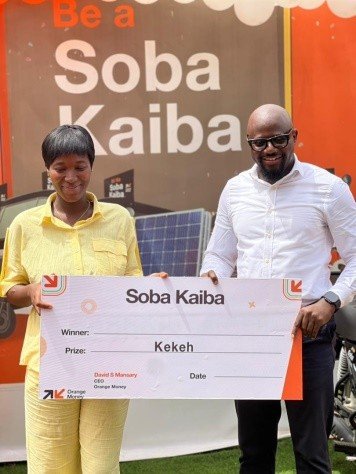
At a well-attended prize-giving ceremony held on Thursday, 19 February 2026, the mobile financial service provider presented a range of high-value prizes to deserving customers. The awards included solar panels, two generators, five motorbikes and one tricycle. Beneficiaries emerged based on their level of transaction activity throughout the duration of the campaign.

The “Sober Kaiba” promotion, which commenced in October 2025, was designed to encourage customers to make greater use of Orange Money’s digital payment, transfer and merchant services. Participants were automatically entered into periodic prize draws by actively transacting on the platform, reinforcing the company’s drive to promote a cash-lite economy.

Speaking at the ceremony, Orange Money Chief Executive Officer, David Mansaray, commended customers for their loyalty and consistent engagement with the platform. He stated that the campaign forms part of Orange Money’s broader strategy to enhance customer experience, build trust and deepen financial inclusion nationwide.

He emphasized that regular use of mobile money services provides greater convenience, efficiency and security for users, while also contributing to the development of an accessible and inclusive financial ecosystem in Sierra Leone.

“Our customers remain at the heart of everything we do. Through initiatives like Sober Kaiba, we are not only rewarding loyalty but also encouraging the use of safe and reliable digital financial solutions that empower individuals and businesses,” David Mansaray said.

Most of the winners attended the event in person to receive their prizes. Among them was Elizabeth Marrah, who won the tricycle. She travelled from Makeni to Freetown after initially expressing skepticism about the authenticity of the congratulatory message she received.

“With this tricycle, I can improve my livelihood and support my family,” Elizabeth Marrah said, describing the prize as life-changing. She added that the experience has strengthened her confidence in Orange Money’s services.

Building on the success of the Sober Kaiba campaign, Orange Money used the occasion to unveil its Ramadan Promotion, strategically aligned with the Muslim Holy Month. The new initiative is structured to provide both economic relief and business incentives during the fasting period.

Under the Ramadan Promotion, five motorbike or tricycle riders will receive 30 litres of fuel weekly, offering practical support to transport operators whose earnings sustain many households. In addition, business owners will have the opportunity to win Le50,000 in cash.

To qualify, merchants must receive payments through their Kotoku accounts or via their registered merchant codes, thereby promoting digital payment adoption among small and medium-sized enterprises. Beyond fuel and cash rewards, selected participants will also receive food items during Ramadan as part of the company’s community support outreach.

Company representatives noted that the Ramadan Promotion underscores Orange Money’s commitment to social responsibility while advancing the use of secure and efficient digital payment solutions.

Orange Money reaffirmed that mobile financial services continue to play a critical role in Sierra Leone’s economy, particularly for small-scale traders, transport operators and individuals who rely on fast, safe and convenient digital transactions.

Through sustained customer reward initiatives and seasonal campaigns, the company says it remains focused on strengthening trust in digital finance and expanding access to financial services across both urban and rural communities nationwide. https://thecalabashnewspaper.com/orange-money-rewards-final-sober-kaiba-winners-launches-nationwide-ramadan-promotion/