Thursday, 2 April 2026


Africell CEO Unveils Renovated Bo Clock Tower, Strengthening Community Pride and Cultural Identity
By Alvin Lansana Kargbo

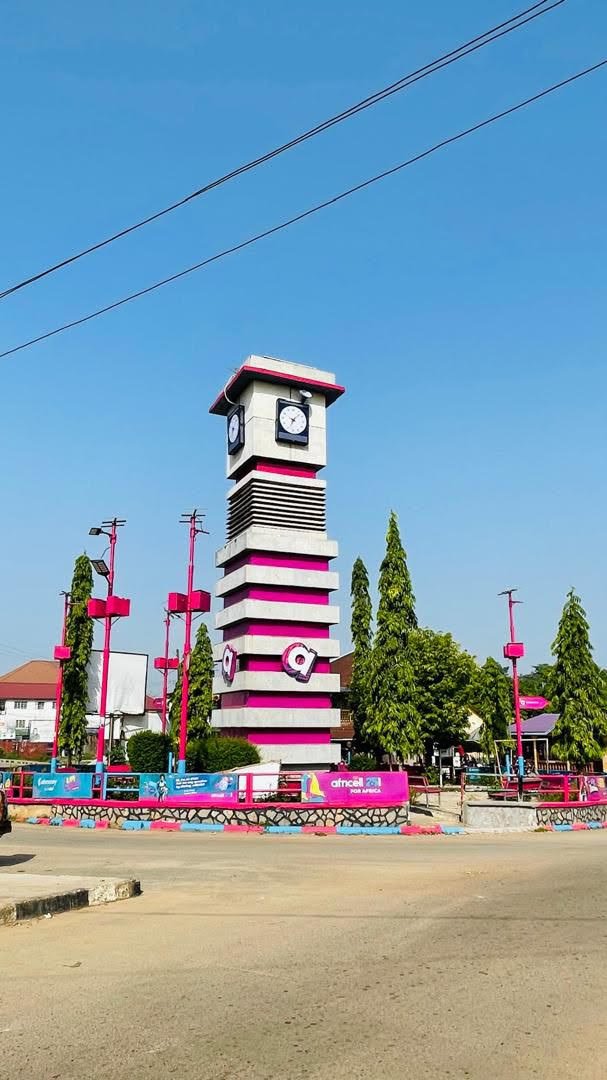
In a significant demonstration of corporate commitment to cultural preservation and community development, the Chief Executive Officer of Africell Sierra Leone, Shadi Gerjawi, has officially commissioned the newly renovated historic Bo Clock Tower, reaffirming the company’s dedication to safeguarding Sierra Leone’s heritage while advancing national development.

The commissioning ceremony, which took place on Monday March 30, 2026, in Bo, attracted local authorities, community stakeholders, traditional leaders, and residents who turned out in large numbers to witness the unveiling of the restored landmark. Widely regarded as one of the city’s most iconic historical symbols, the Bo Clock Tower has undergone an extensive facelift designed to preserve its legacy and maintain its status as a proud emblem of the municipality for generations to come.

Speaking during the event, Shadi Gerjawi underscored Africell Sierra Leone’s vision of going beyond the provision of quality telecommunications services to make meaningful contributions to national growth and identity. He noted that investing in cultural landmarks forms part of the company’s wider mission to strengthen social cohesion, promote national pride, and support the communities it serves.

According to him, the renovation of the Bo Clock Tower is a clear reflection of the company’s enduring relationship with the people of Sierra Leone and its belief in preserving sites that embody the nation’s rich historical narrative.

“This project demonstrates our commitment to the people of Sierra Leone beyond connectivity. We believe in investing in initiatives that celebrate the country’s rich history and strengthen community identity,” he stated.

Also addressing the gathering, the Mayor of Bo City Council, Kobba Musa, commended Africell Sierra Leone for what he described as another laudable intervention in support of local infrastructure and community advancement. He praised the company for consistently complementing government and municipal development efforts through impactful corporate social responsibility initiatives.

In a remark that resonated strongly with the audience, the Mayor described the telecommunications giant as a dependable development partner.

“Africell na serious network,” he remarked, drawing applause from residents and stakeholders, while highlighting the company’s role in enhancing connectivity and supporting community-driven projects that preserve cultural identity.

Residents who spoke after the ceremony expressed appreciation for the transformation of the iconic structure, noting that the renovation has restored the beauty and dignity of one of Bo’s most recognizable landmarks. Many described the intervention as both timely and meaningful, particularly at a time when modernization continues to reshape urban spaces and historical monuments require deliberate efforts to remain preserved.

For many in the city, the restoration of the clock tower is more than an infrastructure upgrade; it is a reaffirmation of Bo’s unique identity and a renewed sense of civic pride rooted in history and shared heritage.

The Bo Clock Tower renovation forms part of Africell Sierra Leone’s broader corporate social responsibility agenda, which continues to prioritize community empowerment, infrastructure support, youth engagement, and the preservation of important cultural assets across Sierra Leone.

With the successful commissioning of the renovated tower, Africell Sierra Leone once again reinforces its position not merely as a telecommunications provider, but as a strategic partner in Sierra Leone’s social, cultural, and infrastructural transformation. https://thecalabashnewspaper.com/africell-ceo-unveils-renovated-bo-clock-tower-strengthening-community-pride-and-cultural-identity/

St Joseph’s 160th Celebration: Archdiocese Approves Compromise Dress Code for Ex-Pupils
By Amin Kef (Ranger)

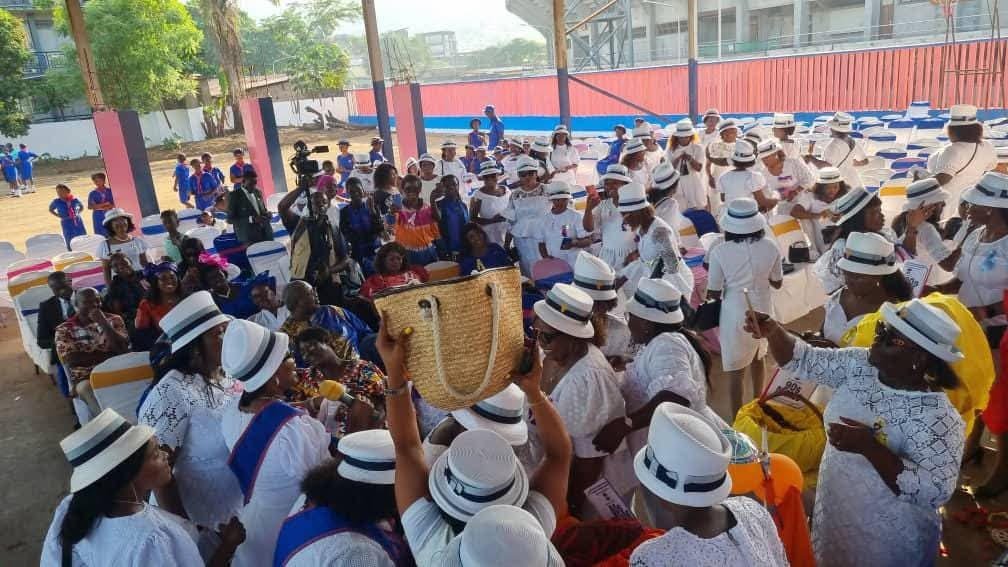
The Archdiocese of Freetown, through the Office of the Vicar General, has issued an official statement addressing the ongoing disagreement among members of the St Joseph’s Secondary School Ex-Pupils Association over the dress code for the school’s upcoming Thanksgiving Mass and march past to commemorate the institution’s 160th anniversary celebration.

In the statement dated 31st March 2026, the Vicar General, Very Rev. Fr. Joseph Tamba Kamanda, PhD, said the intervention was made with the mandate of Metropolitan Archbishop Edward Tamba Charles, who also serves as the Proprietor of Catholic schools within the Archdiocese’s jurisdiction, including St Joseph’s Secondary School, Brookfields.

The statement explained that the Archdiocese had deliberately refrained from interfering in the initial discussions among members of the ex-pupils association, trusting that the matter would be resolved amicably through internal dialogue among the alumnae.

However, following the escalation of the disagreement, including reports of legal consultations and exchanges on social media, the Archdiocese deemed it necessary to provide clarity and guidance aimed at preserving unity and the dignity of the historic institution.

Quoting Archbishop Edward Tamba Charles, the statement expressed concern over the decision by some alumnae to take the issue to court, stressing that such a path was unnecessary for women regarded as accomplished and capable of resolving differences through sincere and respectful engagement.

The Archbishop reportedly noted that while the support and commitment of the ex-pupils to their alma mater are deeply appreciated, such support does not automatically confer decision-making rights over school matters, particularly those relating to official ceremonies organized under the authority of the school and its proprietors.

He further cautioned against attempts to frame the disagreement as an issue of religious discrimination in order to gain public sympathy, describing such an approach as both misleading and potentially harmful.

Following consultations with legal counsel, the Archdiocese announced its endorsement of a compromise proposal jointly put forward by the parties involved. Under the approved arrangement, those who wish may wear a long, straight white dress for the ceremony. The statement also allows participants who choose to cover their hair to do so, provided the style does not interfere with the proper wearing of the ceremonial hat and hat band, which form part of the traditional dress protocol.

The statement noted that a photograph of the approved dress style has been attached for guidance to ensure uniformity and avoid further misunderstandings ahead of the anniversary event.

In a final appeal, Archbishop Tamba Charles called on all sides to remember their status as role models for the present generation of students at St Joseph’s Secondary School. He urged members of the ex-pupils association to conduct themselves with nobility, maturity and a sense of responsibility worthy of the esteem in which society holds them.

Using the French phrase “Noblesse oblige”—meaning nobility obliges—the Archbishop reminded the alumnae that those held in high regard must act with dignity and restraint, especially in matters concerning their beloved alma mater.

The statement concluded with a strong appeal for all parties to desist from further public attacks on social media and to avoid resorting to lawyers over internal association matters, emphasizing instead the need for unity, faithfulness and constructive dialogue as the school prepares for its landmark anniversary celebration.

This intervention by the Archdiocese is expected to calm tensions and refocus attention on the significance of the 160 years of excellence and legacy of St Joseph’s Secondary School, Brookfields, one of Sierra Leone’s most respected educational institutions. https://thecalabashnewspaper.com/st-josephs-160th-celebration-archdiocese-approves-compromise-dress-code-for-ex-pupils/


Trade Minister Alpha Ibrahim Sesay Defends WTO Core Principles, Pushes Inclusive Reform at MC14
By Amin Kef (Ranger)

Sierra Leone’s Minister of Trade and Industry, Hon. Alpha Ibrahim Sesay, has delivered a firm, strategic and forward-looking intervention at the World Trade Organization’s 14th Ministerial Conference (MC14) in Yaoundé, Cameroon, positioning Sierra Leone as a strong advocate for preserving the integrity of the multilateral trading system while advancing reforms that place development and inclusivity at the centre of global trade governance.

Speaking during the WTO Reform Breakout Session on Foundational Issues, the Minister outlined Sierra Leone’s principled stance on the future of the WTO, emphasizing that the institution’s foundational rules must remain protected even as Members pursue reforms aimed at addressing emerging global trade challenges.

At the core of his intervention was Sierra Leone’s unwavering support for the preservation of the WTO’s fundamental principles, including Most-Favoured-Nation (MFN) treatment, non-discrimination, transparency and adherence to the rule of law. Hon. Alpha Ibrahim Sesay stressed that these principles remain the bedrock of a fair, predictable and rules-based global trading system, enabling countries of all sizes to participate in international commerce with confidence.

According to the Minister, those principles represent a carefully negotiated balance of rights and obligations that continues to shape investment decisions, cross-border trade flows and long-term economic planning worldwide. He cautioned that any attempt to reopen or dilute these core disciplines would risk destabilizing the global trade architecture and weakening the certainty that businesses and governments rely on.

He placed particular emphasis on the importance of the MFN principle, describing it as the structural foundation that sustains coherence within the WTO framework. Moving toward conditional or bilateral MFN arrangements, he warned, could fragment the multilateral system and replace rules-based predictability with unequal power dynamics.

Despite this strong defense of the WTO’s legal foundations, the Minister made it clear that Sierra Leone remains fully committed to meaningful reform. He explained that the preservation of core principles and the advancement of reform should not be viewed as competing objectives, but rather as complementary pillars necessary for strengthening the WTO’s relevance in a rapidly changing global economy.

In that regard, Hon. Alpha Ibrahim Sesay articulated Sierra Leone’s vision for a development-centred and inclusive WTO, one that remains firmly member-driven and consensus-based, ensuring that all countries, regardless of economic strength or level of development, have an equal voice in shaping future trade rules.

He noted that development concerns must no longer be treated as peripheral issues limited to Least Developed Countries, but should instead be elevated as a systemic priority across the full WTO membership. Sierra Leone, he maintained, believes that a WTO capable of delivering meaningful outcomes for vulnerable economies is ultimately stronger and more effective for all members.

The Minister also reaffirmed Sierra Leone’s support for restoring a fully functional, two-tier and binding dispute settlement system, describing it as a vital pillar for maintaining trust, enforcing compliance and ensuring fairness within the rules-based multilateral trading order.

His intervention came at a critical moment for the WTO, as MC14 ended in deadlock following the failure of Members to reach consensus on extending the long-standing moratorium on customs duties on electronic transmissions beyond March 2026. The impasse, reportedly triggered by objections from Brazil and Turkey, has raised fresh concerns about the institution’s ability to secure consensus on key trade issues.

Against that backdrop, Sierra Leone’s contribution stood out as balanced and solutions-oriented. Hon. Alpha Ibrahim Sesay signaled Sierra Leone’s readiness to continue engaging constructively in post-MC14 negotiations, expressing support for the proposed Yaoundé Ministerial Statement on WTO Reform and the Post-MC14 Work Plan as a pragmatic basis for continued dialogue.

However, he emphasized that such frameworks must remain without prejudice to the positions and submissions of individual Members, thereby preserving the integrity of the negotiation process and safeguarding the voices of developing countries.

The Minister’s leadership at MC14 further reinforces Sierra Leone’s growing influence within international trade diplomacy, particularly at a time when developing economies are increasingly demanding a more equitable global trading environment.

By strongly defending the WTO’s foundational principles while championing inclusive, development-driven reform, Hon. Alpha Ibrahim Sesay has projected Sierra Leone as a constructive, principled and forward-looking voice within the global trade reform discourse.

His message from Yaoundé was clear: the future of the WTO must be built on fairness, inclusivity and rules that work not only for major economies, but also for countries like Sierra Leone that seek sustainable growth through a more just multilateral trading system. https://thecalabashnewspaper.com/trade-minister-alpha-ibrahim-sesay-defends-wto-core-principles-pushes-inclusive-reform-at-mc14/


ECSL Chairman Edmond Sylvester Alpha Pushes Inclusive Dialogue, Transparency Reforms for Credible 2028 Elections
By Ibrahim Sesay

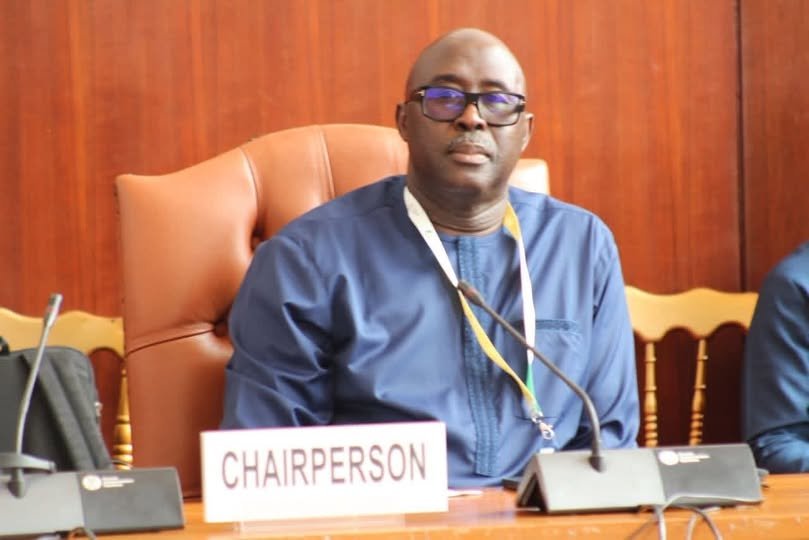
The newly appointed Chief Electoral Commissioner and Chairman of the Electoral Commission for Sierra Leone (ECSL), Edmond Sylvester Alpha, has set a reform-focused tone for the country’s democratic future, calling for unity, transparency, and sustained inter-party dialogue as Sierra Leone begins early preparations for the 2028 General Elections.

Speaking during a high-level consultative engagement with registered political parties at the ECSL headquarters in Freetown on Wednesday, 1st April 2026, Chairman Alpha emphasized that the credibility of the 2028 multi-tier elections will depend on the collective willingness of all political actors to work together in good faith. The event, which served as his formal introduction to political parties following his appointment, brought together party representatives, commissioners, the media, and key democratic governance stakeholders, although the APC and C4C were notably absent.

In his keynote address, Edmond Sylvester Alpha described the meeting as a defining moment in Sierra Leone’s democratic journey, stressing that dialogue remains the bedrock upon which enduring democratic trust is built.

He reflected on Sierra Leone’s democratic progress over the past two decades, citing the institutional reforms of 2005 and the successful conduct of elections in 2007, 2012, 2018, and 2023 as evidence of the country’s resilience, political maturity, and commitment to democratic governance.

According to him, these democratic gains belong not to any single institution or political party but to the people of Sierra Leone, making it the collective responsibility of all stakeholders to protect and deepen them.

Chairman Alpha acknowledged that recent political developments, especially in the aftermath of the 2023 elections, have generated tensions and concerns among stakeholders. However, he assured political parties and the public that his leadership would focus on restoring confidence, strengthening understanding, and creating platforms for inclusive participation.

He reiterated that the Electoral Commission exists to serve all Sierra Leoneans equally and must remain impartial in carrying out its constitutional mandate.

“The Commission is not aligned to any political interest. It does not determine political outcomes. Its role is to provide a credible, transparent, and accountable process through which the will of the people is freely expressed,” he stated.

He emphasized that while voters determine electoral outcomes, the responsibility of the Commission is to ensure that the process through which those outcomes emerge remains trusted, lawful, and transparent.

In what many observers viewed as an olive branch to skeptical political actors, the ECSL Chairman openly acknowledged that the concerns raised by political parties and other stakeholders are valid contributions toward strengthening the country’s electoral system.

He noted that electoral integrity must be viewed as a continuous process that goes beyond polling day itself. According to him, it encompasses the full electoral cycle, including legal frameworks, operational preparedness, stakeholder trust, civic education, dispute resolution, inclusion, and transparency in public communication.

Drawing attention to the reform-oriented recommendations emerging from the national Tripartite engagement process, Alpha said the current moment presents an important opportunity for collective institutional improvement rather than division.

He identified key reform priorities as strengthening transparency in electoral operations and results management, improving stakeholder consultation and inclusive dialogue mechanisms, clarifying legal and procedural guidelines, enhancing public communication, and building confidence among political actors and institutions.

With less than two years before the 2028 elections, Chairman Alpha warned that Sierra Leone has a narrow but critical window to undertake essential preparatory processes.

He listed boundary delimitation, voter registration, electoral planning, and nationwide civic education as urgent processes that must commence in earnest and be carried out in a manner trusted by all stakeholders.

To give practical effect to this collaborative vision, the ECSL Chairman proposed a roadmap anchored on structured engagement and institutional cooperation.

Among the measures he outlined were the reinforcement of the Political Parties Liaison Committee (PPLC), the establishment of a standing Inter-Party Dialogue and Consultation Forum convened regularly by the Commission, the creation of joint technical working groups with party representatives, and the development of a shared electoral roadmap leading to 2028.

He also proposed stronger communication channels to ensure timely, accurate, and transparent information flow to all registered political parties.

“Our democracy is strongest not when we agree on everything, but when we remain committed to working together despite our differences,” Alpha said, adding that Sierra Leoneans are looking to democratic leaders for unity of purpose and responsible leadership.

The consultative meeting also featured strong interventions from other electoral stakeholders.

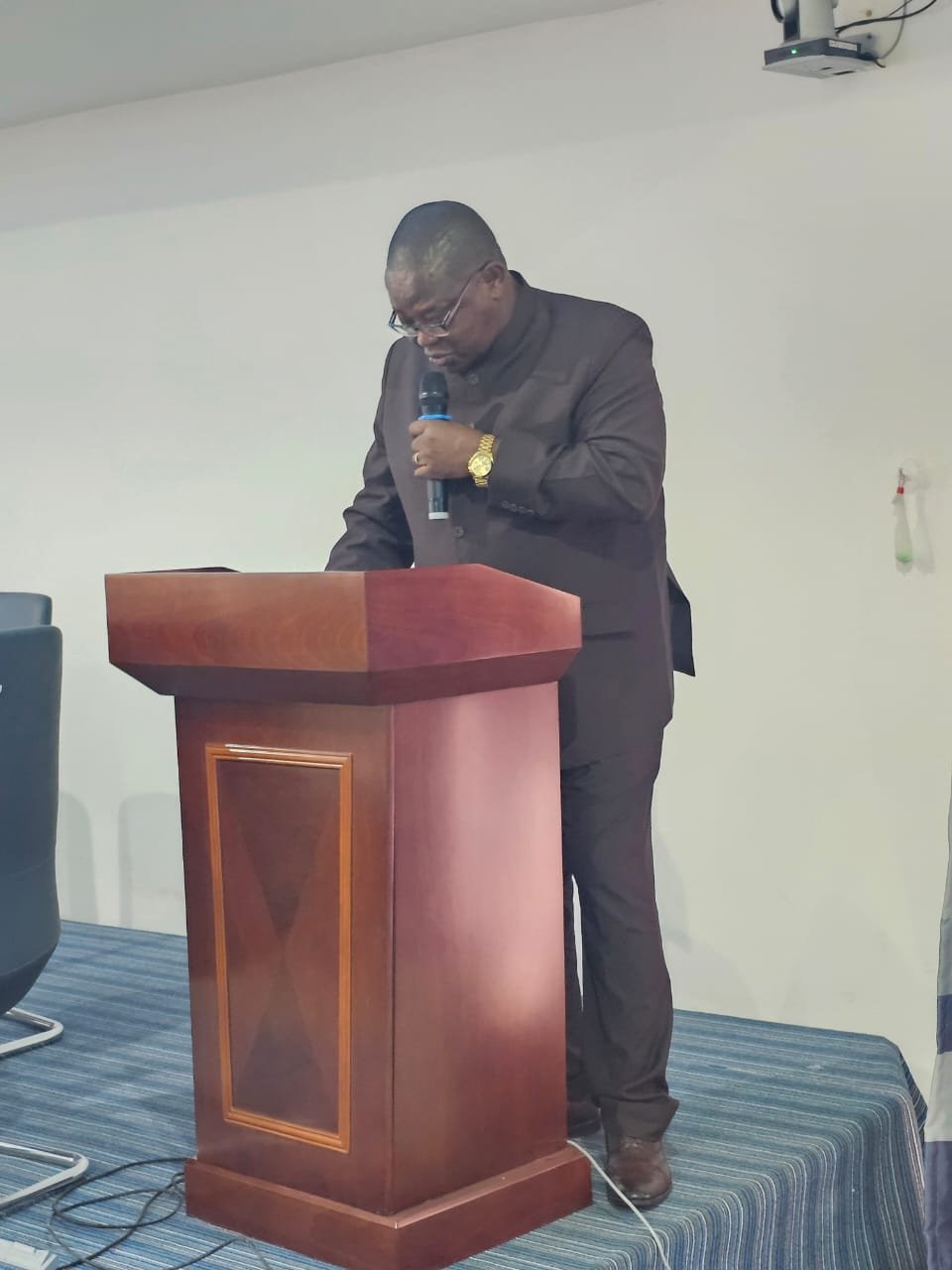
Welcoming attendees, ECSL Executive Secretary William Addo Davies said the purpose of the meeting was to formally introduce the new Chief Electoral Commissioner and Chairman while reaffirming the institution’s commitment to continuous dialogue with stakeholders in the electoral process.

The All Political Parties Association (APPA), through its National Secretary General Ibrahim Sorie Sesay, also presented a detailed statement outlining expectations from the new ECSL leadership.

APPA called for the immediate reactivation of the Political Parties Liaison Committee, describing it as critical for structured dialogue and consensus-building. The association also urged the Commission to ensure that all registered political parties are fully included in ongoing reform discussions, especially those linked to the Tripartite process.

The association further called for stronger transparency and accountability in election date communication, polling procedures, and results management, while also advocating for a comprehensive review of the Proportional Representation system to make it more equitable and representative.

Additionally, APPA stressed the need for stronger operational readiness, timely strategic planning, reinforced monitoring and enforcement mechanisms, improved voter registration integrity, expanded voter education, and the deployment of secure and reliable electoral technology.

“Trust is the currency of credible elections. It is earned through fairness, openness, and accountability,” Ibrahim Sorie Sesay stated.

Other speakers, including representatives of the Political Parties Regulation Commission, reinforced the need for cooperation, equality among political parties, and early preparations for the 2028 elections.

The meeting ended with renewed optimism, as commissioners and political stakeholders pledged to work collectively toward delivering elections that are free, fair, peaceful, transparent, and widely accepted.

As Sierra Leone continues to address post-2023 electoral tensions, the ECSL’s renewed emphasis on inclusivity, reform, and trust-building under Edmond Sylvester Alpha’s leadership could prove pivotal in shaping a more credible and collectively owned electoral process in 2028. https://thecalabashnewspaper.com/ecsl-chairman-edmond-sylvester-alpha-pushes-inclusive-dialogue-transparency-reforms-for-credible-2028-elections/


VP Juldeh Jalloh Leads Tourism Infrastructure Inspection, Commissions New Correctional Service Headquarters
By Amin Kef (Ranger)

Vice President of the Republic of Sierra Leone, Dr. Mohamed Juldeh Jalloh, has reaffirmed government’s commitment to national transformation through tourism development and security sector reform following two high-profile engagements in Freetown on Tuesday, March 31, 2026.

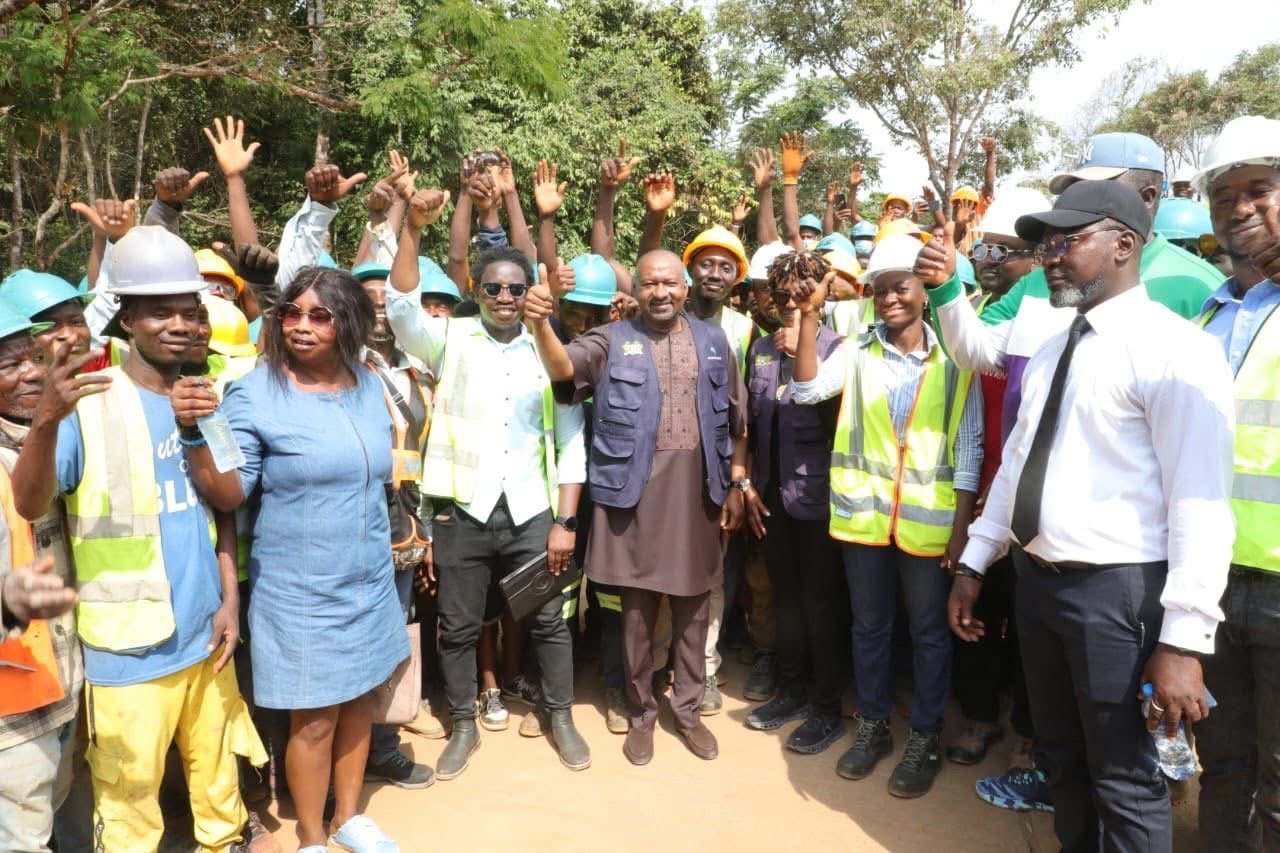
In a demonstration of the government’s strategic focus on sustainable development, the Vice President first led a high-level delegation on an inspection tour of the Tacugama Resort and the Leicester Peak viewing deck, where he commended the rapid progress being made on key tourism infrastructure projects designed to strengthen Sierra Leone’s growing ecotourism appeal.

The delegation, which included the Minister of Tourism and Cultural Affairs, the Minister of Environment, and other senior government officials, visited the sites as part of efforts to assess ongoing work under the country’s broader tourism expansion and economic diversification agenda.

Speaking during the visit, Dr. Juldeh Jalloh described the transformation at Tacugama as a major milestone for Sierra Leone’s tourism sector, noting that the scale and quality of the infrastructure under development demonstrate the country’s readiness to compete on the international tourism stage.

He particularly praised the Tacugama Innovation Centre, describing it as a world-class facility that will significantly boost Sierra Leone’s reputation as a destination for nature-based tourism, education, and recreation. According to him, the centre’s modern design and multifunctional facilities—including a cinema, restaurant, conference spaces, classrooms, library, and conservation education units—reflect a bold vision for the future of tourism.

The Vice President also commended the leadership of the Ministry of Tourism and Cultural Affairs, alongside the support of the Sierra Leone Economic Diversification Project and the World Bank, for helping to deliver one of the country’s few EDGE-certified tourism constructions.

He stressed that beyond the physical structures, the success of such investments will depend heavily on environmental protection and effective land management. He warned against land encroachment and environmental degradation around key tourism zones, emphasizing the need for strong collaboration among security agencies, environmental authorities, and local stakeholders to preserve these assets.

Dr. Juldeh Jalloh said the Tacugama and Leicester Peak developments are expected to create a unique blend of recreation, education, and conservation, providing Sierra Leoneans and international visitors alike with a world-class ecotourism experience.

Providing technical details on the project, Engineer Saidu Conteh explained that the Tacugama Innovation Centre is one of three flagship tourism destination projects aimed at reducing the country’s dependence on extractive industries while boosting tourism performance and creating jobs.

He disclosed that construction has reached an advanced stage, with the centre envisioned as a complete ecotourism hub. In addition to the main complex, the project will feature a botanical garden with a butterfly dome, amphitheatre, hiking trails, bird-watching tower, children’s playground, greenhouse, rooftop restaurant, and a range of visitor support amenities.

He further noted that the facility is designed to offer a full conservation experience, while also serving as a major learning and recreational centre for families, schools, and tourists. However, he cautioned that challenges such as persistent land encroachment could threaten the project’s targeted completion deadline of April 30, 2026.

Later the same day, the Vice President proceeded to New England in Freetown, where he commissioned a newly constructed administrative building for the Sierra Leone Correctional Service (SLCS), describing the occasion as a deeply personal milestone in the country’s ongoing correctional reforms.

As Chairman of the Sierra Leone Correctional Council, Dr. Juldeh Jalloh reflected on the institution’s journey from operating in an outdated facility that had existed since 1961 to now occupying a modern administrative structure designed to improve operational efficiency, officer welfare, and institutional dignity.

He recalled that the modernization initiative began in 2018 as part of a wider reform programme aimed at transforming the correctional service into a more professional and respected institution.

According to the Vice President, the government’s reform efforts extend beyond infrastructure to include salary improvements, provision of uniforms, expanded training opportunities, and clear pathways for career progression.

Addressing officers directly, he underscored the importance of merit, discipline, and continuous professional development, stressing that leadership positions within the service must be earned through commitment and competence rather than favoritism.

He challenged officers to see themselves as reformers and nation-builders whose responsibility goes beyond detention to include rehabilitation and transformation of lives within the correctional system.

Dr. Juldeh Jalloh assured officers that despite prevailing economic pressures, government remains committed to investing in the correctional service, urging personnel to match this commitment with integrity, professionalism, and dedication to duty.

Director General of the Sierra Leone Correctional Service, Joseph John Senessie, described the commissioning as a historic turning point for the institution. He said the new administrative building finally brings an end to decades of operating from a structure that no longer reflected the aspirations of a modern correctional service.

He expressed gratitude to President Julius Maada Bio, Vice President Dr. Mohamed Juldeh Jalloh, the Minister of Internal Affairs, and institutional partners for supporting the reform vision.

The Director General also paid tribute to Major General Sahr David Tamba Ngaujah for his support and vision, describing the new building as both a symbol of progress and a strong foundation for the next phase of institutional growth.

The twin engagements by the Vice President highlight the government’s parallel focus on unlocking Sierra Leone’s tourism potential while deepening reforms within critical state institutions, reinforcing a broader national development agenda anchored on sustainability, professionalism, and service delivery. https://thecalabashnewspaper.com/vp-juldeh-jalloh-leads-tourism-infrastructure-inspection-commissions-new-correctional-service-headquarters/


President Bio Commissions WAICA Re Headquarters, Strengthens Sierra Leone’s Role as West Africa’s Financial Hub
By Amin Kef (Ranger)

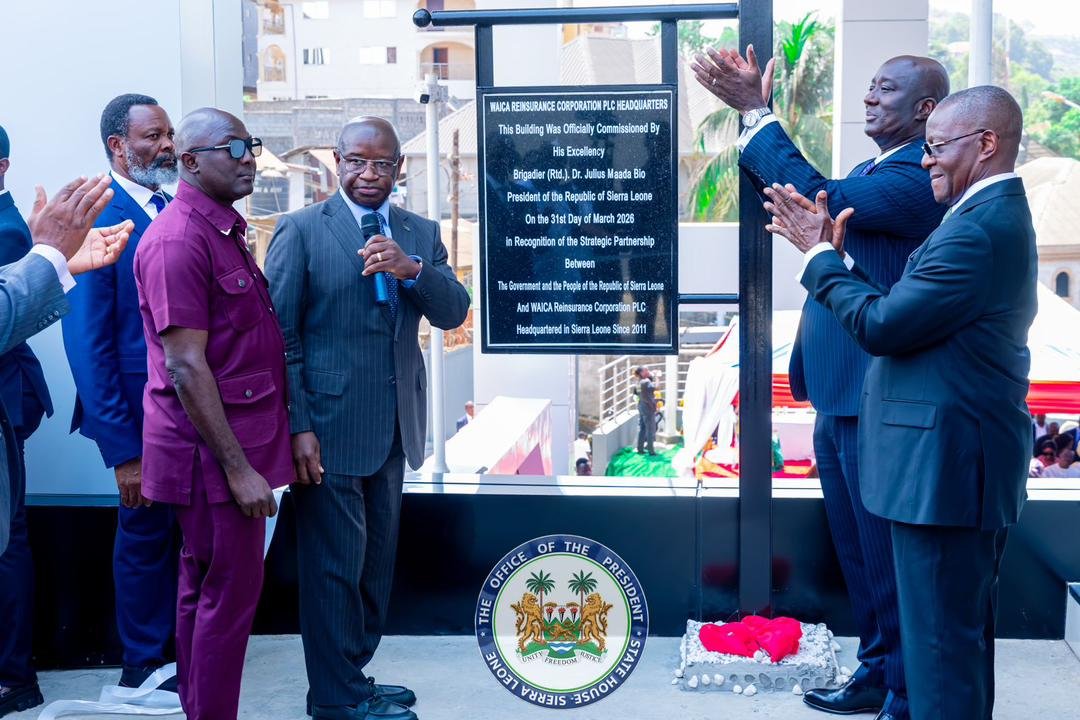
President Dr. Julius Maada Bio has officially commissioned the permanent headquarters of the West African Insurance Companies Association Reinsurance Corporation (WAICA Re) PLC in Freetown, describing the development as a major boost to Sierra Leone’s growing reputation as a regional center for finance, investment and economic cooperation in West Africa.

The commissioning ceremony, held on Tuesday 31 March 2026 at 4A Alshek Crescent, Hill Station, brought together senior government officials, Members of Parliament, representatives of the diplomatic and consular corps, stakeholders in the insurance and financial services sector, and regional business leaders. The event marked the formal opening of a landmark institution that has become central to strengthening insurance and reinsurance capacity across the West African sub-region.

Delivering his keynote address, President Julius Maada Bio said the occasion represented much more than the unveiling of a modern office complex, stressing that it symbolizes Sierra Leone’s credibility, the strength of regional cooperation and Africa’s growing ability to build durable financial institutions.

He described the commissioning as a significant milestone in the collective effort to establish resilient institutions capable of supporting economic growth, mitigating risk and promoting deeper regional integration.

According to the President, Sierra Leone remains proud to host WAICA Re since its establishment in 2011, noting that the institution has evolved into a strategic pillar in enhancing the insurance and reinsurance landscape across West Africa.

He said the fulfillment of the commitment to establish the permanent headquarters demonstrates the enduring value of trust, continuity and respect for agreements among African nations and institutions.

President Bio reaffirmed his government’s commitment to providing a stable legal, regulatory and investment environment that allows credible institutions to grow and thrive.

He emphasized that the Headquarters Agreement signed years ago remains a solemn obligation of the State and assured the corporation’s leadership that Sierra Leone will continue to honor its responsibilities in ways that strengthen investor confidence and deepen the country’s reputation as a dependable destination for business and finance.

The President assured regional partners and the leadership of WAICA Re that Sierra Leone remains open to credible long-term investment, adding that his government will continue to protect institutional rights, strengthen the rule of law and create the enabling conditions necessary for sustainable business growth.

He noted that the significance of WAICA Re extends far beyond the insurance industry, describing it as a symbol of Africa’s capacity to create strong regional institutions that address local realities, pool shared strengths and reduce dependence on external financial systems.

At a time when global uncertainties continue to shape economic realities, President Bio said resilient African financial institutions such as WAICA Re are increasingly important for ensuring economic stability and effective risk management.

He commended the leadership of the corporation for their strategic foresight, dedication and perseverance in transforming the long-held vision of a permanent headquarters into reality.

The President further stated that the new headquarters reinforces Sierra Leone’s broader development agenda centered on economic diversification, private sector growth and international competitiveness.

According to him, the presence of the institution in Freetown strengthens the country’s profile as a hub for regional finance, commerce and investment, while complementing government’s efforts to attract more multinational and regional institutions into Sierra Leone.

Speaking in his capacity as Chair of the ECOWAS Authority of Heads of State and Government, President Bio said he was especially pleased that the project reflects the spirit of regional cooperation and shared prosperity that ECOWAS continues to champion.

He stressed that the future prosperity of West Africa depends on institutions that transcend borders, build trust and foster collective resilience among member states.

President Bio called on African nations to continue investing in institutions that embody solidarity, innovation and shared purpose, adding that the WAICA Re headquarters should stand as a lasting symbol of what African countries can achieve when they work together in unity.

On behalf of the corporation, Group Managing Director and Chief Executive Officer, Abiola E. Ekundayo, expressed appreciation to the Government and people of Sierra Leone for the sustained support provided since WAICA Re’s establishment in 2011.

He said the new headquarters symbolizes the institution’s growth, operational stability and long-term confidence in Africa’s economic future.

According to him, WAICA Re’s footprint continues to expand across the continent and beyond, reflecting the trust placed in the corporation as a reliable reinsurance partner.

Also speaking, Group Chairman of WAICA, Kofi Duffuor, commended the Government of Sierra Leone, Parliament and the people of the country for hosting the institution and ensuring that the headquarters agreement has been honored.

He praised President Bio’s leadership and commitment to sustaining the agreement, describing it as a demonstration of confidence in building enduring regional institutions that can support Africa’s financial transformation.

The commissioning of the WAICA Re headquarters is widely regarded as a major step in consolidating Sierra Leone’s role as a strategic destination for regional financial services and strengthening economic cooperation among West African states.

The development is also expected to further elevate Freetown’s status as a preferred destination for regional institutions seeking a stable and credible operational base.

With the formal opening of the headquarters, Sierra Leone has once again reaffirmed its readiness to host major regional organizations and deepen its contribution to Africa’s evolving financial architecture. https://thecalabashnewspaper.com/president-bio-commissions-waica-re-headquarters-strengthens-sierra-leones-role-as-west-africas-financial-hub/

Wednesday, 1 April 2026


Orange Sierra Leone Commissions NLe1.8 Million Ultra-Modern Health Centre in Wai Community, Boosting Rural Healthcare Access
Orange Sierra Leone, in partnership with the Ministry of Health, has officially commissioned a NLe1.8 million ultra-modern ten-room health centre in Wai Community, Sorogbema Chiefdom, Pujehun District, marking a major milestone in the drive to improve access to quality healthcare services in rural Sierra Leone.

The facility, which was officially inaugurated on March 28, 2026, is expected to significantly transform healthcare delivery in Wai and surrounding communities, where residents have for years grappled with limited access to essential medical services due to distance, inadequate infrastructure, and insufficient resources.

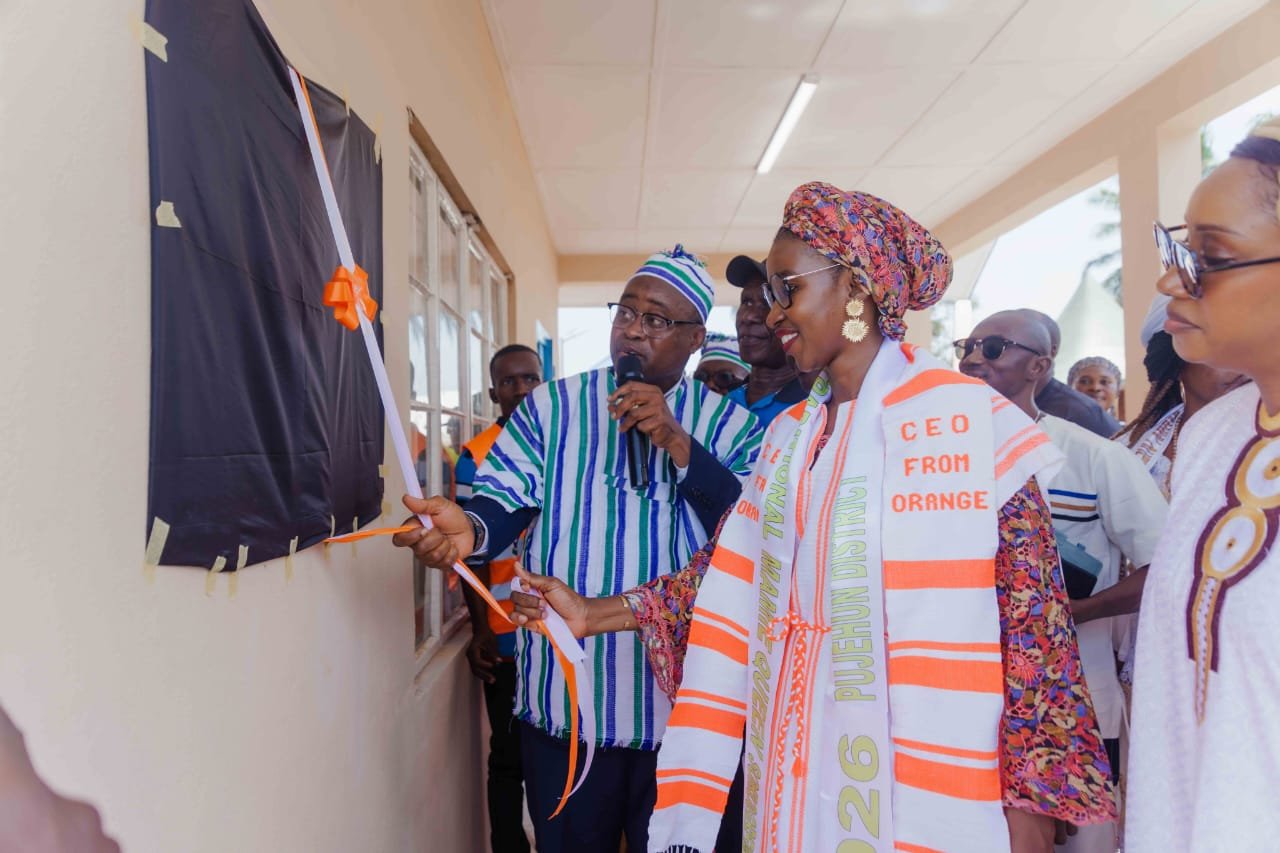
The commissioning ceremony was officiated by the Deputy Minister of Health I, Dr. Charles Senesie, alongside Orange Sierra Leone Chief Executive Officer, Madam Aïcha Touré, in the presence of the Paramount Chief, local authorities, traditional leaders, and hundreds of community residents who turned out to witness the historic event.

Delivering the opening remarks, Orange Sierra Leone’s Corporate Social Responsibility Officer, Mohamed Santos Bangura, gave a detailed overview of the project, tracing its journey from the groundbreaking ceremony held on April 17, 2025, to its successful completion.

He described the commissioning as a landmark achievement that reflects Orange Sierra Leone’s unwavering commitment to impactful social investment and sustainable national development.

According to Bangura, the new health centre is specifically designed to address critical gaps in rural healthcare delivery, with a strong focus on maternal and child health services.

He emphasized that the expansion of life-saving healthcare services in Wai would play a vital role in reducing preventable illnesses while contributing significantly to the reduction of maternal and child mortality rates in Pujehun District.

The Paramount Chief of Sorogbema Chiefdom, Mustapha Jeangay Massaquoi III, expressed profound appreciation to Orange Sierra Leone for what he described as a timely and transformative intervention.

He assured all stakeholders that the chiefdom would take full ownership of the facility, ensuring proper maintenance, protection, and effective monitoring so that it continues to serve both present and future generations.

Speaking during the commissioning, Orange Sierra Leone CEO Madam Aïcha Touré reaffirmed the company’s dedication to community wellbeing and national development, noting that the health centre was deliberately designed to respond to the urgent healthcare needs of Wai and neighbouring communities.

She disclosed that the ten-room facility is equipped with a labour ward and other essential medical infrastructure, enabling it to provide a broad range of healthcare services including maternal and child health care, outpatient consultations, emergency response, and basic diagnostic services.

Madam Touré further highlighted that the initiative aligns with the Orange Foundation’s maternal mortality reduction programme, under which the Wai facility will continue to benefit from targeted interventions aimed at improving outcomes for pregnant women, nursing mothers, and newborns.

In his keynote address, the Deputy Minister of Health I, Dr. Charles Senesie, commended Orange Sierra Leone for complementing Government’s efforts to strengthen healthcare systems across the country.

He noted that the project fits squarely within the Ministry’s broader strategy of expanding access to quality healthcare, particularly in underserved and hard-to-reach rural communities.

Dr. Senesie also announced that the former Wai Maternal and Child Health Post (MCHP) has now been officially upgraded to a fully equipped Community Health Centre (CHC), a development expected to significantly improve service delivery capacity and save more lives in the district.

The ceremony also featured remarks from philanthropist Mr. Salim Feika, one of the key contributors to the project, who expressed appreciation to all partners involved, including the Ministry of Health, the District Health Management Team, Orange Sierra Leone, and local authorities.

As part of his contribution, Mr. Feika donated two large waste disposal containers, chairs, and a motorbike to improve sanitation management and strengthen emergency response capabilities at the health facility.

He further appealed to stakeholders and development partners to support additional priority needs, including the construction of staff quarters, the provision of an ambulance, and continued capacity-building for healthcare workers, all aimed at ensuring efficient and sustainable service delivery.

In his closing remarks, Sierra Leone’s Ambassador to Liberia, Eddie Sidikie Mansaray, urged residents of Wai and surrounding communities to take full ownership of the facility by utilizing its services responsibly and supporting healthcare workers in maintaining high standards of care.

The well-attended commissioning ceremony brought together government officials, traditional leaders, development partners, health professionals, and community members, and concluded with the formal handover of the health centre to the Wai community and the people of Sorogbema Chiefdom.

With support from the Orange Foundation, the Wai Community Health Centre is now expected to significantly improve healthcare access, strengthen maternal and child health services, and contribute meaningfully to Sierra Leone’s ongoing national efforts to reduce mortality rates and improve public health outcomes in rural communities. https://thecalabashnewspaper.com/orange-sierra-leone-commissions-nle1-8-million-ultra-modern-health-centre-in-wai-community-boosting-rural-healthcare-access/